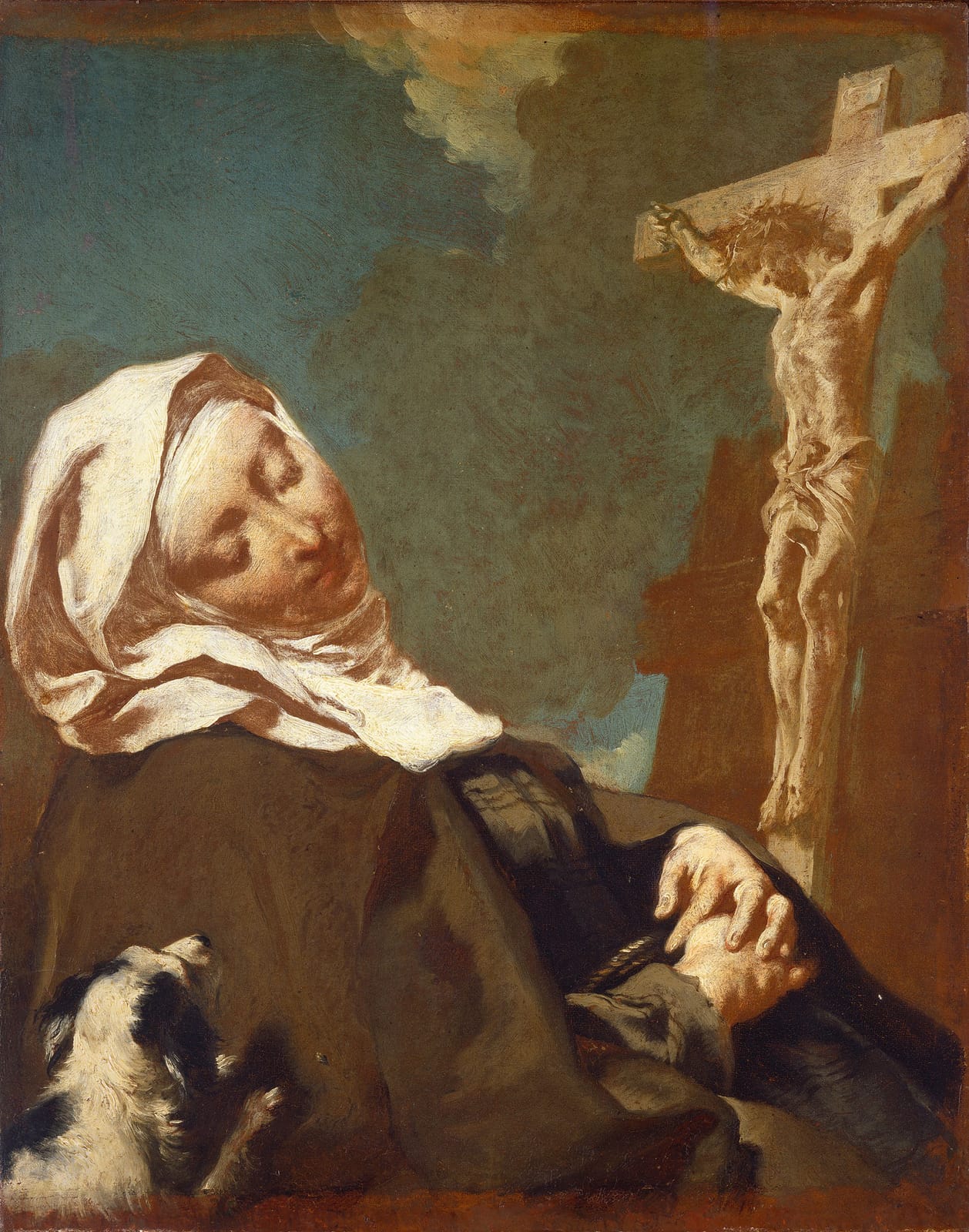
Septuagesima
February 26, 2019
February 26: St. Margaret of Cortona, Penitent
From Dom Guéranger’s The Liturgical Year.
Close to the faithful virgins, who form the court of Jesus, there stand those holy women, whose repentance has merited for them a prominent place in the calendar of the Church. They are the bright trophies of God’s mercy. They expiated their sins by a life of penance; the tears of their compunction wiped away their guilt; He that is purity itself has found them worthy of His love, and, when pharisees affect to be shocked at His allowing them to be near Him, He warmly defends them. Foremost among these is Mary Magdalene, to whom much was forgiven, because she loved much; but there are two on the list of penitent saints whose names shine most brightly on the calendar of this portion of the year; and who were, like Mary Magdalene, ardent in their love of the divine Master, whom they had once offended: these are, Mary of Egypt, and Margaret of Cortona. It is the second of these who to-day tells us the consoling truth that if sin separate us from God, penance has the power not only of disarming His anger, but of forming between God and the sinner that ineffable bond of love, which the apostle alludes to when he says: ‘Where sin hath abounded, grace hath more abounded.'