
This day

March 21, 2019

St Benedict as abbot with book and crozier
Saint Benedict, Pietro Perugino (1448–1523), 1495–1498. Credits

Lent

March 21, 2019

A Greater Double leads the weekday.Rubric

March 21: St. Benedict, Abbot

From Dom Guéranger’s The Liturgical Year.

Forty days after the white dove of Cassino had mounted to heaven, Benedict, her glorious brother, ascended by a bright path to the blissful abode, where they were to be united for ever. Both of them reached the heavenly country during that portion of the year which corresponds with the holy season of Lent. It frequently happens, however, that St. Scholastica’s feast is kept before Lent has begun; whereas St. Benedict’s day, the twenty-first of March, always comes during the season of penance. God, who is the sovereign Master of time, willed that the faithful, whilst practising their exercises of penance, should always have before their eyes a saint whose example and intercession would inspire them with courage.

With what profound veneration ought we to celebrate the festival of this wonderful saint, who, as St. Gregory says, was filled with the spirit of all the just! If we consider his virtues, we find nothing superior in the annals of perfection presented to our admiration by the Church.

Love of God and man, humility, the gift of prayer, dominion over the passions—form him into a masterpiece of the grace of the Holy Ghost.

Thursday of the Second Week of Lent

From Dom Guéranger’s The Liturgical Year.

The Station for to-day is in the celebrated basilica, St. Mary’s across the Tiber. It was consecrated in the third century, under the pontificate of St. Callixtus, and was the first church built in Rome in honour of our blessed Lady.

Grant us, we beseech thee, O Lord, the assistance of thy grace; that whilst we duly apply ourselves to fasting and prayer, we may be delivered from all enemies both of soul and body. Through Christ our Lord. Amen.

Lectio Jeremiæ Prophetæ.
Cap. xvii.
Hæc dicit Dominus Deus: Maledictus homo qui confidit in homine, et ponit carnem nem brachium euum, et a Domino recedit cor ejus. Erit enim quasi myricæ in deserto, et non videbit cum venerit bonum; sed habitant in siccitate in deserto, in terra salsuginis et inhabitabili. Benedictus vir, qui confidit in Domino, et erit Dominus fiducia ejus. Et erit quasi lignum quod transplantatur super aquas, quod ad humorem mittit radices euas: et non timebit cum venerit æstus. Et erit folium ejus viride, et in tempore siccitatis non erit sollicitum, nec aliquando desinet facere fructum. Pravum est cor omnium et inscrutabile: quis cognoscet illud?

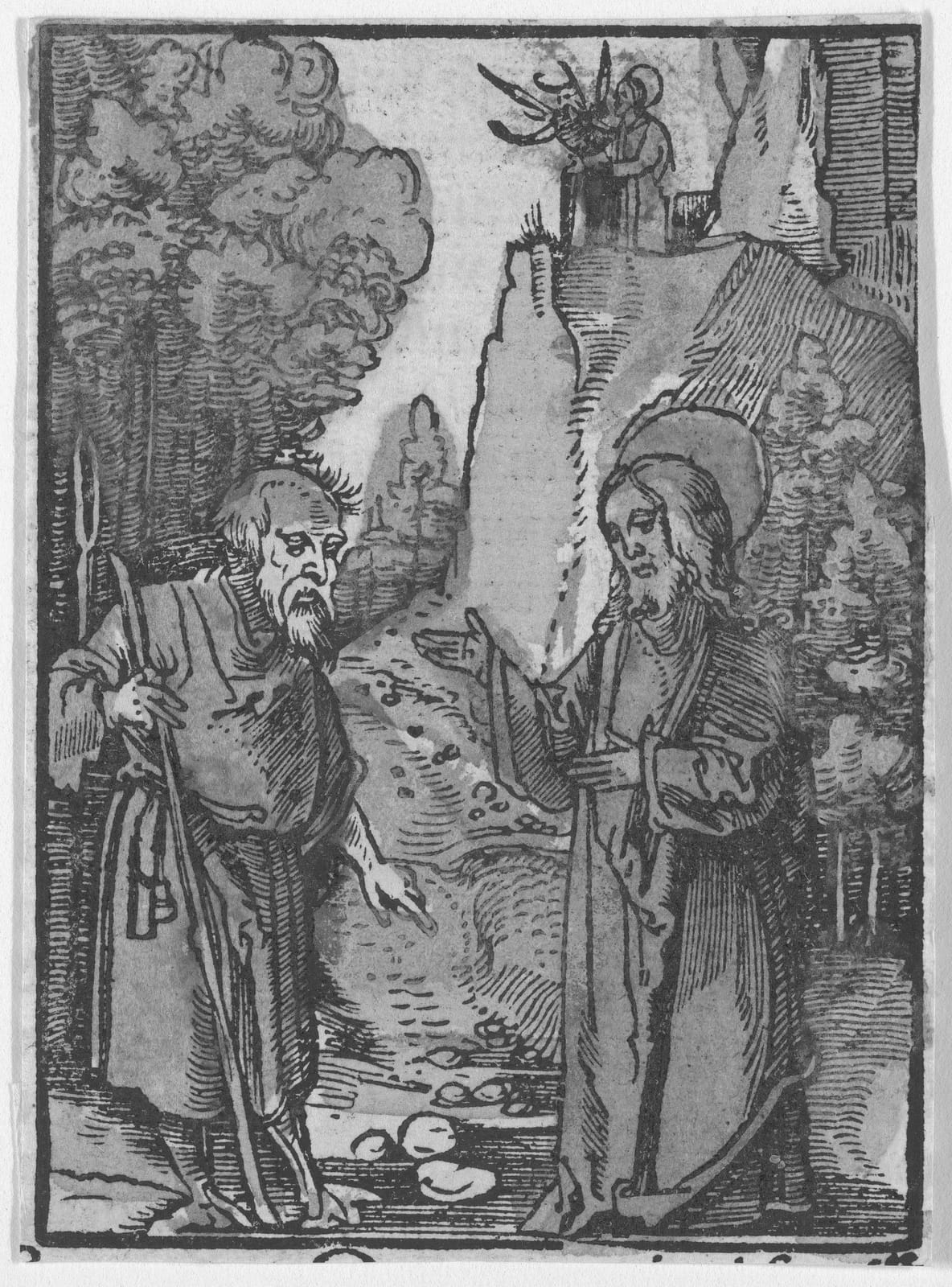
The Temptation of Christ in the wilderness
Hans Schäufelein (1480–1540), The Temptation of Christ, from Das Plenarium, 1517. Credits

Email view of this day