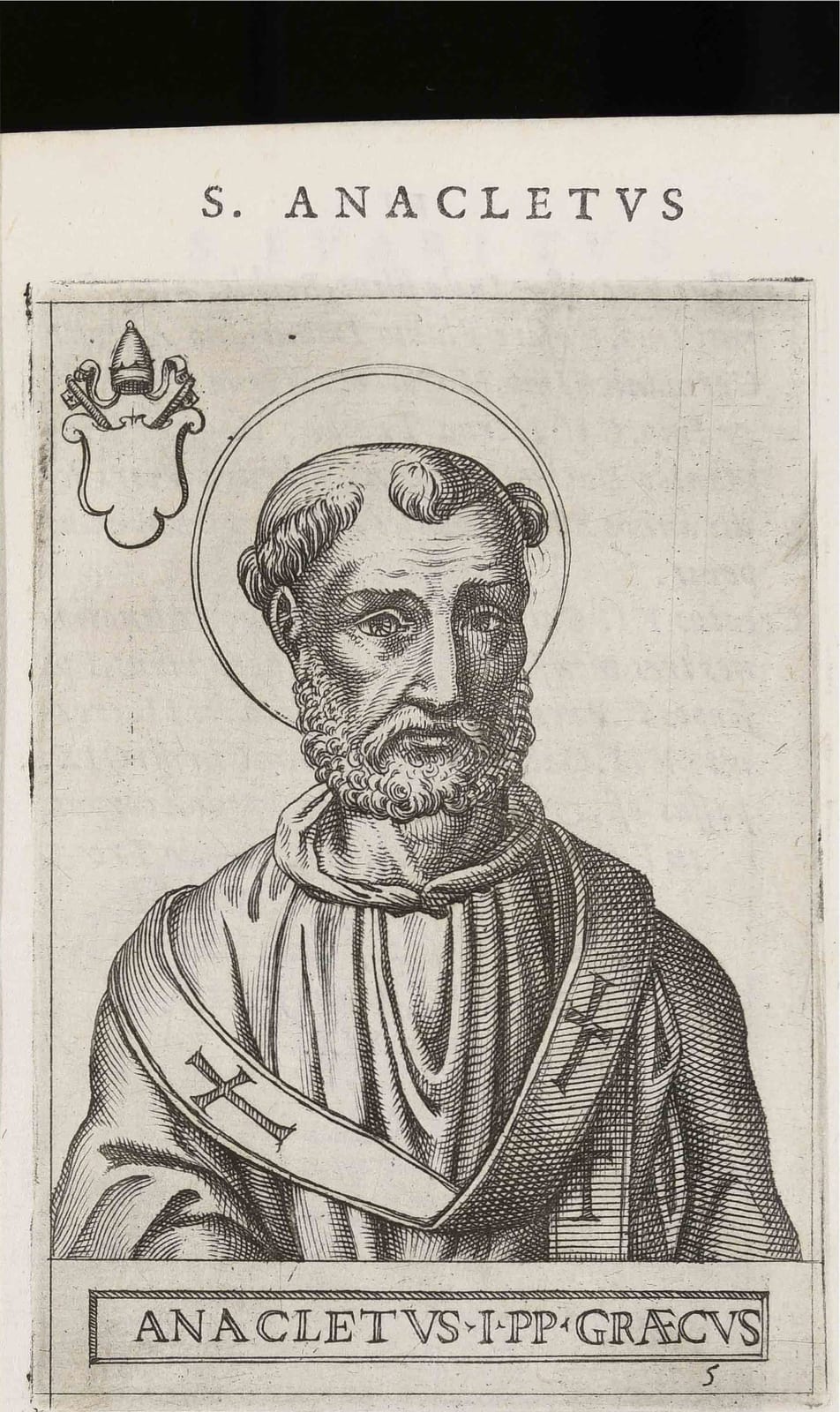
This day

July 13, 2019

After Pentecost

July 13, 2019

July 13: St. Anacletus, Pope and Martyr

From Dom Guéranger’s The Liturgical Year.

THE name of Anacletus sounds like a lingering echo of the solemnity of June 29. Linus, Clement, and Cletus, the immediate successors of St. Peter, received from his hands the pontifical consecration; Anacletus had a less but still inestimable glory of being ordained priest by the Vicar of the Man-God. Whereas the feasts of most of the martyr Pontiffs who came after him are only of simple rite, that of Anacletus is a semidouble, because of his privilege of being the last Pope honoured by the imposition of hands of the Prince of the Apostles. It was also during his pontificate that the Eternal City had the glory of receiving within its walls the beloved disciple, who had come to fulfil his promise and drink of his Master's chalice. ‘O happy Church,’ exclaims Tertullian, 'into whose bosom the Apostles poured not only all their teaching, but their very blood; where Peter imitated his Lord’s Passion by dying on the cross; where Paul, like John the Baptist, received his crown by means of the sword; whence the Apostle John, after coming forth safe and sound from the boiling oil, was sent to the isle of his banishment.’

This week's Sunday: The Fourth Sunday after Pentecost

From Dom Guéranger’s The Liturgical Year.

The fourth Sunday after Pentecost was called, for a long period, in the west, the Sunday of mercy, because, formerly, there was read upon it the passage from St. Luke beginning with the words: ‘Be merciful, as your Father is merciful.’ But, this Gospel having been since assigned to the Mass of the first Sunday after Pentecost, the Gospel of the fifth Sunday was made that of the fourth; the Gospel of the sixth became that of the fifth; and so on, up to the twenty-third. The change we speak of was, however, not introduced into many Churches till a very late period; and it was not universally received till the sixteenth century.

Whilst the Gospels were thus brought forward a week, in almost the whole series of these Sundays, the Epistles, Prayers, and the other sung portions of the ancient Masses were, with a few exceptions, left as originally drawn up. The connexion which the liturgists of the eleventh, twelfth, and thirteenth centuries had fancied they found between the Gospel and the rest of the liturgy for these Sundays was broken.

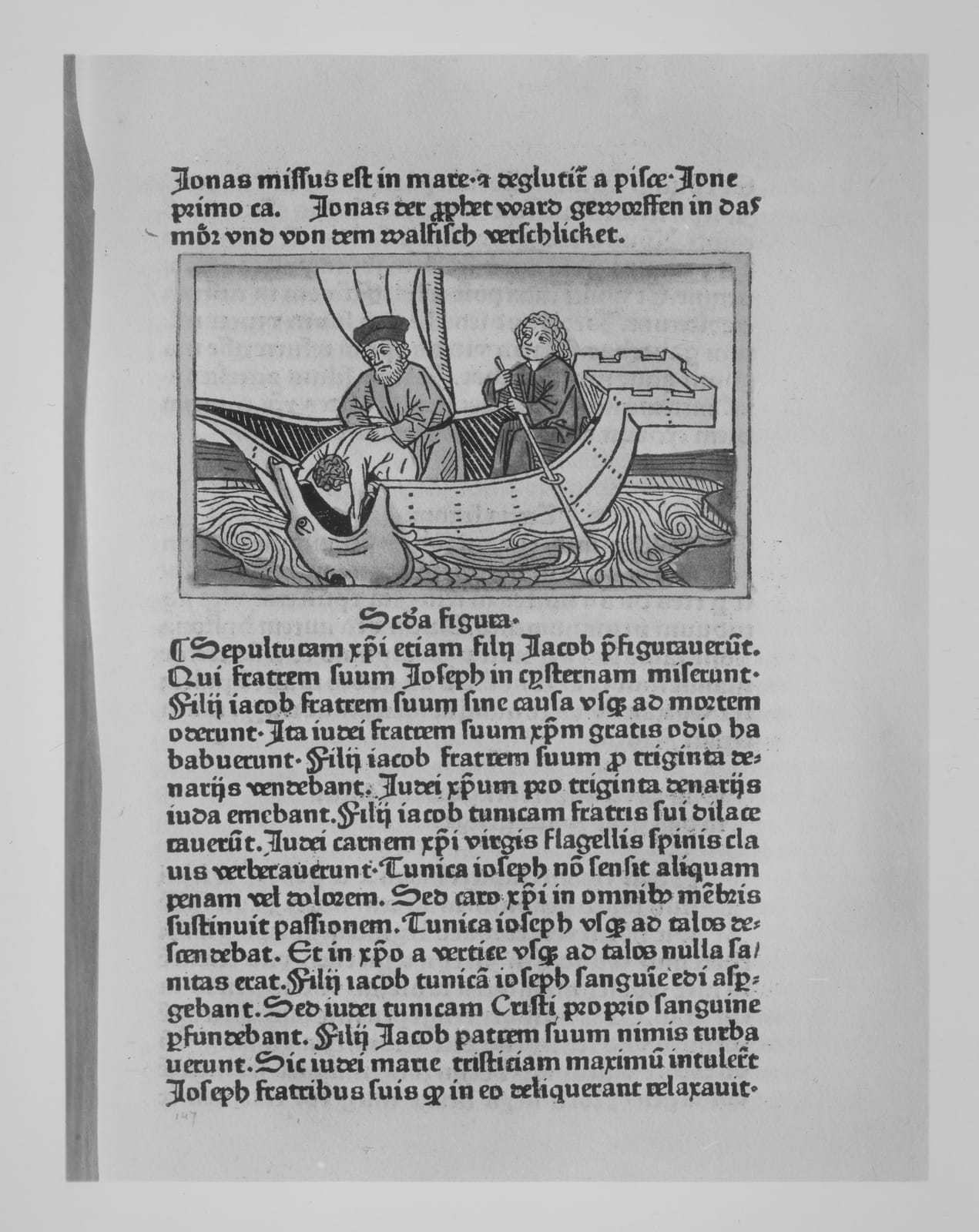
A woodcut opening from Speculum humanae salvationis
Günther Zainer (d. 1478), Speculum humanae salvationis, ca. 1473. Credits

Email view of this day