This day

January 28, 2020

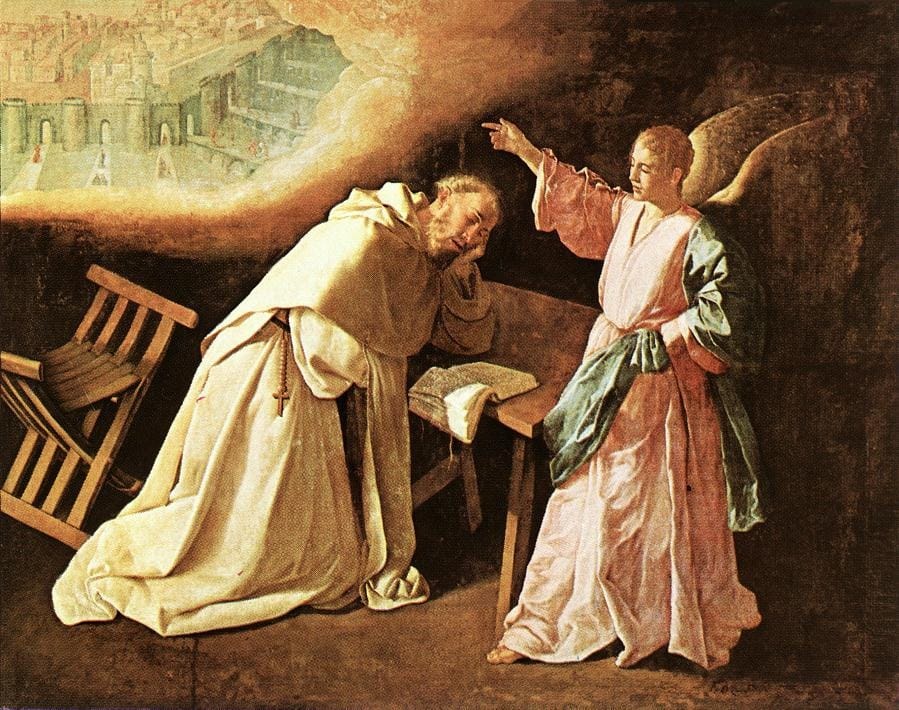
St Peter Nolasco in white habit asleep at a desk while a vested angel points to a vision of a city
The Vision of St Peter of Nolasco, Francisco de Zurbarán (1598–1664). Credits

Epiphanytide

January 28, 2020

January 28 [January 31]: St. Peter Nolasco, Confessor

From Dom Guéranger’s The Liturgical Year.

[This feast day, originally kept on January 31, was moved to January 28 when St. John Bosco was placed on January 31.-Ed.]

THE Ransomer of Captives, Peter Nolasco, is thus brought before us by the Calendar, a few days after the Feast of his master, Raymund of Pennafort. Both of them offer to the Divine Redeemer the thousands of Christians they ransomed from slavery. It is an appropriate homage, for it was the result of the Charity which first began in Bethlehem, in the heart of the Infant Jesus, and was afterwards so fervently practiced by these two Saints.

Peter was born in France, but made Spain his adopted country, because it offered him such grand opportunities for zeal and self-sacrifice. In imitation of our Redeemer, he devoted himself to the ransom of his brethren; he made himself a prisoner to procure them their liberty; and remained in exile, that they might once more enjoy the happiness of home. His devotedness was blessed by God. He founded a new Religious Order in the Church, composed of generous-hearted men, who for six hundred years prayed, toiled, and spent their lives in obtaining the blessing of liberty for countless captives, who would else have led their whole lives in chains, exposed to the imminent danger of losing their faith.
Chapter 7: On the Office of Vespers for Sundays and Feasts during Christmas

From Dom Guéranger’s The Liturgical Year.

THE Office of Vespers, or Evensong, during the whole year, consists firstly of five Psalms and Antiphons, which vary more or less every day. As the main object of our book is the convenience of the Faithful, we only give the Vespers of the Sundays and the principal Feasts. With regard to the Sundays, therefore, during Christmas, which are neither Feasts, nor within the Octave of a Feast, we give them here in full, reserving only that which is peculiar to each for the Proper. If it be a Feast, the Office must be sought for on its own day.

After the Pater and Ave have been said in secret, the Church commences this Hour with her favourite supplication:
℣. Deus in adjutorium meum intende.
℟. Domine, ad adjuvandum me festina.

Gloria Patri, et Filio, et Spiritui Sancto:
Sicut erat in principio et nunc et semper, et in sæcula sæculorum. Amen. Alleluia.

Ant. Dixit Dominus.

℣. Incline unto my aid, O God.
℟. O Lord, make haste to help me.

Glory be to the Father, and to the Son, and to the Holy Ghost.

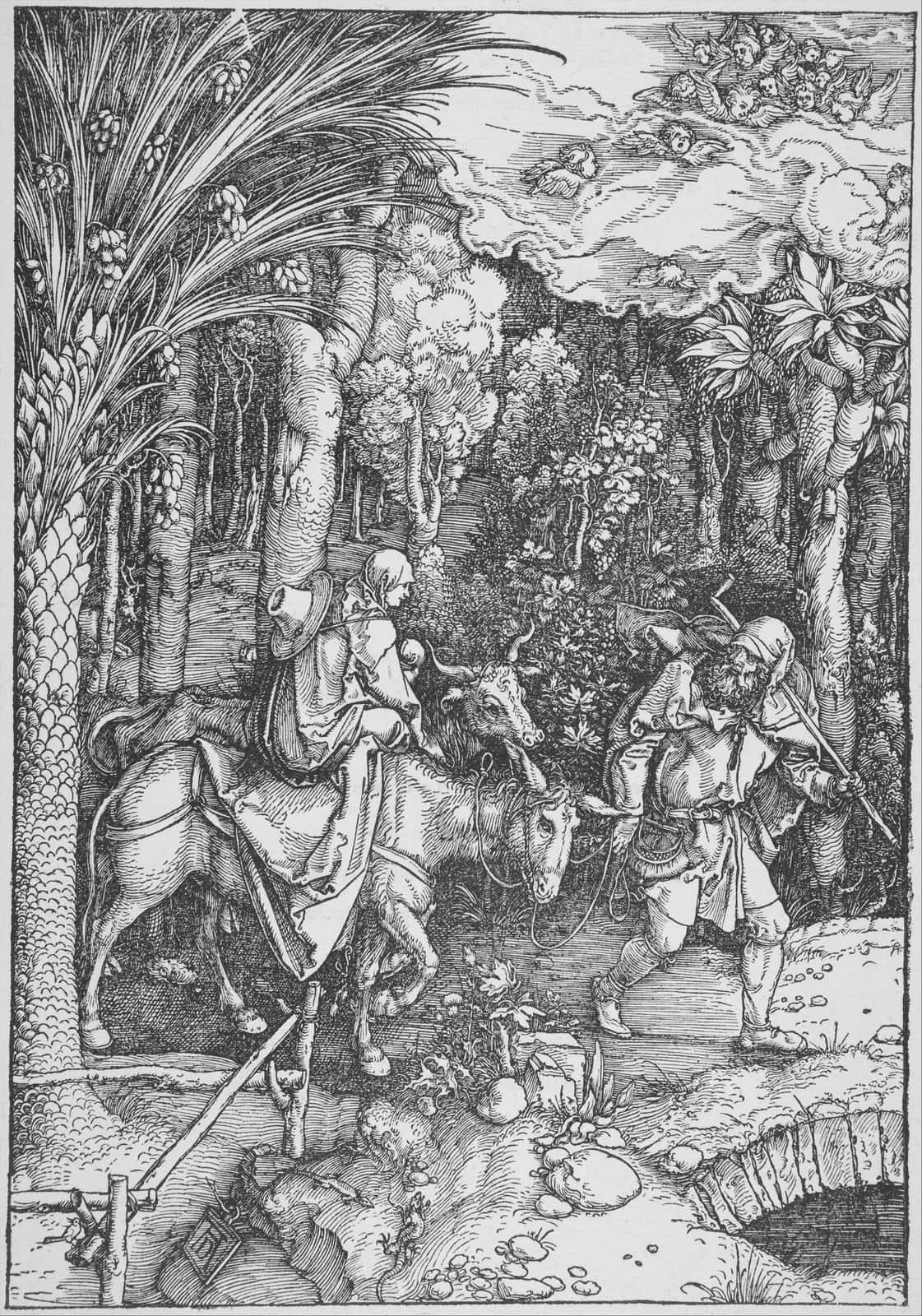
The Holy Family fleeing into Egypt
Albrecht Dürer (1471–1528), The Flight into Egypt, from The Life of the Virgin, 1511. Credits

Email view of this day