This day

February 17, 2020

Septuagesima

February 17, 2020

Monday of Sexagesima Week

From Dom Guéranger’s The Liturgical Year.

All flesh had corrupted its way upon the earth. The terrible lesson, then, which men had received, by being driven out of paradise in the person of our first parents, had been without effect. Neither the certainty of death, when they would have to stand before the divine Judge, nor the humiliations which attend man’s first coming into this world, nor the pains and fatigues and trials which beset the whole path of life, had subdued men’s hearts, or brought them into submission to that sovereign Master whose hand lay thus heavy upon them. They had the divine promise that a Saviour should be given to them, and that this Redeemer (who was to be the Son of her that was to crush the serpent’s head), would not only bring them salvation, but would moreover reinstate them in all the happiness and honours they had lost. But even this was not enough to make them rise above the base passions of corrupt nature. The example of Adam’s nine hundred years’ penance, and the admonitions he could so feelingly give who had received such proofs of God’s love and anger, began to lose their influence upon his children; and when he at last descended into the grave, his posterity grew more and more heedless of what they owed to their Creator.


This week's Sunday: Sexagesima Sunday

From Dom Guéranger’s The Liturgical Year.

The Church offers to our consideration, during this week of Sexagesima, the history of Noah and the deluge. Man has not profited by the warnings already given him. God is obliged to punish him once more, and by a terrible chastisement. There is found out of the whole human race one just man; God makes a covenant with him, and with us through him. But, before He draws up this new alliance, He would show that He is the sovereign Master, and that man, and the earth whereon he lives, subsist solely by His power and permission.

As the ground-work of this week’s instructions, we give a short passage from the Book of Genesis: it is read in the Office of this Sunday’s Matins.

De Libro Genesis.
Cap. vi.
Videns autem Deus quod multa malitia hominum esset in terra, et cuncta cogitatio cordis intenta esset ad malum omni tempore, pœnituit eum quod hominem fecisset in terra. Et tactus dolore cordis intrinsecus: Delebo, inquit, hominem quem creavi, a facie terræ, ab homine usque ad animantia, a reptili usque ad volucres cœli, pœnitet enim me fecisse eos.

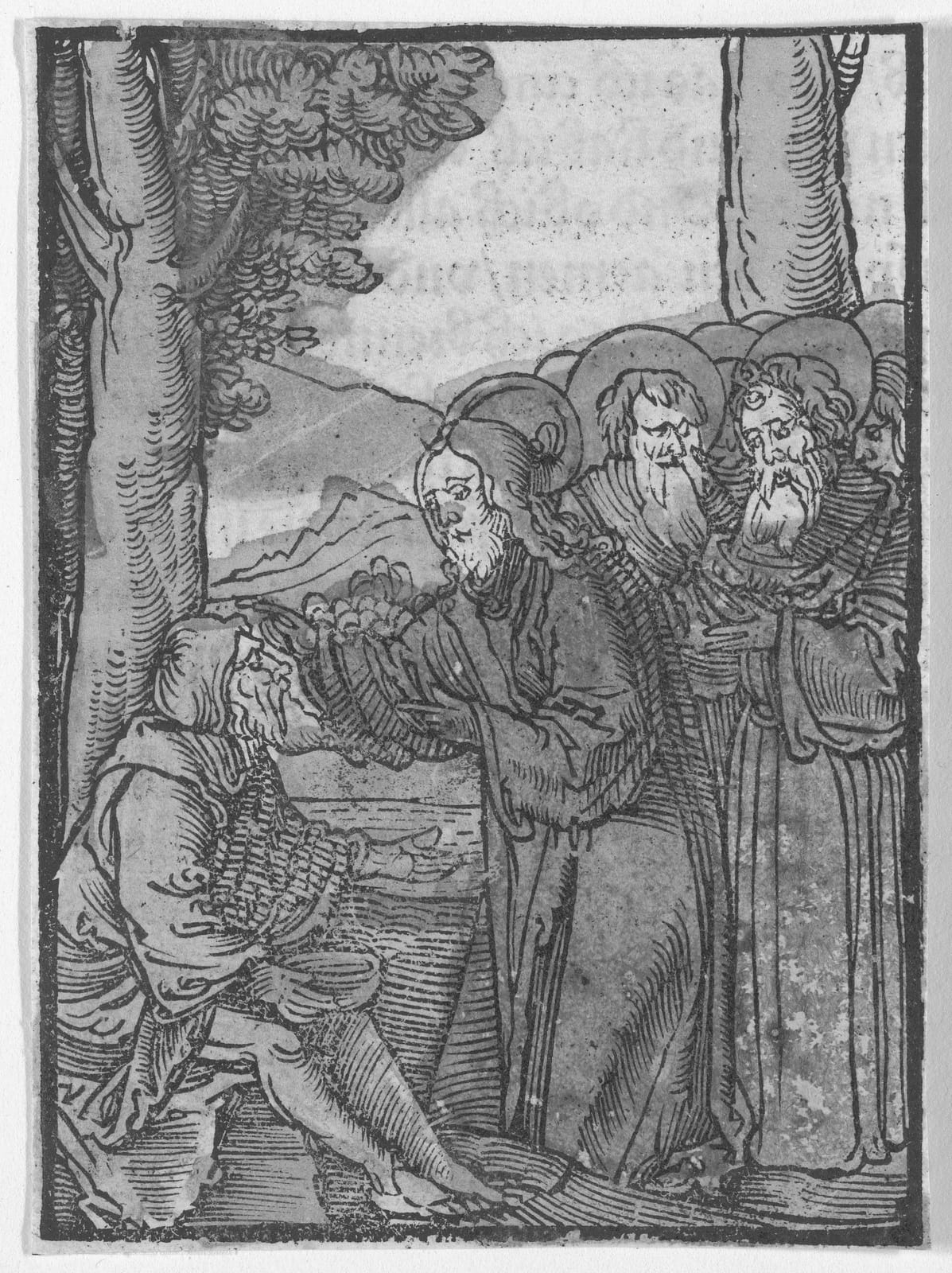
Christ healing a blind man
Hans Schäufelein (1480–1540), Christ Healing the Blind, from Das Plenarium, 1517. Credits

Email view of this day