This day

July 22, 2020

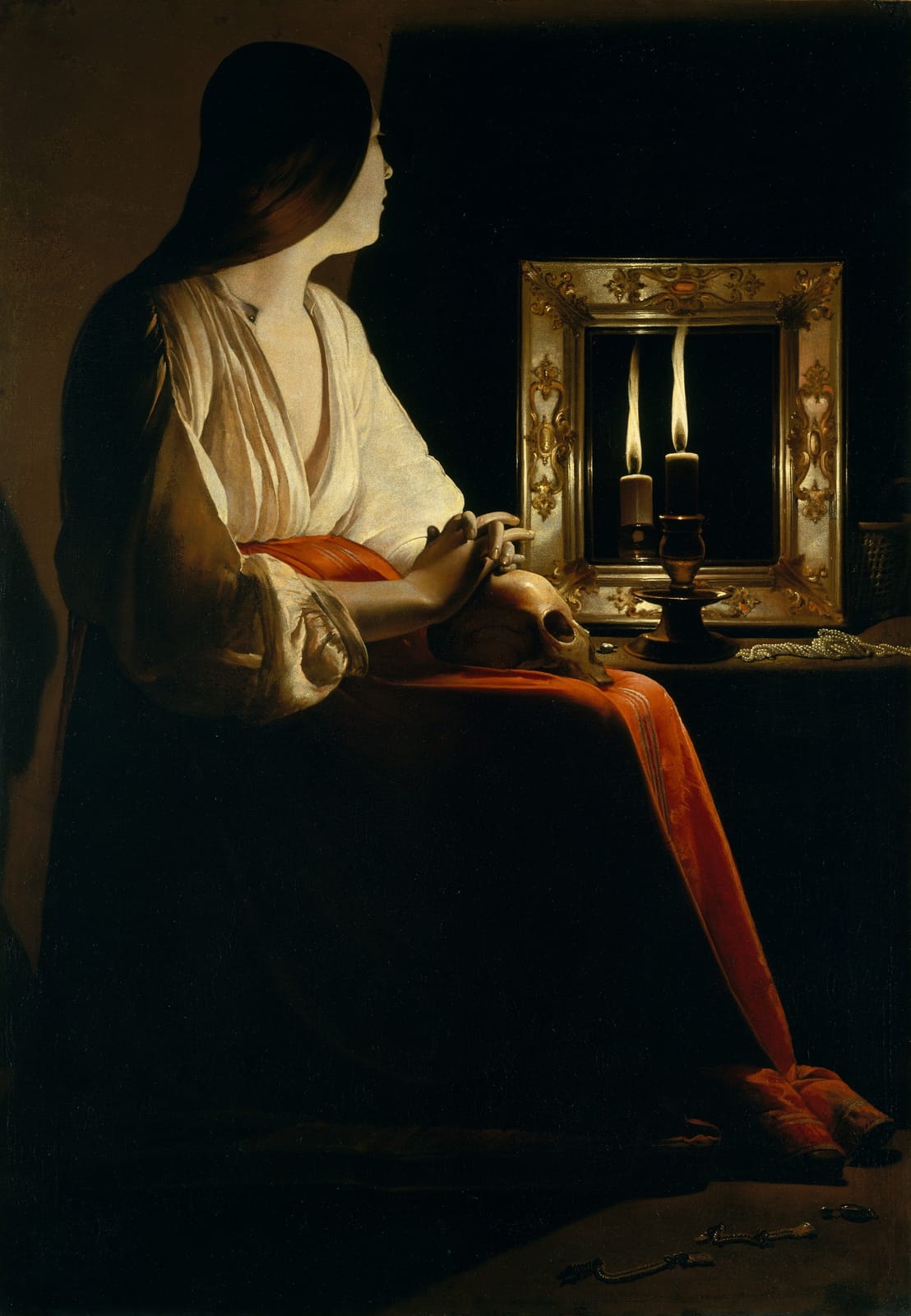
The Penitent Magdalen sits with a skull beside a candle
The Penitent Magdalen, Georges de La Tour (1593–1652), c. 1640. Credits

After Pentecost

July 22, 2020

July 22: St. Mary Magdalen

From Dom Guéranger’s The Liturgical Year.

‘THREE saints,’ said our Lord to St. Bridget of Sweden, 'have been more pleasing to me than all others: Mary my mother, John the Baptist, and Mary Magdalen.’ The Fathers tell us that Magdalen is a type of the Gentile Church, called from the depth of sin to perfect holiness; and, indeed, better than any other, she personifies both the wanderings and the love of the human race, espoused by the Word of God. Like the most illustrious characters of the law of grace, she has her antitype in past ages. Let us follow the history of this great penitent as traced by unanimous tradition: Magdalen’s glory will not be thereby diminished.

When, before all ages, God decreed to manifest His glory, He willed to reign over a world drawn from nothing; and as His goodness was equal to His power, He would have the triumph of supreme love to be the law of that kingdom, which the Gospel likens unto a king who made a marriage for his son.

Passing over the pure intelligences whose nine choirs are filled with divine light, the immortal Son of the King of ages looked down to the extreme limits of creation; there he beheld human nature, made, indeed, to know God, but acquiring that knowledge laboriously; its weakness would better show His divine condescension: with it, then, He chose to contract His alliance.


This week's Sunday: The Seventh Sunday after Pentecost

From Dom Guéranger’s The Liturgical Year.

The dominical cycle of the Time after Pentecost completes to-day its first seven. Previous to the general adoption of the changes introduced into the Sunday Gospels for this portion of the year, the Gospel of the multiplication of the seven loaves gave its name to the seventh Sunday; and the mystery it contains is still evident in more than one section of to-day's liturgy.

As we have already seen, this mystery was that of the consummation of the perfect in the repose or rest of God Himself; it was the fruitful peace of the divine union. Nothing, then, could be more fitting than that Solomon, who is pre-eminently thepeaceful, the sacred and authorized chanter of the nuptial Canticle, should have been selected to come forward, on this day, to speak the praises of infinite Wisdom, and reveal her ways to the children of men. When Easter is kept as late in April as it is possible, the seventh Sunday after Pentecost is the first of the month of August; and the Church then begins, in her night Office, the lessons from the Sapiential Books.

Christ warning the disciples against false prophets
Hans Schäufelein (1480–1540), Christ Warning the Disciples of False Prophets, from Das Plenarium, 1517. Credits

Email view of this day