This day

July 31, 2020

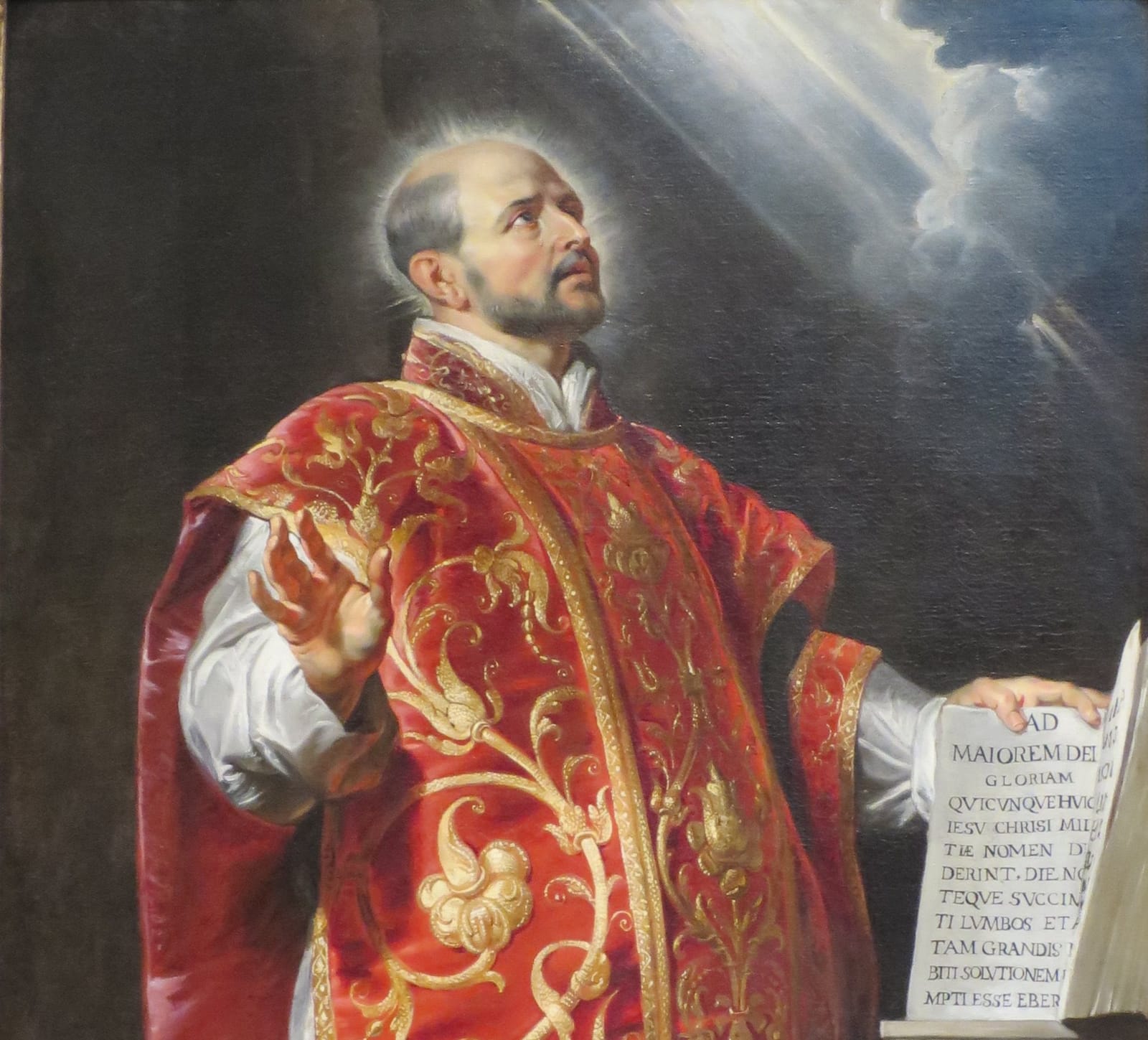
St Ignatius in red chasuble with AMDG book
St Ignatius of Loyola (1491-1556) Founder of the Jesuits. Credits

After Pentecost

July 31, 2020

July 31: St. Ignatius, Confessor

From Dom Guéranger’s The Liturgical Year.

ALTHOUGH the cycle of the time after Pentecost has shown us many times already the solicitude of the Holy Spirit for the defence of the Church, yet to-day the teaching shines forth with a new lustre. In the sixteenth century Satan made a formidable attack upon the Holy City, by means of a man who, like himself, had fallen from the height of heaven, a man prevented in early years by the choice graces which lead to perfection, yet unable in an evil day to resist the spirit of revolt. As Lucifer aimed at being equal to God, Luther set himself up against the Vicar of God, on the mountain of the covenant; and soon, falling from abyss to abyss, he drew after him the third part of the stars of the firmament of Holy Church. How terrible is that mysterious law whereby the fallen creature, be he man or angel, is allowed to keep the same ruling power for evil which he would otherwise have exercised for good. But the designs of eternal Wisdom are never frustrated: against the misused liberty of the angel or man is set up that other merciful law of substitution, by which St. Michæl was the first to benefit.

This week's Sunday: The Eighth Sunday after Pentecost

From Dom Guéranger’s The Liturgical Year.

In the middle ages this Sunday was called the sixth and last Sunday after the Natalis of the apostles (that is, the feast of St. Peter); it was, indeed, the last for the years when Easter had been kept as late in April as was possible; but it was only the first after that feast of St. Peter when Easter immediately followed the spring equinox.

We have already noticed the variable character of this last portion of the liturgical cycle, which is the result of Easter being kept on a different day each year; and that in consequence of this variation this week may be the second in which the Sapiential Books are read, or, what is of more frequent occurrence, the Books of Kings may still be providing the lessons for the Divine Office. In this latter case it is the ancient temple raised by Solomon, the king of peace, to the glory of Jehovah, that engages the Church's attention to-day. We shall find that the portions of the Mass which are chanted on this Sunday are closely connected with the lessons read in last night’s Office.

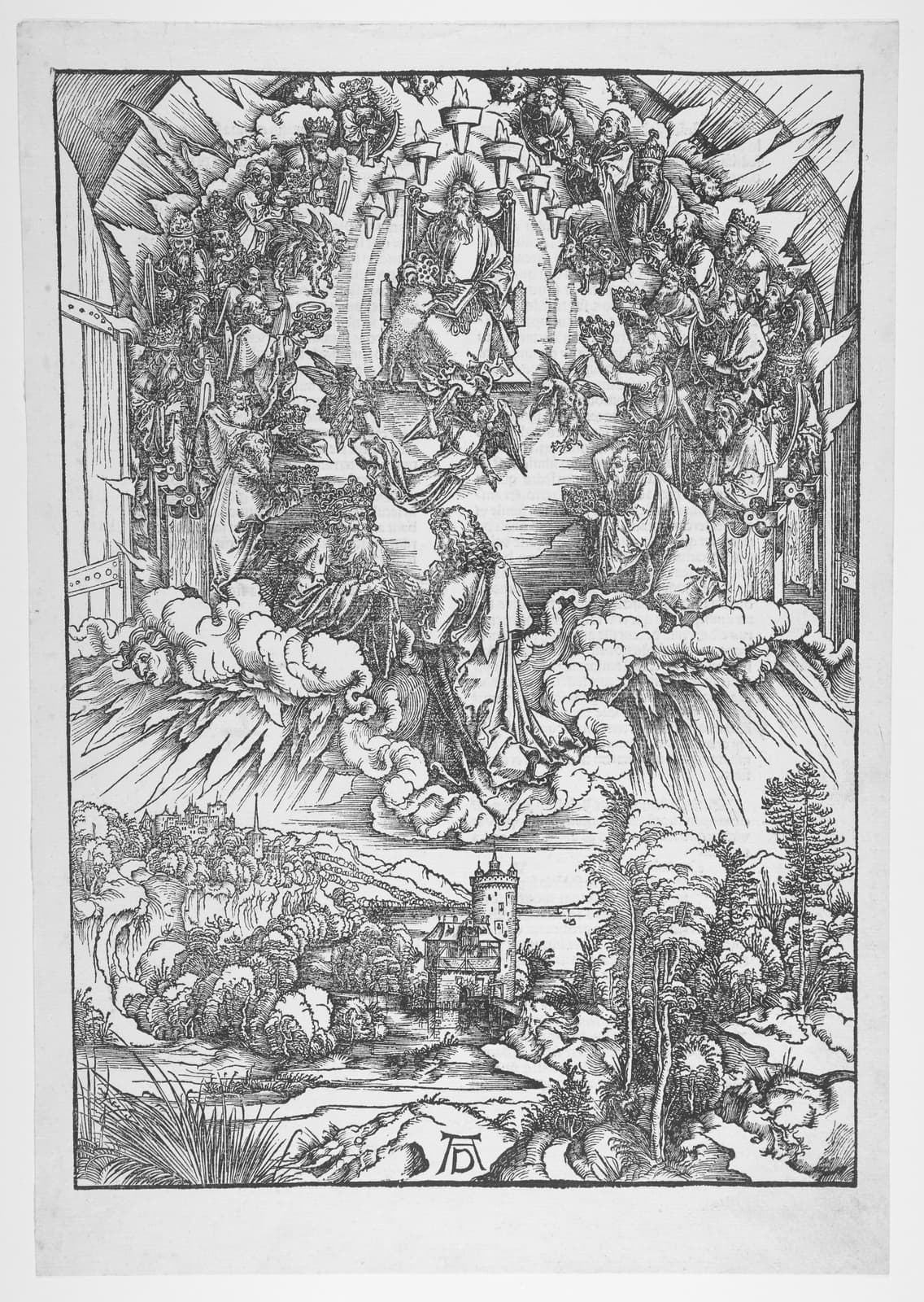
Saint John before God and the elders
Albrecht Dürer (1471–1528), Saint John Before God and the Elders, from The Apocalypse, 1498. Credits

Email view of this day