This day

August 5, 2020

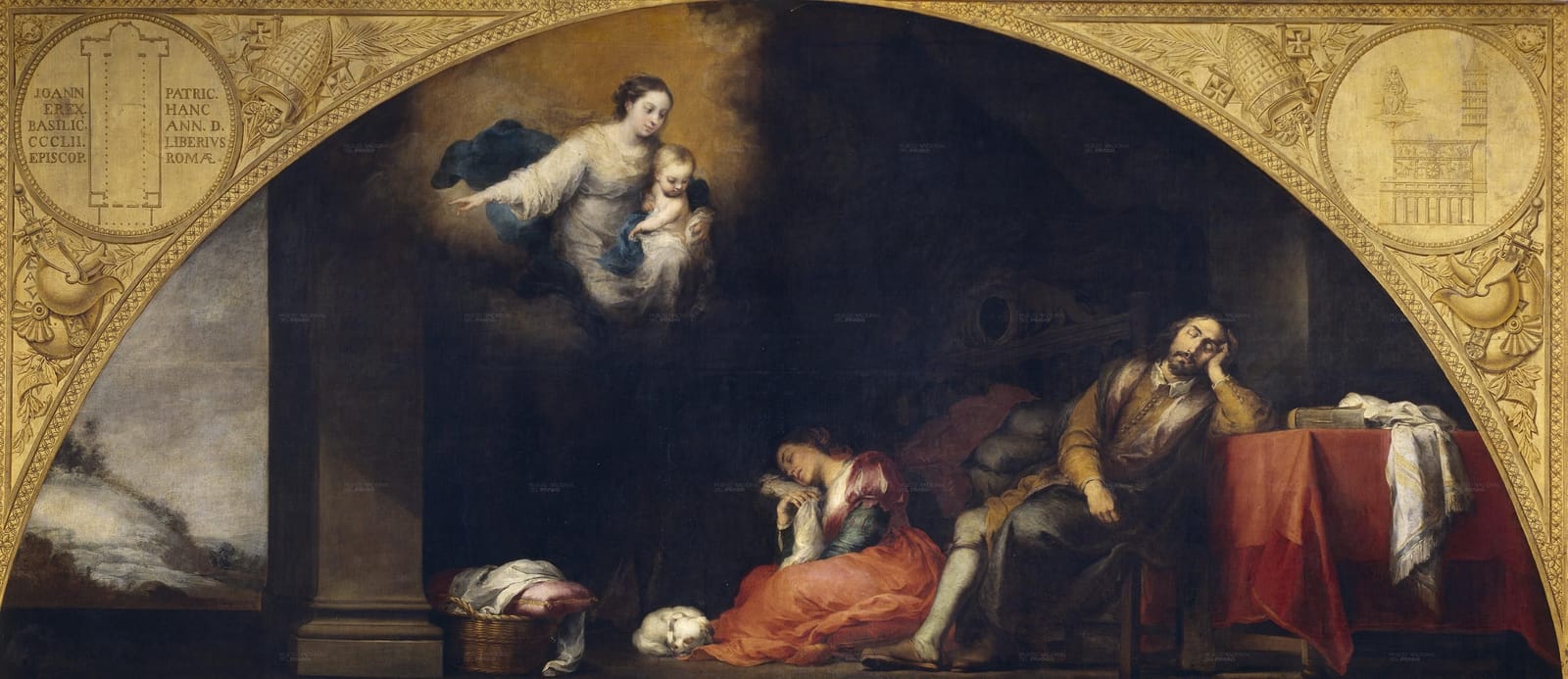
The Dream of the Patrician
The Dream of the Patrician, Bartolomé Esteban Murillo (1617–1682), c. 1664–1665. Credits

After Pentecost

August 5, 2020

August 5: Our Lady of the Snow

From Dom Guéranger’s The Liturgical Year.

ROME, delivered from slavery by Peter on the first of this month, offers to the world a wonderful spectacle. O Wisdom, who, since the glorious Pentecost, hast spread over the whole world, where could it be more true to sing of thee that thou hast trodden the proud heights under thy victorious feet? On seven hills had pagan Rome set up her pageantry and built temples to her false gods; seven churches now appear at the summits on which purified Rome rests her now truly eternal foundations.

By their very site, the basilicas of St. Peter and St. Paul, of St. Laurence and St. Sebastian, placed at the four outer angles of the city of the Cæsars, recall the long siege continued for three centuries around the ancient Rome, while the new Rome was being founded. Helena and her son Constantine, recommencing the work of the foundations of the Holy City, carried the trenches further out; nevertheless, the churches which were their own peculiar work—viz., Holy Cross in Jerusalem, and St. Saviour's on the Lateran, are still at the very entrance of the pagan stronghold, close to the gates, and leaning against the ramparts; just as a soldier, setting foot within a tremendous fortress which has been long invested, advances cautiously, surveying both the breach through which he has just passed, and the labyrinth of unknown paths opening before him.

This week's Sunday: The Ninth Sunday after Pentecost

From Dom Guéranger’s The Liturgical Year.

The lamentation over Jerusalem's woes, the subject of to-day's Gospel, has given its name to this ninth Sunday after Pentecost, at least among the Latins. We have already observed that it is easy to find, even in the liturgy as it now stands, traces of how the early Church was all attention to the approaching fulfilment of the prophecies against Jerusalem—that ungrateful city upon which our Jesus heaped His earliest favours. The last limit put by mercy upon justice has, at length, been passed. Our Lord, speaking of the ruin of Sion and its temple, had foretold that the generation that was listening to His words should not pass until what He had announced should be fulfilled. The almost forty years accorded to Juda, that he might avert the divine wrath, have had no other effect than to harden the people of deicides in their determination not to accept Christ as the Messiah. As a torrent, which, having been long pent back, rushes along all the fiercer when the embankment breaks, vengeance at length burst on the ancient Israel; it was in the year 70 that was executed the sentence he himself had passed when, delivering up his King and God to the Gentiles, he had cried out: 'His blood be upon us and upon our children!'

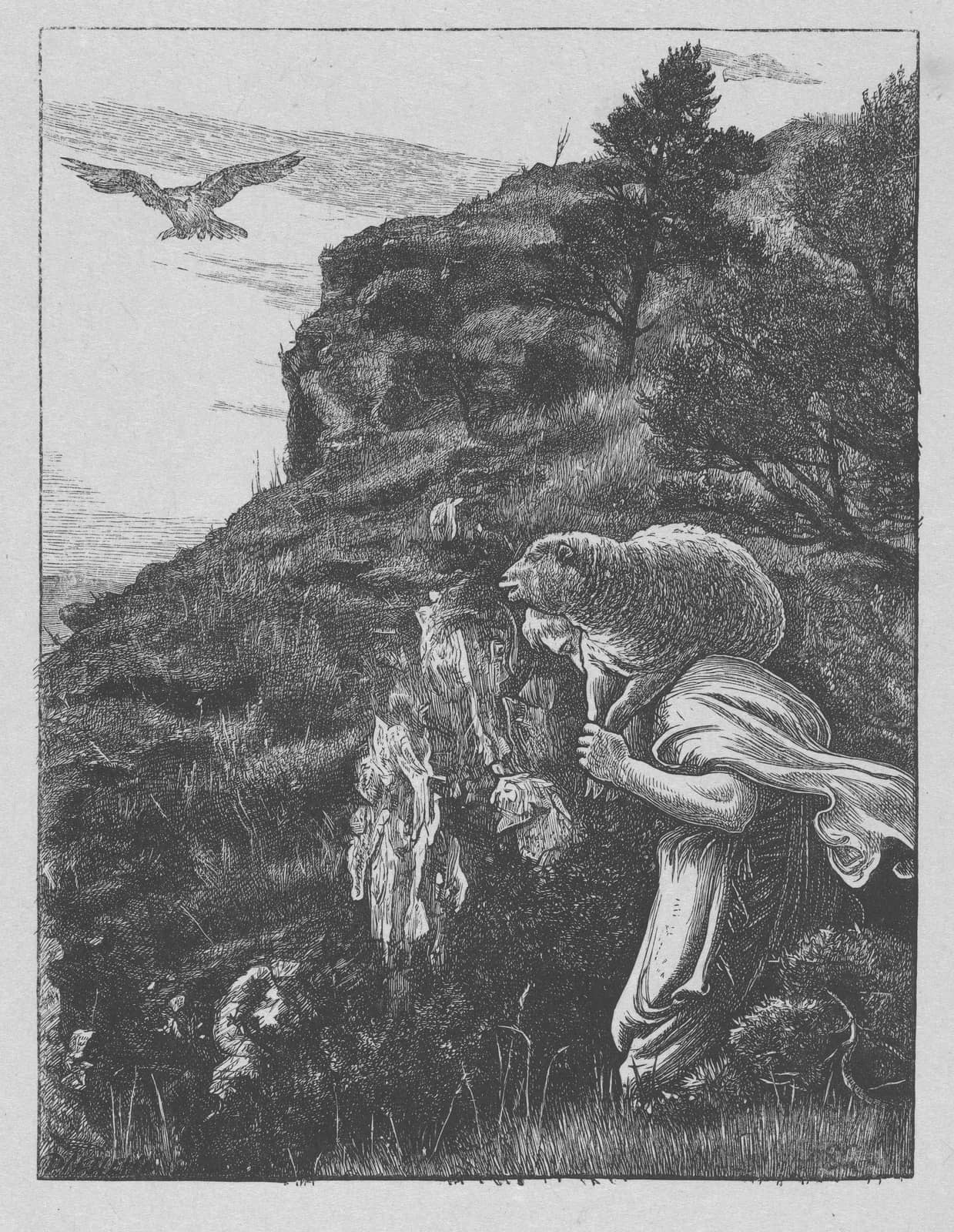
A shepherd carries the lost sheep
Sir John Everett Millais (1829–1896), The Lost Sheep, from The Parables of Our Lord and Saviour Jesus Christ, 1864. Credits

Email view of this day