After Pentecost
August 26, 2020
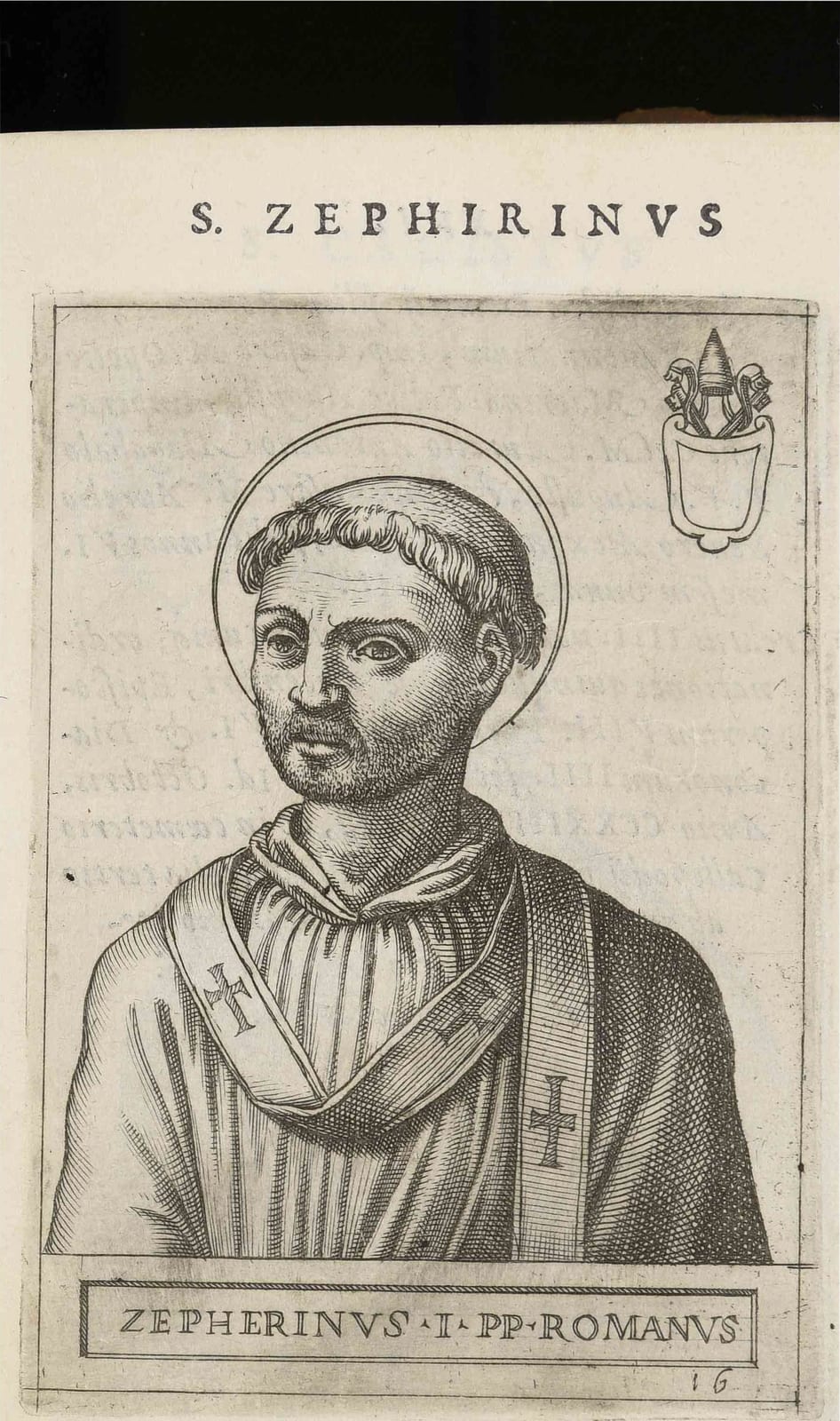
August 26: St. Zephyrinus, Pope and Martyr
From Dom Guéranger’s The Liturgical Year.
Zephyrinus was the first Pontiff to be buried in the celebrated crypt where the Popes of the third century came after their combat to sleep their last sleep. The catacomb which thus succeeded the Vatican cemetery in the honour of sheltering the vicars of Christ, had been opened thirty years before by the virgin martyr Cæcilia. As, when at the point of death, she had consecrated her palace into a church, so now from her tomb she caused her family burialplace to pass into the hands of the Church. This gift of the Cæcilii was the inauguration, in the very face of the pagan government, of common Church property officially recognized by the State. Zephyrinus entrusted the administration of the new cemetery to the person who ranked next to himself in the Roman Church, viz: the archdeacon Callixtus. The holy Pontiff witnessed the growth of heresy concerning the Unity of God and the Trinity of the divine Persons; without the help of the special vocabulary, which was later on to fix even the very terms of theological teaching, he knew how to silence both the Sabellians to whom the Trinity was but a name, and the precursors of Arms, who revenged themselves by reviling him.