After Pentecost
November 10, 2020
A Double leads; Sts. Tryphon, Respicius, and Nympha are commemorated.Rubric
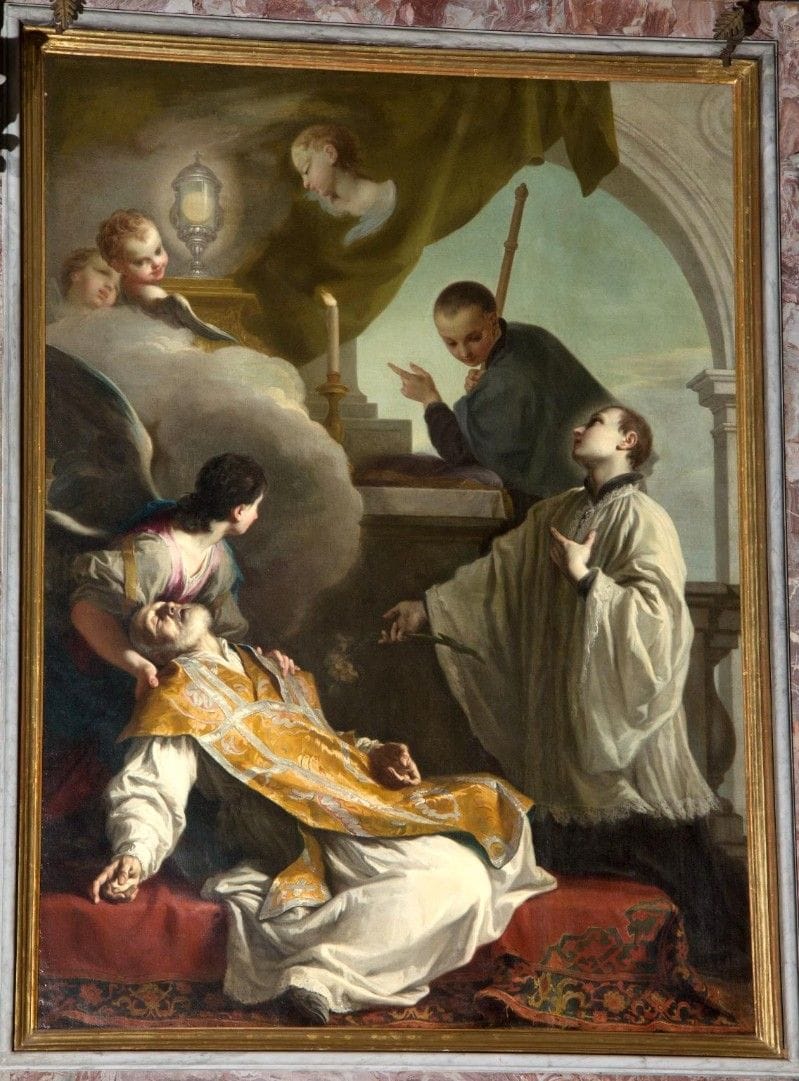
November 10: St. Andrew Avellino, Confessor
From Dom Guéranger’s The Liturgical Year.
IN the sixteenth century, in reply to the reproach of exhaustion hurled against the Church, the Holy Ghost raised from her soil an abundant harvest of sanctity. Andrew was one of his most worthy cooperators in the work of holy reformation and supernatural renaissance, which then took place. Eternal Wisdom had as usual suffered Satan to go before, for his own greater shame, cloaking his evil works under the grand names of renaissance and reform.
It was nine years since St. Cajetan had departed this world, leaving it strengthened by his labours and all embalmed with the fragrance of his virtues; the former Bishop of Theate, his companion and collaborator in founding the first Regular Clerks, was now governing the Church under the name of Paul IV.; when in 1556 God bestowed upon the Theatines, in the person of our Saint, an heir to the supernatural gifts, the heroic sanctity, and the zeal for the sanctuary, that had characterized their father. Andrew was the friend and support of the great Bishop of Milan, St. Charles Borromeo, whose glory in heaven he went to share on this day.