This day

February 13, 2021

Septuagesima

February 13, 2021

Saturday of Sexagesima Week

From Dom Guéranger’s The Liturgical Year.

On the Saturday of the preceding week, which was devoted to the consideration of the fall of our first parents both in its own malice and in its sad consequences upon us, we turned our thoughts towards our blessed Lady, who, though a daughter of Eve, was, by the special mercy of God, preserved from the stain of original sin. Let us end this week with a like act of veneration and love towards this Immaculate Queen of heaven. We, even the most saintly among us, have not only been stained with original sin; we have our actual sins to grieve over and do penance for. This should give us a higher appreciation of her, the one single member of the human family who never committed the slightest sin. Let us turn towards her, and give expression to our feelings.

We, O Mary! have corrupted our way; we have disobeyed our Lord; we have broken His law; we have preferred our own selfish gratifications to the service we owed Him: but thou wast ever filled with His holy love, and there passed not even a shadow of sin upon thy soul, O spotless mirror of justice and holiness!


This week's Sunday: Sexagesima Sunday

From Dom Guéranger’s The Liturgical Year.

The Church offers to our consideration, during this week of Sexagesima, the history of Noah and the deluge. Man has not profited by the warnings already given him. God is obliged to punish him once more, and by a terrible chastisement. There is found out of the whole human race one just man; God makes a covenant with him, and with us through him. But, before He draws up this new alliance, He would show that He is the sovereign Master, and that man, and the earth whereon he lives, subsist solely by His power and permission.

As the ground-work of this week’s instructions, we give a short passage from the Book of Genesis: it is read in the Office of this Sunday’s Matins.

De Libro Genesis.
Cap. vi.
Videns autem Deus quod multa malitia hominum esset in terra, et cuncta cogitatio cordis intenta esset ad malum omni tempore, pœnituit eum quod hominem fecisset in terra. Et tactus dolore cordis intrinsecus: Delebo, inquit, hominem quem creavi, a facie terræ, ab homine usque ad animantia, a reptili usque ad volucres cœli, pœnitet enim me fecisse eos.

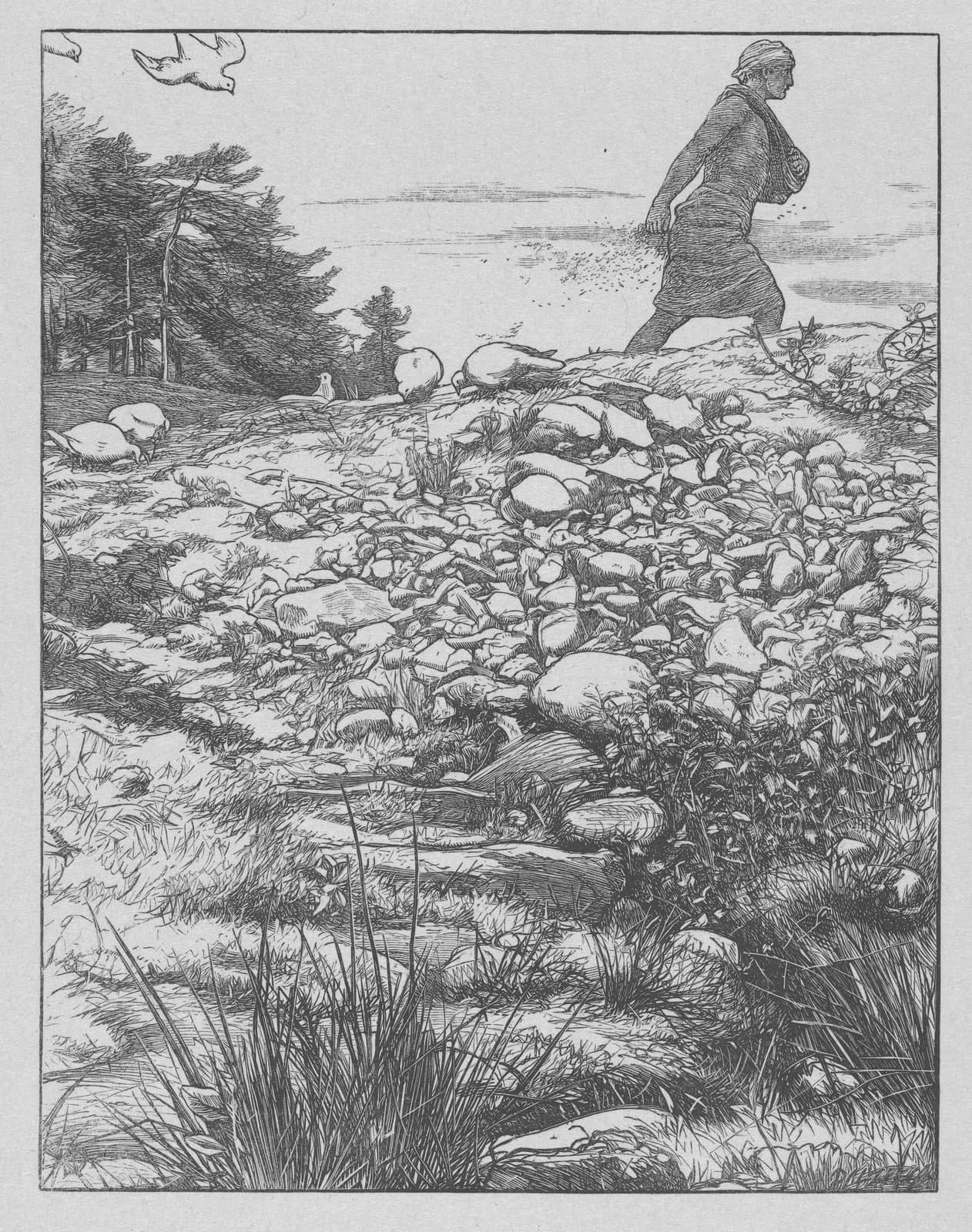
A sower scatters seed on rocky and thorny ground
Sir John Everett Millais (1829–1896), The Sower, from The Parables of Our Lord and Saviour Jesus Christ, 1864. Credits

Email view of this day