Septuagesima
February 15, 2022
February 15: Sts. Faustinus and Jovita, Martyrs
From Dom Guéranger’s The Liturgical Year.
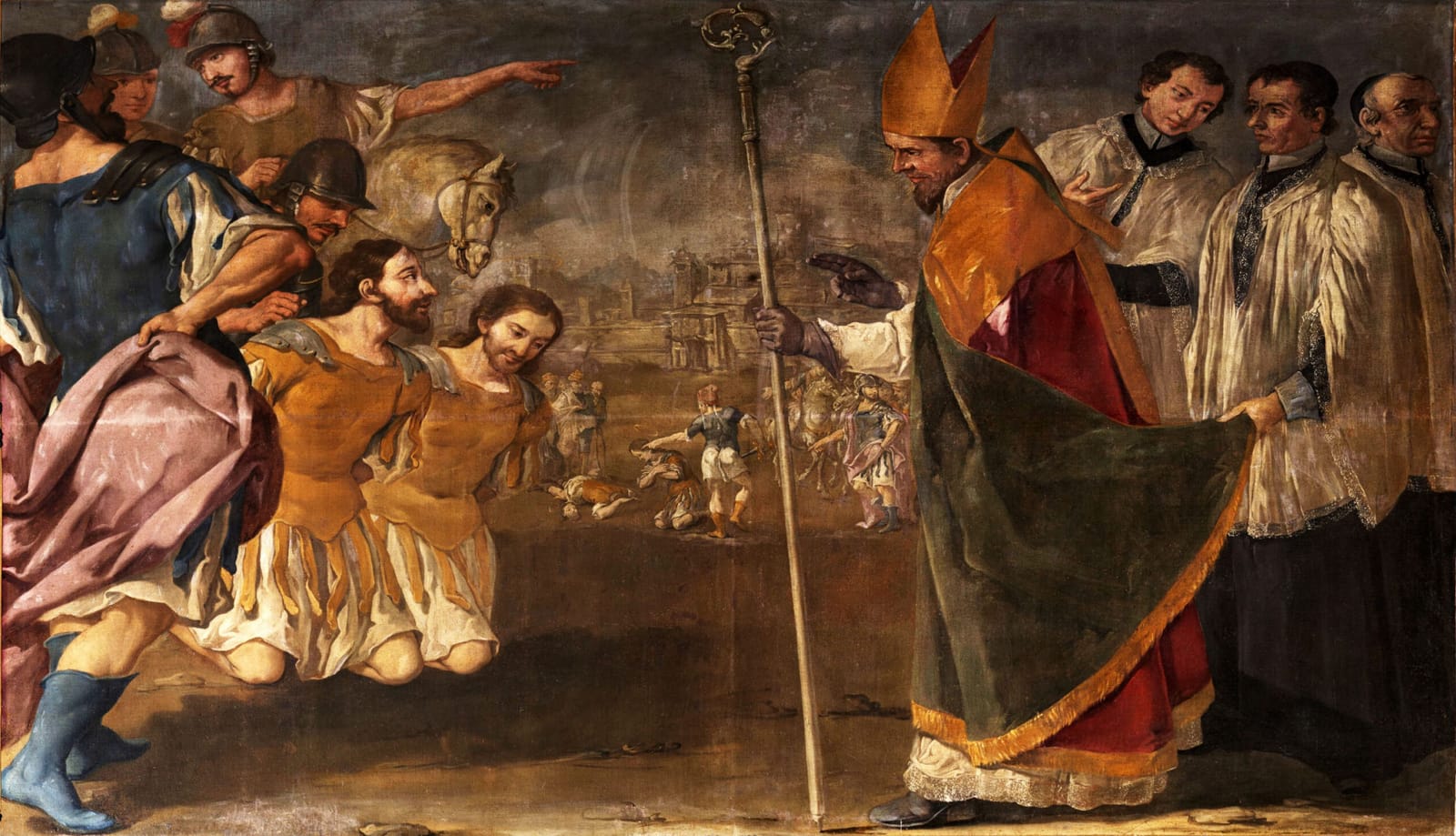
The two brothers whom we are to honour to-day suffered martyrdom in the beginning of the second century, and their memory has ever been celebrated in the Church. The glory of the great ones of this world passes away, and men soon forget even their very names. Historians have oftentimes a difficulty in proving that such heroes ever existed, or, if they did exist, that they flourished at such a period, or achieved anything worth notice. Brescia, the capital of one of the Italian provinces, can scarcely mention the names of those who were its governors or leading men in the second century; and yet here are two of her citizens, whose names will be handed down, with veneration and love, to the end of the world, and the whole of Christendom is filled with the praise of their glorious martyrdom. Glory, then, to these sainted brothers, whose example so eloquently preaches to us the great lesson of our season, fidelity in God's service.
The sufferings which merited for them the crown of immortality, are thus recorded in the liturgy: Faustinus et Jovita fratres nobiles Brixiani, in multis Italiæ urbibus quo vincti, sæviente Trajani persecutione, ducebantur, acerbissima supplicia perpessi, fortes in Christianæ fidei confessione perstiterunt.