This day

July 26, 2022

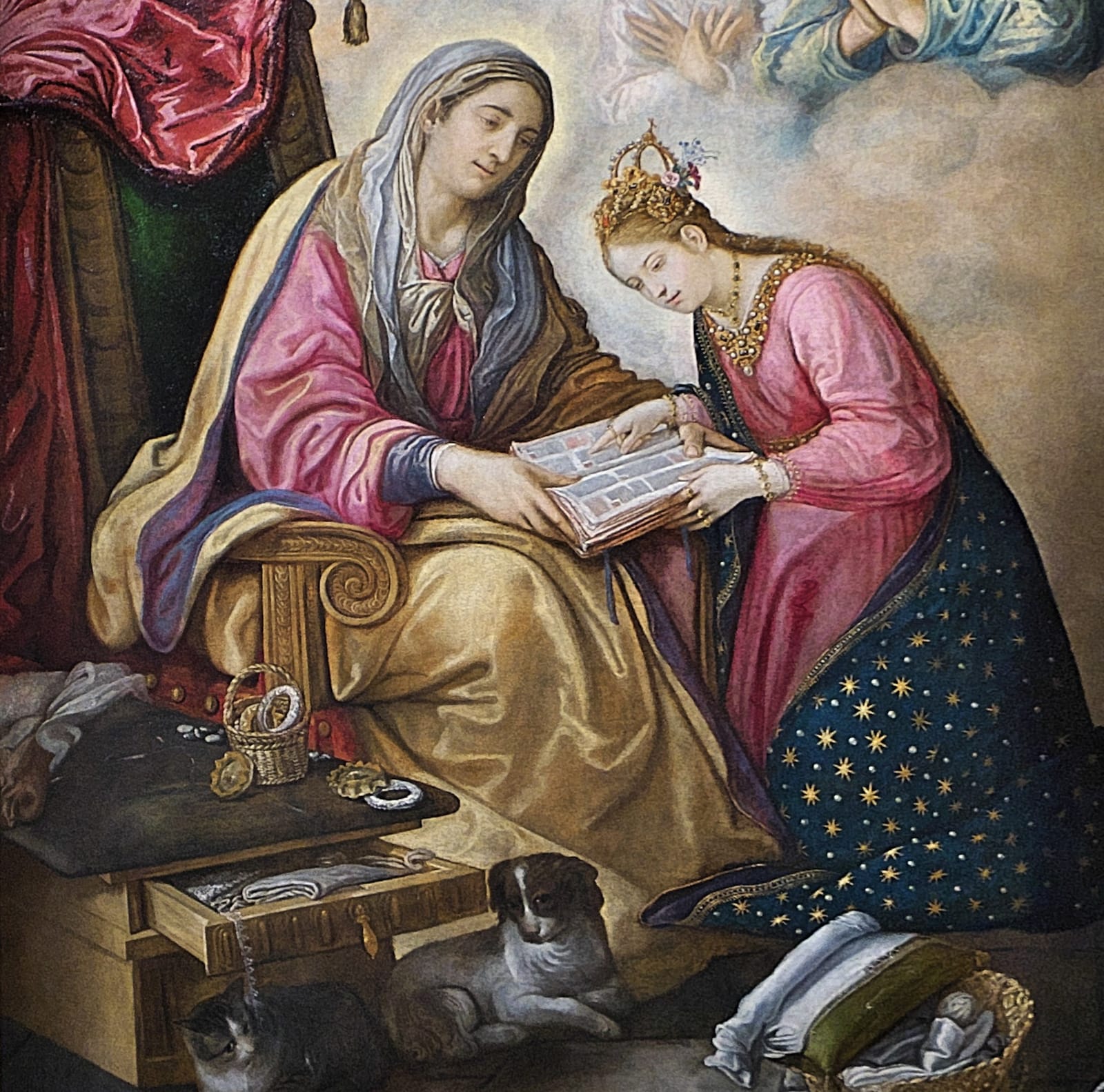
Saint Anne teaching the Virgin to read (cropped below cherubs, clear of frame)
Saint Anne Teaching the Virgin, Juan de Roelas (1558–1625), c. 1610–1615. Credits

After Pentecost

July 26, 2022

July 26: St. Anne, Mother of the Blessed Virgin Mary

From Dom Guéranger’s The Liturgical Year.

UNITING the blood of kings with that of pontiffs, the glory of Anne’s illustrious origin is far surpassed by that of her offspring, without compare among the daughters of Eve. The noblest of all who have ever conceived by virtue of the command to ‘increase and multiply,’ beholds the law of human generation pause before her as having arrived at its summit, at the threshold of God; for from her fruit God Himself is to come forth, the fatherless Son of the Blessed Virgin, and the grandson of Anne and Joachim.

Before being favoured with the greatest blessing ever bestowed on an earthly union, the two holy grandparents of the Word made Flesh had to pass through the purification of suffering. Traditions which, though mingled with details of less authenticity, have come down to us from the very beginning of Christianity, tell us of these noble spouses subjected to the trial of prolonged sterility, and on that account despised by their people; of Joachim cast out of the temple and going to hide his sorrow in the desert; of Anne left alone to mourn her widowhood and humiliation.


This week's Sunday: The Seventh Sunday after Pentecost

From Dom Guéranger’s The Liturgical Year.

The dominical cycle of the Time after Pentecost completes to-day its first seven. Previous to the general adoption of the changes introduced into the Sunday Gospels for this portion of the year, the Gospel of the multiplication of the seven loaves gave its name to the seventh Sunday; and the mystery it contains is still evident in more than one section of to-day's liturgy.

As we have already seen, this mystery was that of the consummation of the perfect in the repose or rest of God Himself; it was the fruitful peace of the divine union. Nothing, then, could be more fitting than that Solomon, who is pre-eminently thepeaceful, the sacred and authorized chanter of the nuptial Canticle, should have been selected to come forward, on this day, to speak the praises of infinite Wisdom, and reveal her ways to the children of men. When Easter is kept as late in April as it is possible, the seventh Sunday after Pentecost is the first of the month of August; and the Church then begins, in her night Office, the lessons from the Sapiential Books.

The parable of the banquet whose invited guests stayed away
Hans Schäufelein (1480–1540), The Parable of the Banquet without Guests, from Das Plenarium, 1517. Credits

Email view of this day