This day

October 21, 2022

After Pentecost

October 21, 2022

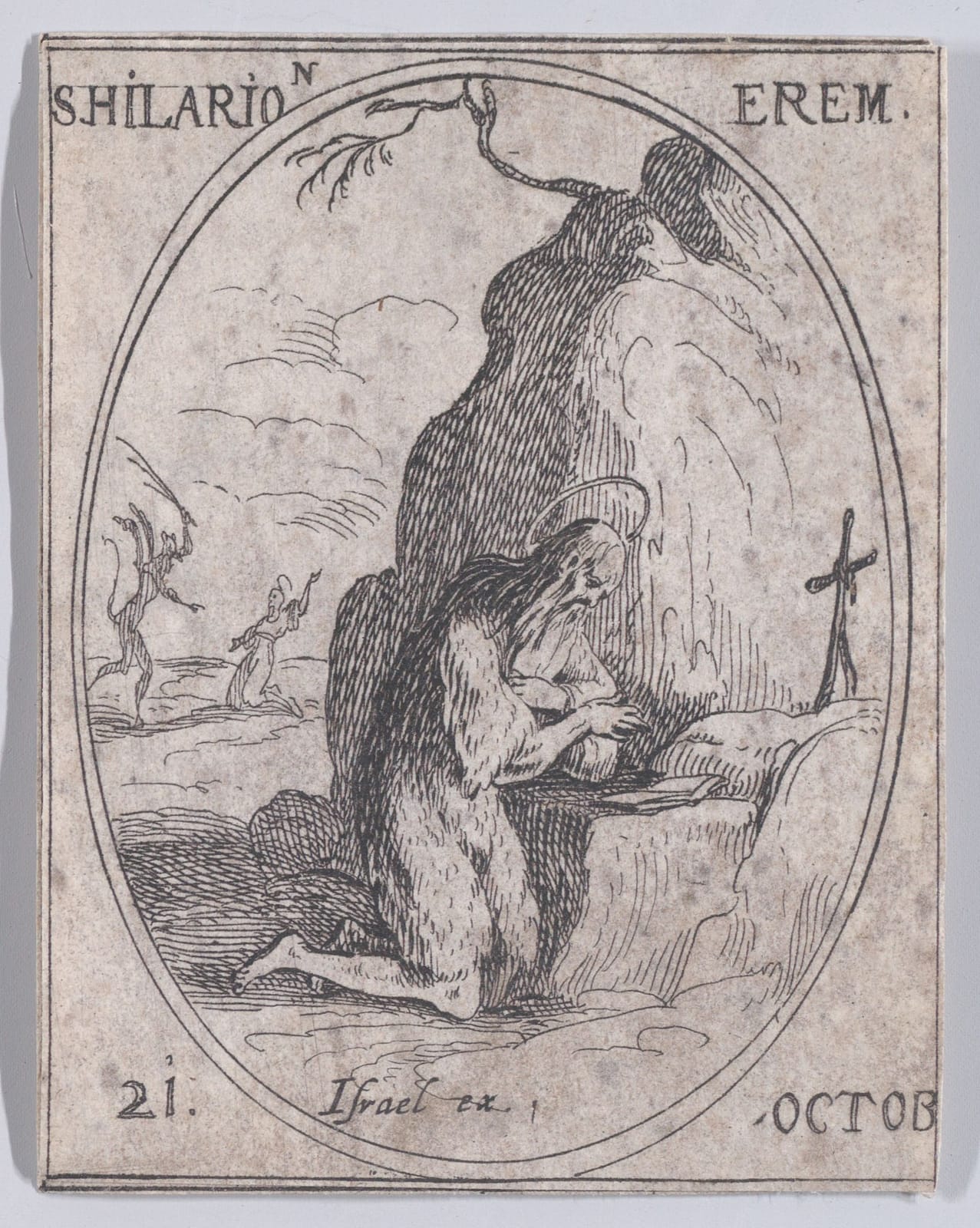
October 21: St. Hilarion, Abbot

From Dom Guéranger’s The Liturgical Year.

‘Monks were unknown in Syria before St. Hilarion,' says his historian St. Jerome. ‘He instituted the monastic life in that country, and was the master of those who embraced it. The Lord Jesus had His Anthony in Egypt and His Hilarion in Palestine, the former advanced in years, the latter still young.' Now our Lord very soon raised this young man to such glory, that Anthony would say to the sick, who came to him from Syria attracted by the fame of his miracles: ‘Why take the trouble to come so far, when you have near you my son Hilarion?' And yet Hilarion had spent only two months with Anthony; after which the patriarch had said to him: ‘Persevere to the end, my son; and thy labour will win thee the delights of heaven.' Then, giving a hair-shirt and a garment of skin to this boy of fifteen whom he was never to see again, he sent him back to sanctify the solitudes of his own country, while he himself retired farther into the desert.

The enemy of mankind, foreseeing a formidable adversary in this new solitary, waged a terrible war against him.
Chapter 8: Of the Office of Compline for Sundays and Feasts during the Time after Pentecost

From Dom Guéranger’s The Liturgical Year.

This Office, which concludes the day, commences by a warning of the dangers of the night; then immediately follows the public confession of our sine, as a powerful means of propitiating the divine justice, and of obtaining God’s help, now that we are going to spend so many hours in the unconscious, and therefore dangerous, state of sleep, which is also such an image of death.

May the almighty Lord grant us a quiet night, and a perfect end.
℟. Amen.

The lector then reads these words, from the first Epistle of St. Peter: Fratres: Sobrii estote et vigilate: quia adversarius vester diabolus tamquam leo rugiens circuit, quærens quem devoret: cui resistite fortes in fide. Tu autem, Domine, miserere nobis.

Brethren, be sober and watch: because your adversary the devil, as a roaring lion, goeth about seeking whom he may devour: whom resist ye, strong in faith. But thou, O Lord, have mercy on us.

Then the Lord’s Prayer is recited in secret; after which the priest says the Confiteor, and when he has finished, the choir repeats it. The priest, having pronounced the general form of absolution, says:

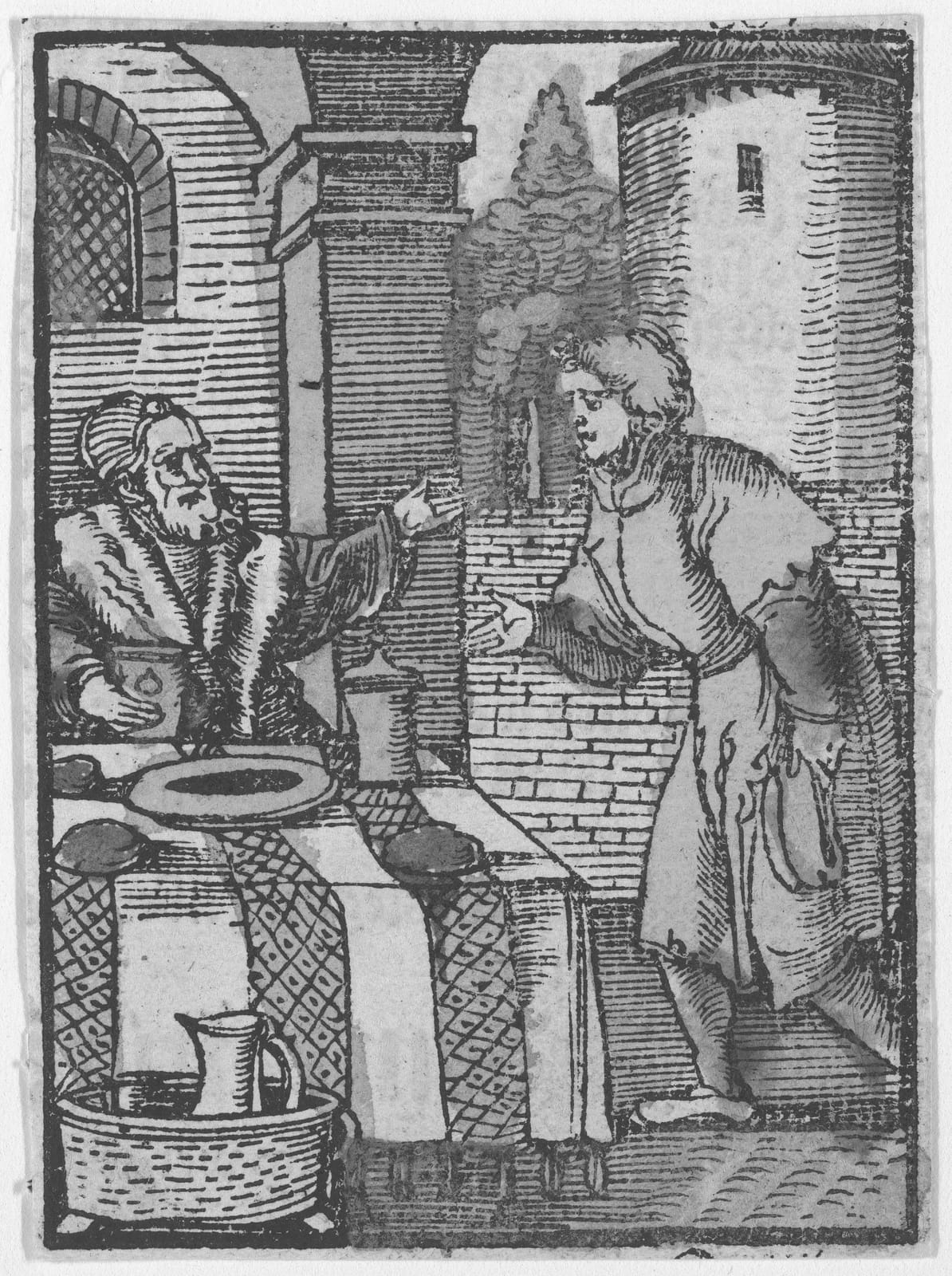
The parable of the banquet whose invited guests stayed away
Hans Schäufelein (1480–1540), The Parable of the Banquet without Guests, from Das Plenarium, 1517. Credits

Email view of this day