Septuagesima
February 10, 2023
A Double leads the weekday.Rubric
February 10: St. Scholastica, Virgin
From Dom Guéranger’s The Liturgical Year.
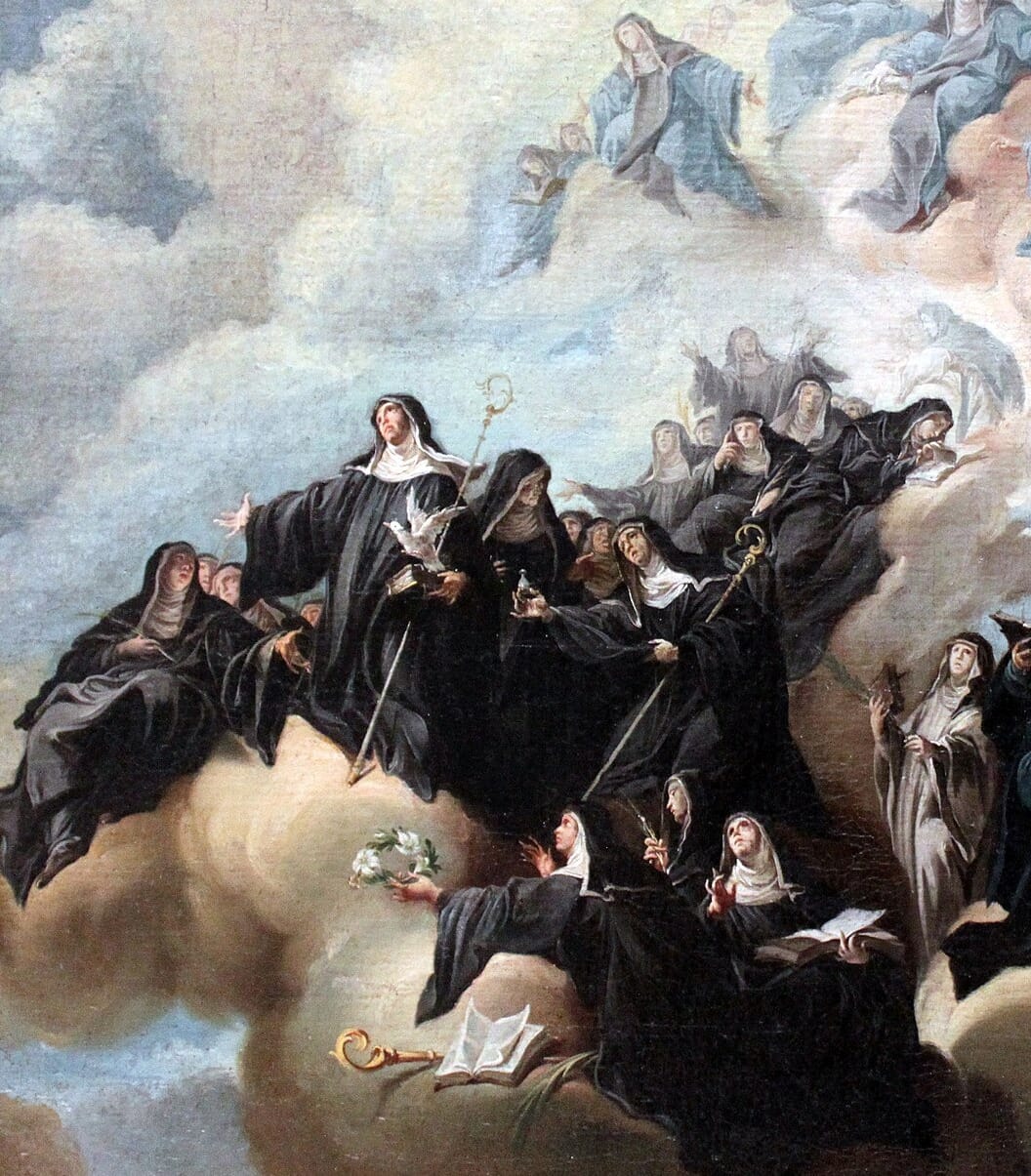
The sister of the patriarch St. Benedict comes to us to-day, sweetly inviting us to follow her to heaven. Apollonia the martyr is succeeded by Scholastica, the fervent daughter of the cloister. Both of them are the brides of Jesus, both of them wear crowns, for both of them fought hard, and won the palm. Apollonia’s battle was with cruel persecutors, and in those hard times when one had to die to conquer; Scholastica’s combat was the lifelong struggle, whose only truce is the soldier’s dying breath. The martyr and the nun are sisters now in the Heart of Him they both so bravely loved.
God, in His infinite wisdom, gave to St. Benedict a faithful co-operatrix, a sister of such angelic gentleness of character, that she would be a sort of counterpoise to the brother, whose vocation, as the legislator of monastic life, needed a certain dignity of grave and stern resolve. We continually meet with these contrasts in the lives of the saints; and they show us that there is a link, of which flesh and blood know nothing; a link which binds two souls together, gives them power, harmonizes their differences of character, and renders each complete.