This day

July 7, 2023

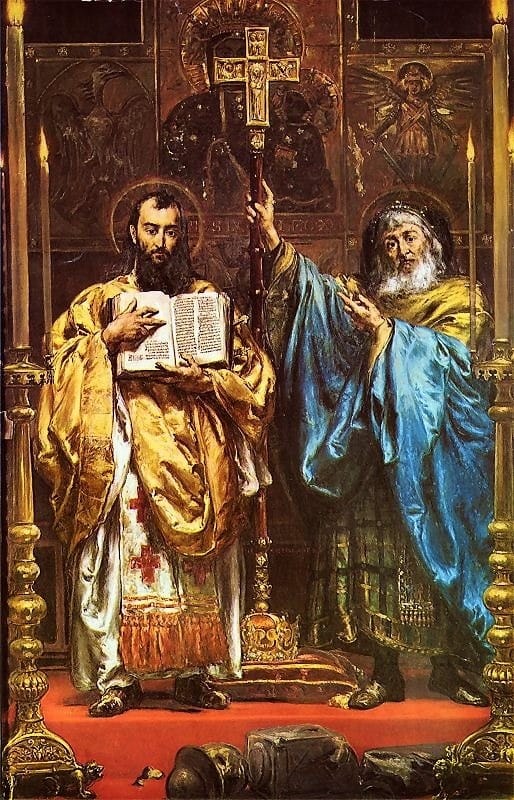
Ss Cyril and Methodius as bishop-missionaries
Cyril and Methodius. Credits

After Pentecost

July 7, 2023

July 7: Sts. Cyril and Methodius, Bishops and Confessors, Apostles of the Slavs

From Dom Guéranger’s The Liturgical Year.

TWIN stars this day arise in the heavens of holy Church, illuminating by the radiant beams of their apostolate immense tracts of country. Seeing that they start from Byzantium, one is at first led to suppose that their evolution is going to be performed independently of the laws which Rome has the right to dictate for the movement of the heavens, whereof it is said that they shall declare the glory of God and the works of his hand. But the auspicious influence of St Clement I, through his sacred relics, diverts their course, as we shall see, towards the mistress of the world; and presently they can be descried gravitating with matchless splendour in Peter's orbit, manifesting once more to the whole earth that all true light, in the order of salvation, radiates solely from the Vicar of the Man-God. Then once again is realized that word of the psalmist, that there are no speeches nor languages where the voices of the messengers of light are not heard.

To the sudden and splendid outburst of the good tidings that marked the first centuries of our era had succeeded the labours of the second apostolate, to which the Holy Ghost entrusted the gathering in of those new nations called by divine Wisdom to replace the ancient world.

This week's Sunday: The Fifth Sunday after Pentecost

From Dom Guéranger’s The Liturgical Year.

This Sunday, which, with the Greeks, is called the fifth of St. Matthew, was known by the Latins as the Sunday of the fishing; such was its name up to the time when the Church transferred to the previous Sunday the Gospel which suggested that title. The week which it commences is, in some ancient lectionaries, called the 'first after the feast of the apostles' or of St. Peter; in others it is the second or third after the same feast; these, and similar varieties of names, which it is no rare thing to find in the liturgical books of the Middle Ages, are due to the fact that Easter was kept earlier or later in the years when those books were written.

The Church began last night the reading of the second Book of Kings, which opens with the description of Saul's sad end and David's accession to the throne of Israel. The exaltation of Jesse’s son is the climax to the prophetic life of the ancient people. In David God had found His faithful servant, and He resolved to exhibit him to the world as the most perfect figure of the future Messiah.

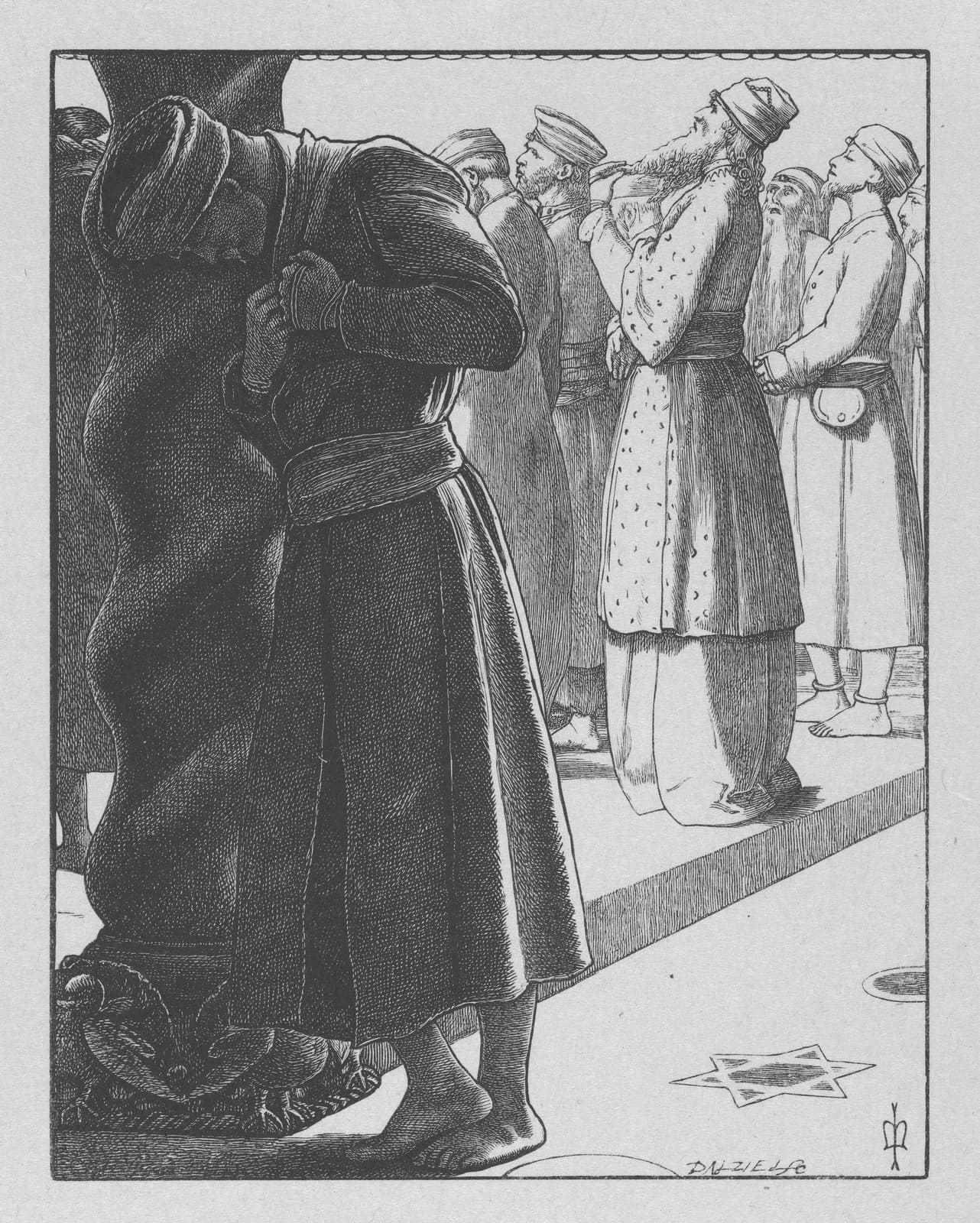
The Pharisee and the publican in the Temple
Sir John Everett Millais (1829–1896), The Pharisee and the Publican, from The Parables of Our Lord and Saviour Jesus Christ, 1864. Credits

Email view of this day