This day

September 27, 2023

After Pentecost

September 27, 2023

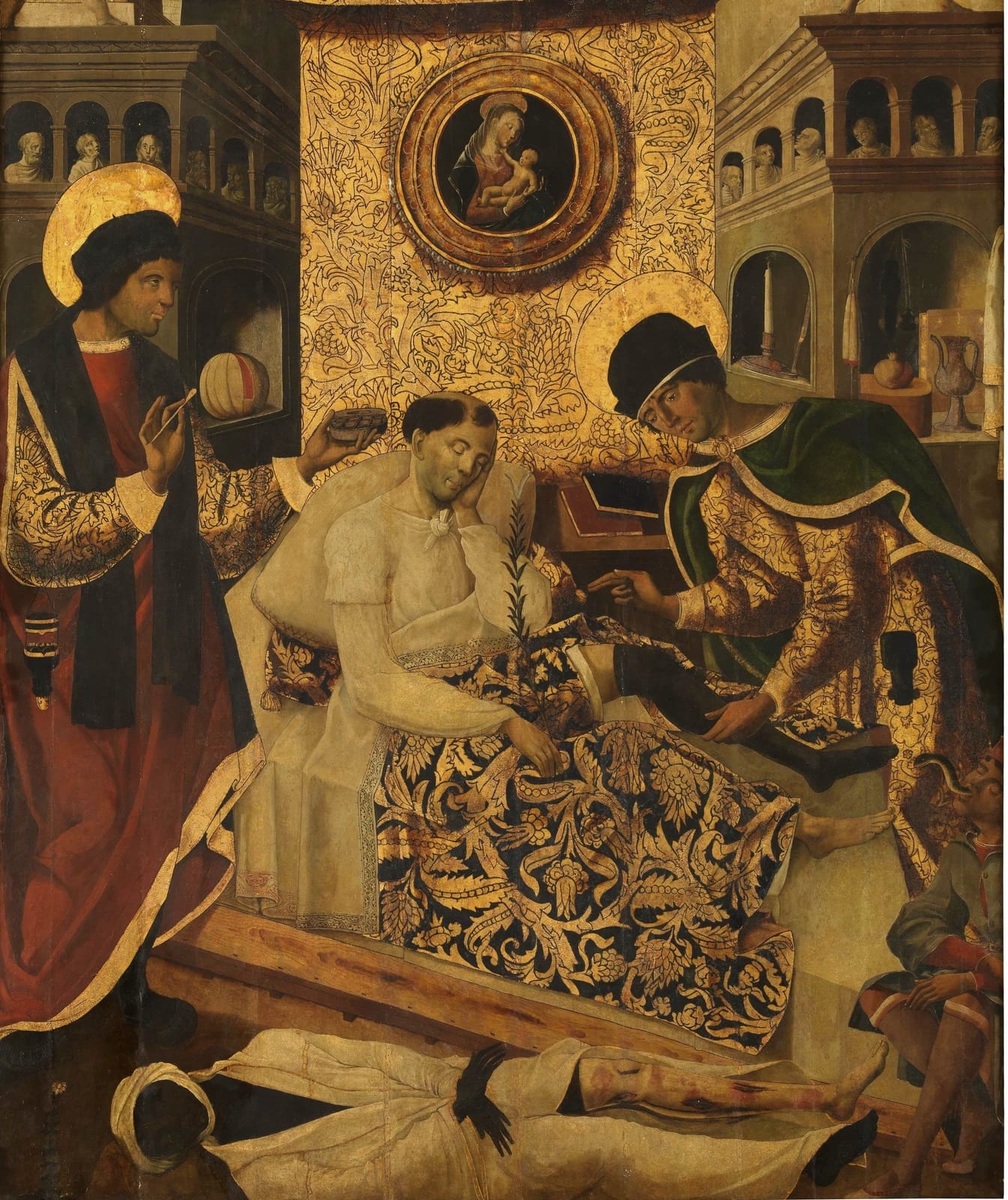
September 27: Sts. Cosmas and Damian, Martyrs

From Dom Guéranger’s The Liturgical Year.

Honour the physician for the need thou hast of him: for the Most High hath created him. For all healing is from God, and he shall receive gifts of the king. The skill of the physician shall lift up his head, and in the sight of great men he shall be praised. The Most High hath created medicines out of the earth, and a wise man will not abhor them. Was not bitter water made sweet with wood? The virtue of these things is come to the knowledge of men, and the Most High hath given knowledge to men, that He may be honoured in Mis wonders. By these he shall cure and shall allay their pains, and of these the apothecary shall make sweet confections, and shall make up ointments of health, and of his works there shall be no end. For the peace of God is over the face of the earth. My son, in thy sickness neglect not thyself, but pray to the Lord, and He shall heal thee. Turn away from sin and order thy hands aright, and cleanse thy heart from all offence.

This week's Sunday: The Seventeenth Sunday after Pentecost

From Dom Guéranger’s The Liturgical Year.

The Gospel, which is now assigned to the Mass of the seventeenth Sunday, has given it the name of the Sunday of the love of God, dating, that is, from the time when the Gospel of the cure of the dropsy and of the invitation to the wedding-feast was anticipated by eight days. Previously even to that change, and from the very first, there used to be read, on this seventeenth Sunday, another passage from the new Testament, which is no longer found in this series of Sundays: it was the Gospel which mentions the difficulty regarding the resurrection of the dead, which the Sadducees proposed to our Lord.

The judgments of God are always just, whether it be, in His justice, humbling the proud, or, in His mercy, exalting the humble. This day last week we saw this sovereign disposer of all things, allotting to each his place at the divine banquet. Let us recall to mind the behaviour of the guests, and the respective treatment shown to the humble and the proud.

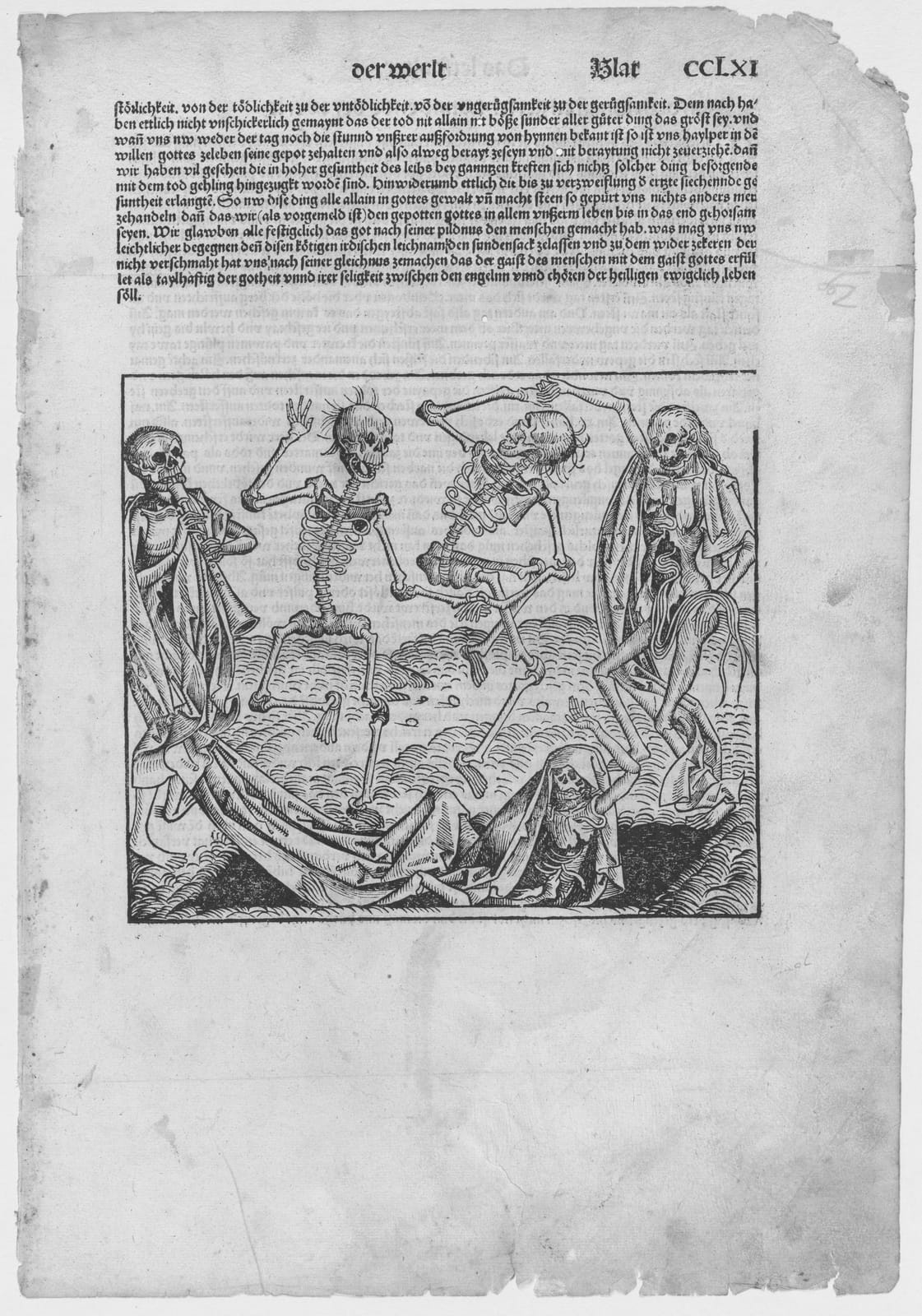
The dance of death, a leaf from the Nuremberg Chronicle
Michael Wolgemut (1434–1519), Dance of Death, from The Nuremberg Chronicle, 1493. Credits

Email view of this day