After Pentecost
November 8, 2023
A Double leads; the Four Crowned Martyrs are commemorated.Rubric
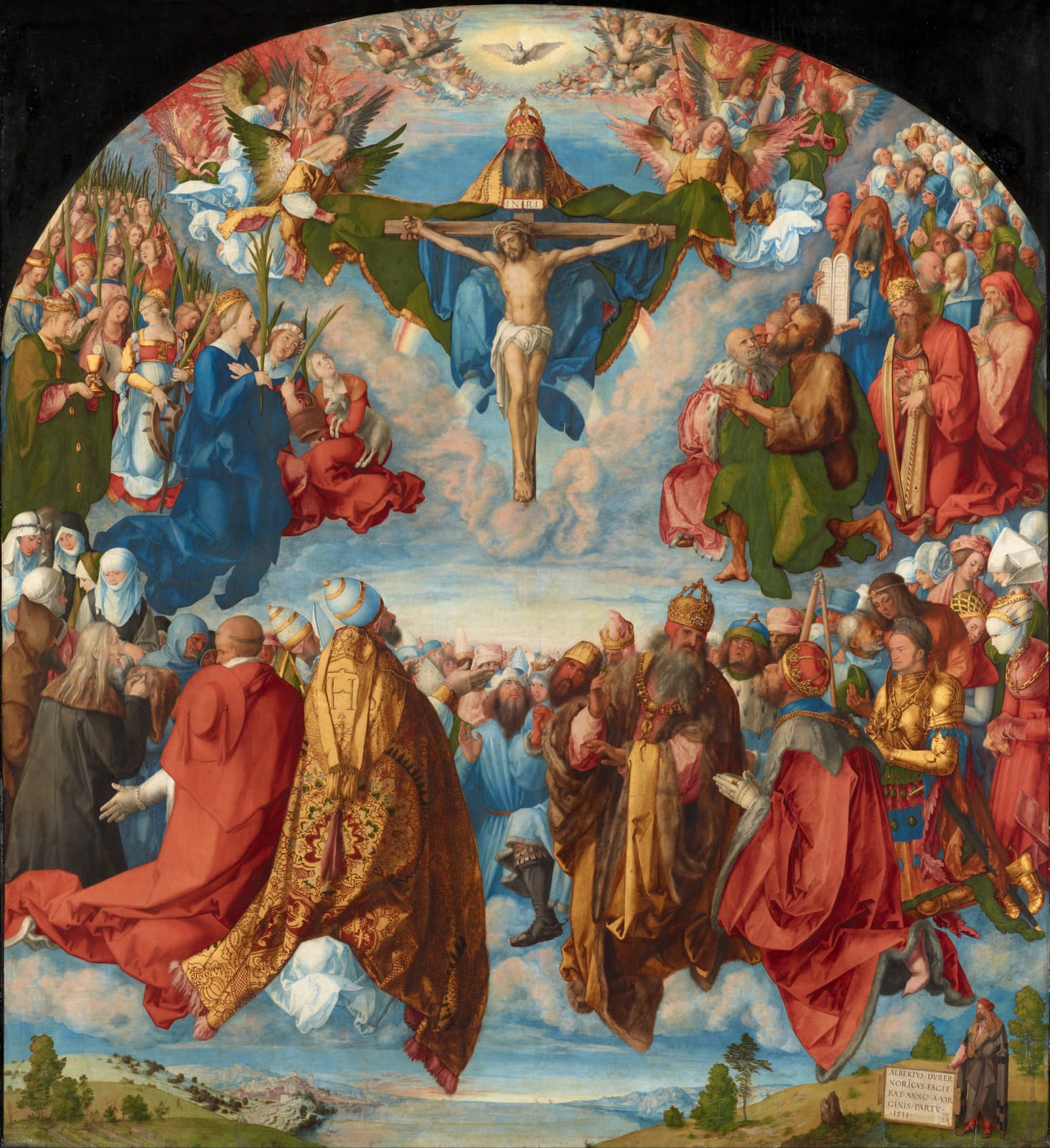
November 8: Octave Day of All Saints
From Dom Guéranger’s The Liturgical Year.
How could we more appropriately conclude the teachings of this Octave, than by quoting the words used by the Church herself in today's Liturgy?
Strangers as we are and pilgrims on the earth, let us fix our hearts and our thoughts on the day which will give to each of us a home, and restore us to Paradise. Who, that is on a voyage, would not hasten to return to his country! Who, that is on the way home, would not eagerly desire a favourable wind, that he might the sooner embrace his dear ones! Parents, brothers, children, friends in multitudes impatiently await us in our heavenly fatherland; blessed crowd already secure of their own eternal happiness, they are solicitous about our salvation. What joy for them and for us, when at length we see them and they may embrace us! How great the delight of that heavenly kingdom: no more fear of death; but eternal and supreme happiness! Let all our earnest desires tend to this: that we may be united with the Saints, that together with them we may possess Christ.