This day

February 5, 2024

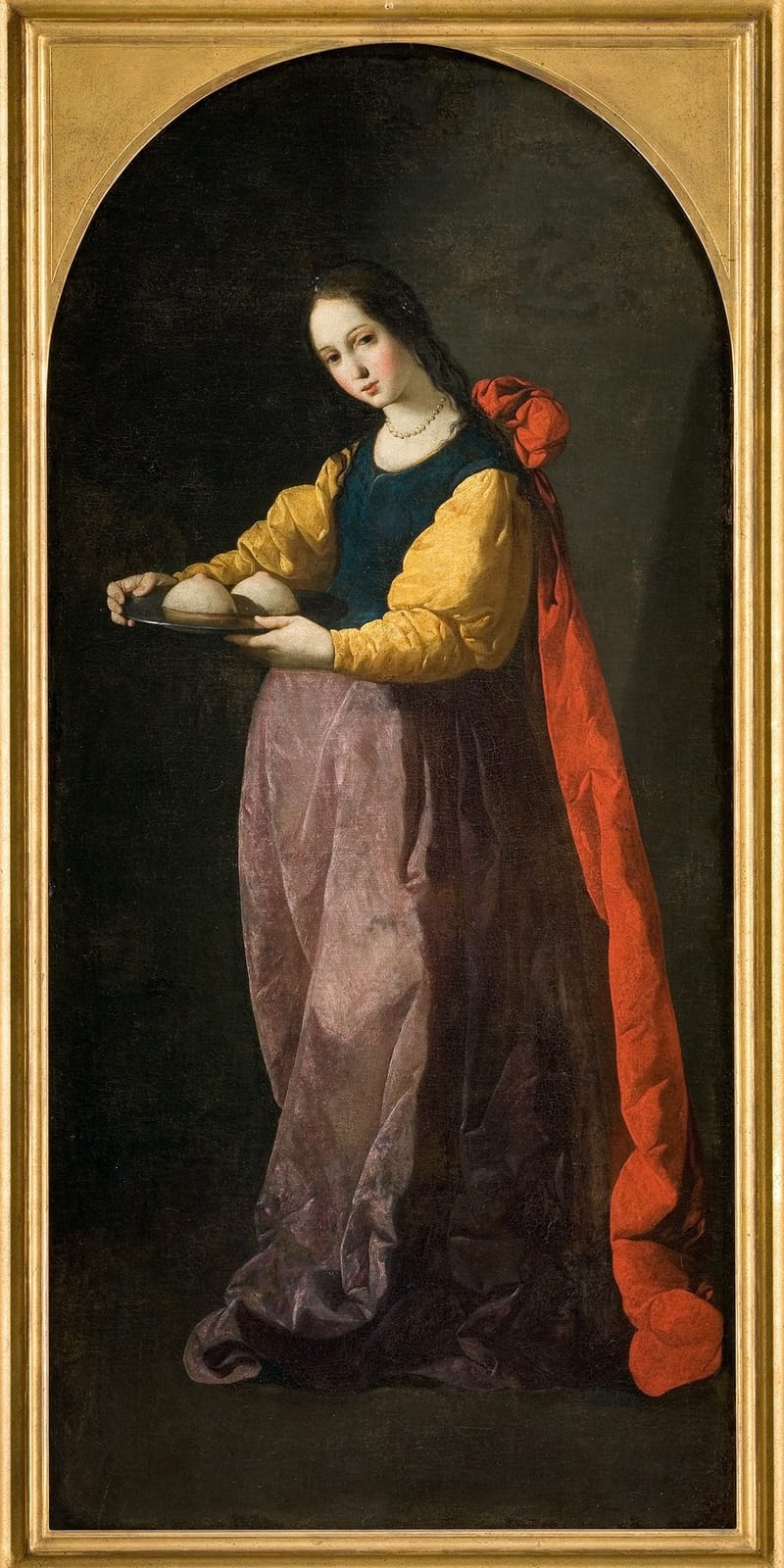
St Agatha in yellow sleeves and red mantle holding a platter with her severed breasts
Saint Agatha, Francisco de Zurbarán (1598–1664), c. 1635–40. Credits

Septuagesima

February 5, 2024

A Double leads the weekday.Rubric

February 5: St. Agatha, Virgin and Martyr

From Dom Guéranger’s The Liturgical Year.

Since the commencement of the ecclesiastical year, we have kept the feasts of two out of the four illustrious virgins whose names are daily honoured in the holy Sacrifice of the Lamb: the third comes to-day, lighting up the heaven of the Church with her bright soft rays. Lucy first, then Agnes, and now the gracious visit of Agatha. The fourth, Cecily, the immortal Cecily, is to be one of that magnificent constellation which gives such splendour to the closing of the year. To-day, then, let us keep a feast in honour of Agatha, the virgin daughter of that same fair Sicily which can boast of her Lucy. We must not allow the holy sadness of our present season to take aught from the devotion we owe to our saint. The joy wherewith we celebrate her merits will lead us to study her virtues. She will repay us by her prayers; she will encourage us to persevere in the path which is to bring us to the God she so nobly loved and served, and with whom she is now for ever united.


Monday of Sexagesima Week

From Dom Guéranger’s The Liturgical Year.

All flesh had corrupted its way upon the earth. The terrible lesson, then, which men had received, by being driven out of paradise in the person of our first parents, had been without effect. Neither the certainty of death, when they would have to stand before the divine Judge, nor the humiliations which attend man’s first coming into this world, nor the pains and fatigues and trials which beset the whole path of life, had subdued men’s hearts, or brought them into submission to that sovereign Master whose hand lay thus heavy upon them. They had the divine promise that a Saviour should be given to them, and that this Redeemer (who was to be the Son of her that was to crush the serpent’s head), would not only bring them salvation, but would moreover reinstate them in all the happiness and honours they had lost. But even this was not enough to make them rise above the base passions of corrupt nature.

Christ healing a blind man
Hans Schäufelein (1480–1540), Christ Healing the Blind, from Das Plenarium, 1517. Credits

Email view of this day