This day

April 4, 2024

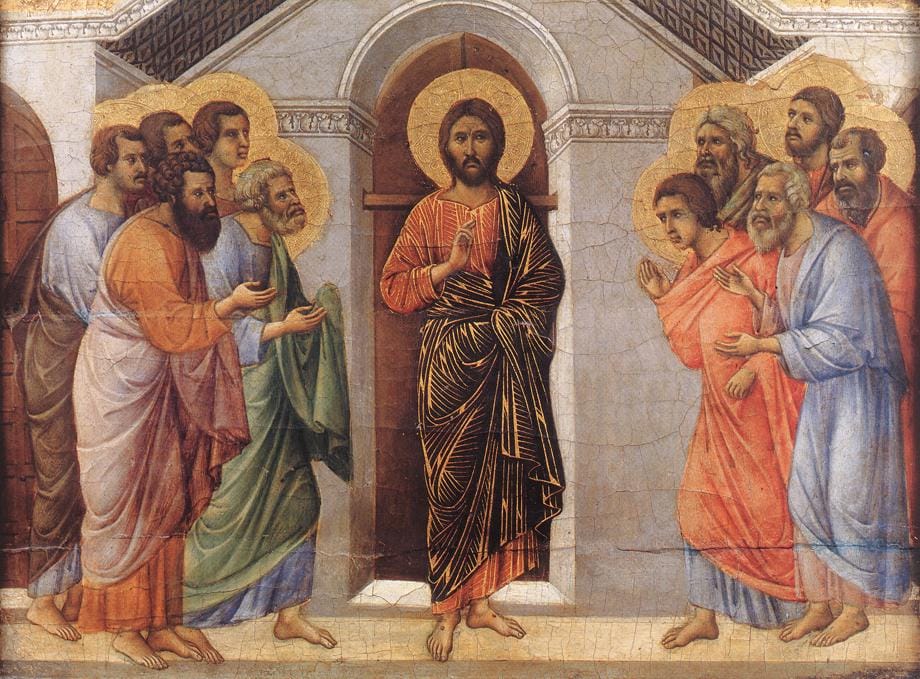
Christ stands in a barred doorway as the Apostles gather on either side
Appearance Behind Locked Doors, Duccio di Buoninsegna (c. 1255–1319), 1308–11. Credits

Paschal Time

April 4, 2024

Thursday in Easter Week

From Dom Guéranger’s The Liturgical Year.

This is the day which the Lord hath made: let us be glad and rejoice therein.

AFTER having glorified the Lamb of God, and the Passover whereby our Lord destroyed our enemies; after having celebrated our deliverance by water, and our entrance into the Promised Land; let us now fix our respectful gaze upon him whose triumph is prefigured by all these prodigies. So dazzling is the glory that now beams from this Man-God, that, like the prophet of Patmos, we shall fall prostrate before him. But he is so wonderful, too, in his love, that he will encourage us to enjoy the grand vision: he will say to us, as he did to his disciple: ‘Fear not! I am the First, and the Last; and alive, and was dead; and behold! I am living for ever and ever, and have the keys of death and of hell.’

Yes, he is now Master of death, which had held him captive; he holds in his hand the keys of hell. These expressions of Scripture signify that he has power over death and the tomb; he has conquered them.
Chapter 5: On Hearing Mass during Paschal Time

From Dom Guéranger’s The Liturgical Year.

WHEN we assisted at the holy Sacrifice during Passiontide. our attention was fixed on the real immolation of the Lamb; we looked upon the altar as a new Calvary; and our devotion was centred upon the divine Victim slain for our ransom. During Eastertide the Lamb presents himself to us in another aspect; he is living, he is resplendent with glory, he is the Conqueror. He still deigns to be immolated; but it is that he may invite us to a joyous banquet—the banquet of the Pasch—wherein he gives us to eat of his Flesh. In her chants during the Mass the Church is untiring in her Alleluia; she affectionately kisses the Wounds of her Jesus, which now dart forth rays of dazzling brightness. Her altar is the throne of the risen God; she approaches it without fear, for the divine Conqueror of death, though so resplendent in his glory, is more loving and affable than ever.

Another source of joy to the Church, when at the holy altar, is the sight of her children partaking of the banquet of the Paschal Lamb.

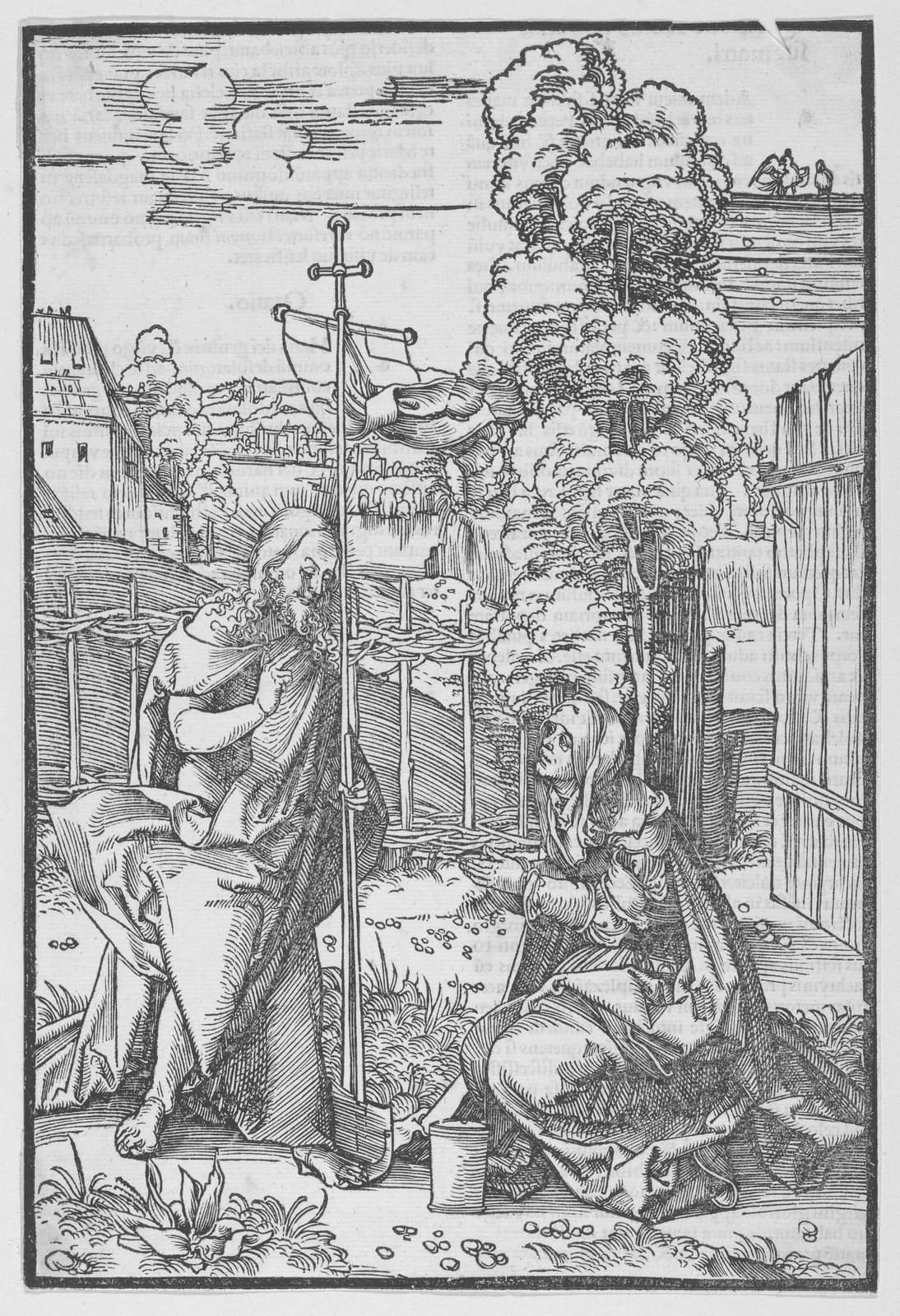
Noli me tangere: the risen Christ appears to Mary Magdalene in the garden
Hans Schäufelein (1480–1540), Christ Appearing to Mary Magdalen (Noli Me Tangere), from Speculum passionis domini nostri Ihesu Christi, 1507. Credits

Email view of this day