
This day

July 4, 2024

After Pentecost

July 4, 2024

July 4: The Sixth Day within the Octave of the Holy Apostles Peter and Paul

From Dom Guéranger’s The Liturgical Year.

PETER and Paul still hear the prayer of their devout clients throughout the world. Time has wrought no change in their power; and in heaven no more than formerly on earth can the gravity of the general interests of holy Church so absorb them, as that they should neglect the petition of the humblest inhabitant of the glorious city of God, of which they were constituted, and still are, the princes. Putting to sleep the faith of even just men is one of the triumphs of hell at present; hence we must be allowed to insist somewhat on our point, in order to disturb this dangerous slumber, which would end in nothing less than the utter oblivion of the most touching consideration of our Lord's intention, when he confided to mere men the continuance of his work and the representation of his Person visibly here below.

The error whereby the world has been turned away from Peter will be decidedly overcome only when it is brought to see in him, not merely the firmness of the rock in resisting the attacks of hell’s gates, but likewise that tenderness of heart and that paternal solicitude which make him to be indeed the Vicar of Jesus in his love.

This week's Sunday: The Sixth Sunday after Pentecost

From Dom Guéranger’s The Liturgical Year.

The Office for the sixth Sunday after Pentecost, which began yesterday evening, reminded us, in its Magnificat antiphon, of a repentance which has never had an equal. David, the royal prophet, the conqueror of Goliath, himself conquered by sensuality, and from adulterer become a murderer, at last felt the crushing weight of his double crime, and exclaimed: 'I do beseech thee, O Lord, take away the iniquity of thy servant, for I have done foolishly!'

Sin is always a folly and a weakness, no matter of what kind it may be, or who he be that commits it. The rebel angel, and fallen man, may, in their pride, make efforts to persuade themselves that, when they sinned, they did not act as fools, and were not weak; but all their efforts are vain; sin must ever have this disgrace upon it, that it is folly and weakness, for it is a revolt against God, a contempt for His law, a mad act or the creature, who, being made by his. Creator to attain infinite happiness and glory, prefers to debase himself by turning towards nothingness, and then falls even lower than the nothingness from which he was taken.

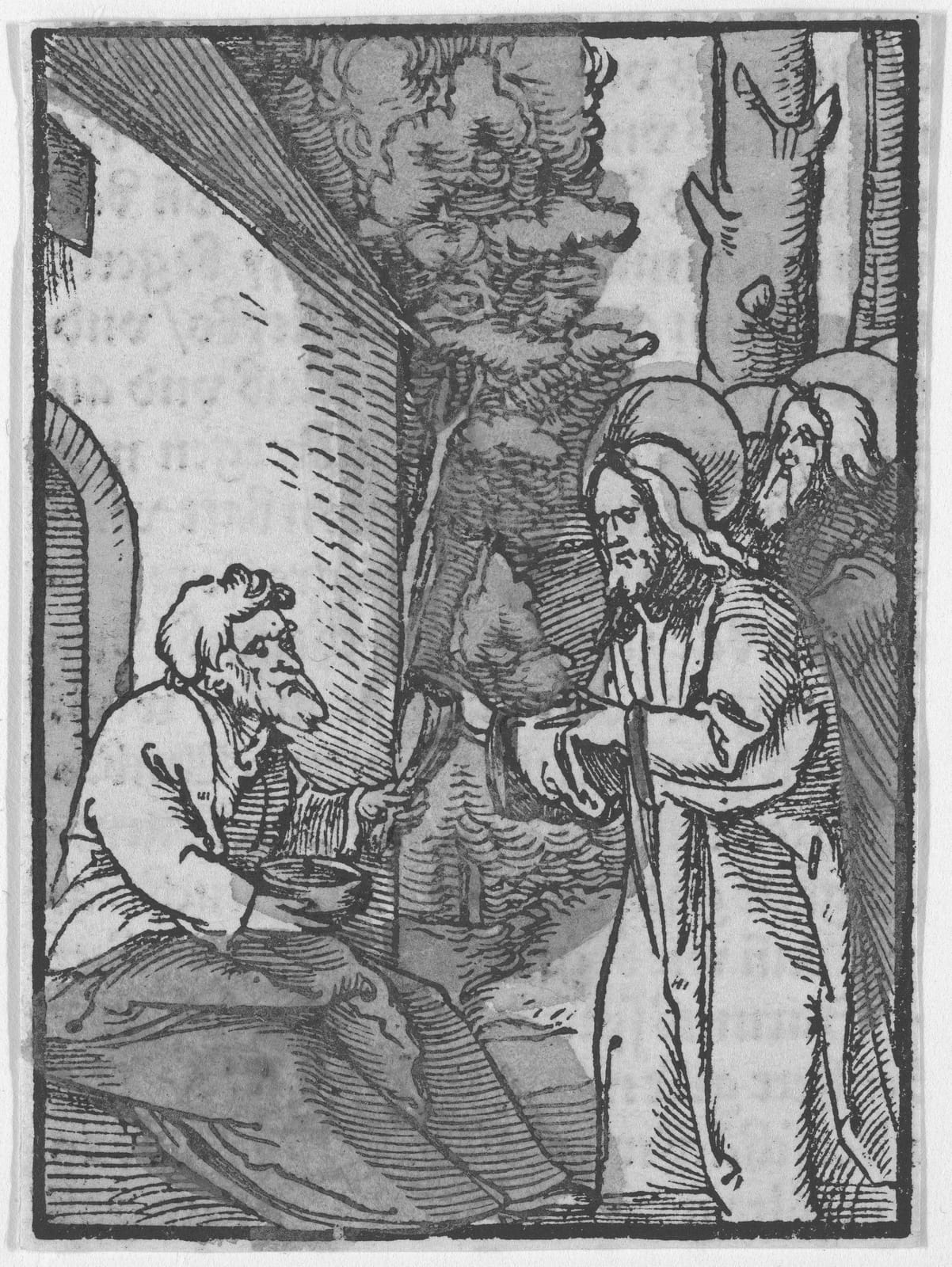
Christ healing a leper
Hans Schäufelein (1480–1540), Christ Healing the Leper, from Das Plenarium, 1517. Credits

Email view of this day