This day

October 25, 2024

After Pentecost

October 25, 2024

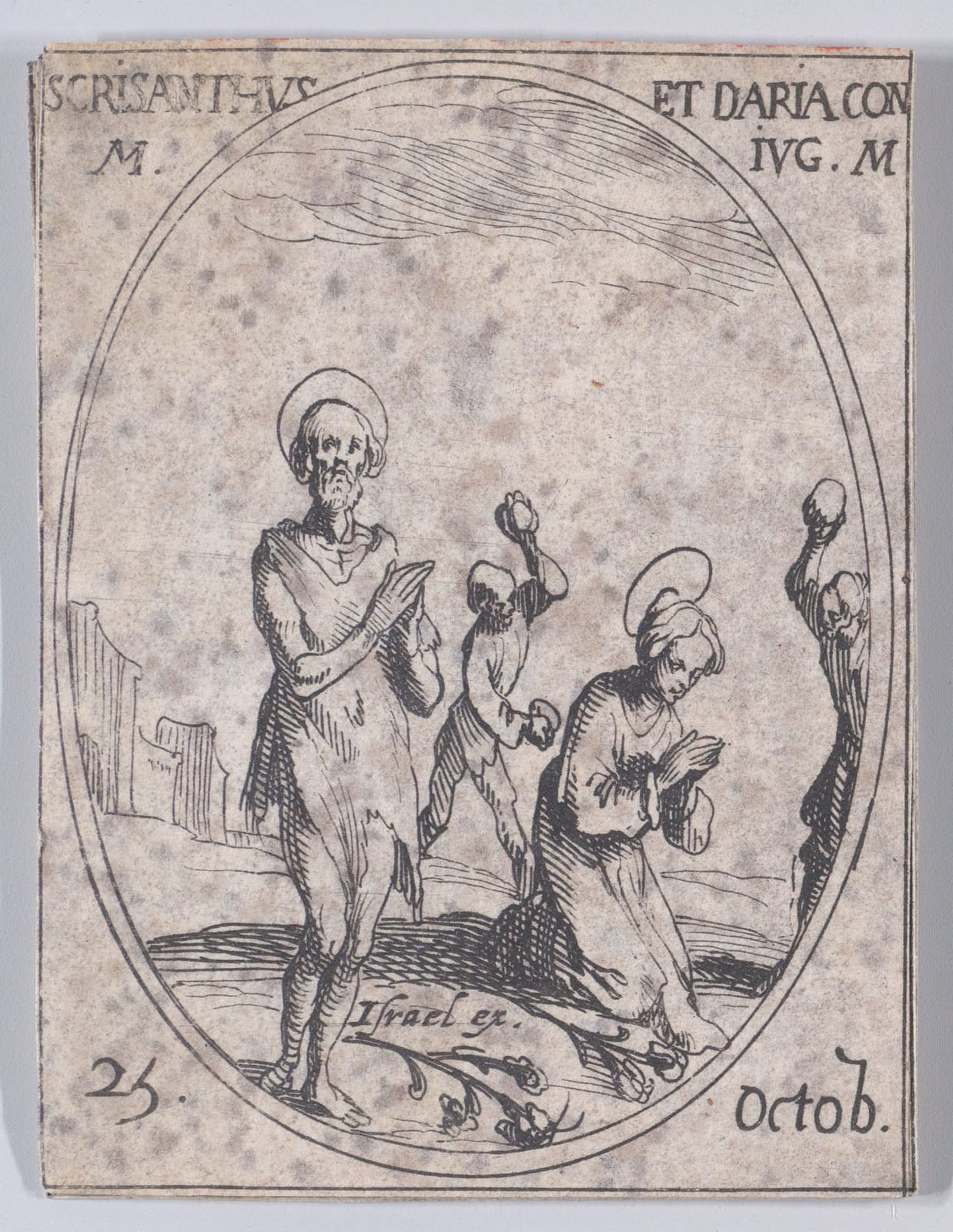
October 25: Sts. Chrysanthus and Daria, Martyrs

From Dom Guéranger’s The Liturgical Year.

Chrysanthus was united, in his confession of our Lord, with her whom he had won to Christianity and to the love of the angelic virtue. Our forefathers had a great veneration for these two martyrs, who having lived together in holy virginity, were together buried alive in a sand-pit at Rome for refusing to honour the false gods.

Dying like the seed in the earth, they yielded the fruit of martyrdom. On the anniversary day of their triumph, numbers of the faithful had gathered in the catacomb on the Salarian Way for the liturgical Synaxis, when the pagans surprised them and walled up the entrance of the vault. Many years passed away. When the hour of victory had sounded for the Church, and the Christians discovered again the way to the sacred crypt, a wonderful spectacle was presented to their gaze: before the tomb where reposed Chrysanthus and Daria, was grouped the family they had begotten to martyrdom. Each person was still in the attitude in which he had been overtaken by death. Beside the ministers of the altar, which was surrounded by men, women, and children, assistants at that most solemn of Masses, were to be seen the silver vessels of the Sacrifice: that Sacrifice in which the conquering Lamb had so closely united to Himself so many noble victims.

This week's Sunday: The Twenty-Second Sunday after Pentecost

From Dom Guéranger’s The Liturgical Year.

According to Honorius of Autun, the Mass of to-day has reference to the days of Antichrist. The Church, foreseeing the reign of the man of sin, and as though she were actually undergoing the persecution which is to surpass all others, takes her Introit of this twenty-second Sunday from the Psalm De profundis.

If, unitedly with this prophetic sense, we would apply these words practically to our own personal miseries, we must remember the Gospel we had last week, which was formerly appointed for the present Sunday. Each one of us will recognize himself in the person of the insolvent debtor, who has nothing to trust to but his master’s goodness; and, in our deep humiliation, we shall exclaim: If thou, O Lord, mark iniquities, who shall endure it?

If thou, O Lord, wilt mark iniquities, Lord! who shall endure it? For with thee there is merciful forgiveness, O God of Israel!
Ps. Out of the depths have I cried unto thee, O Lord: Lord! hear my voice. Glory, etc. If thou.

We have just been rousing our confidence by singing that with God there is merciful forgiveness.

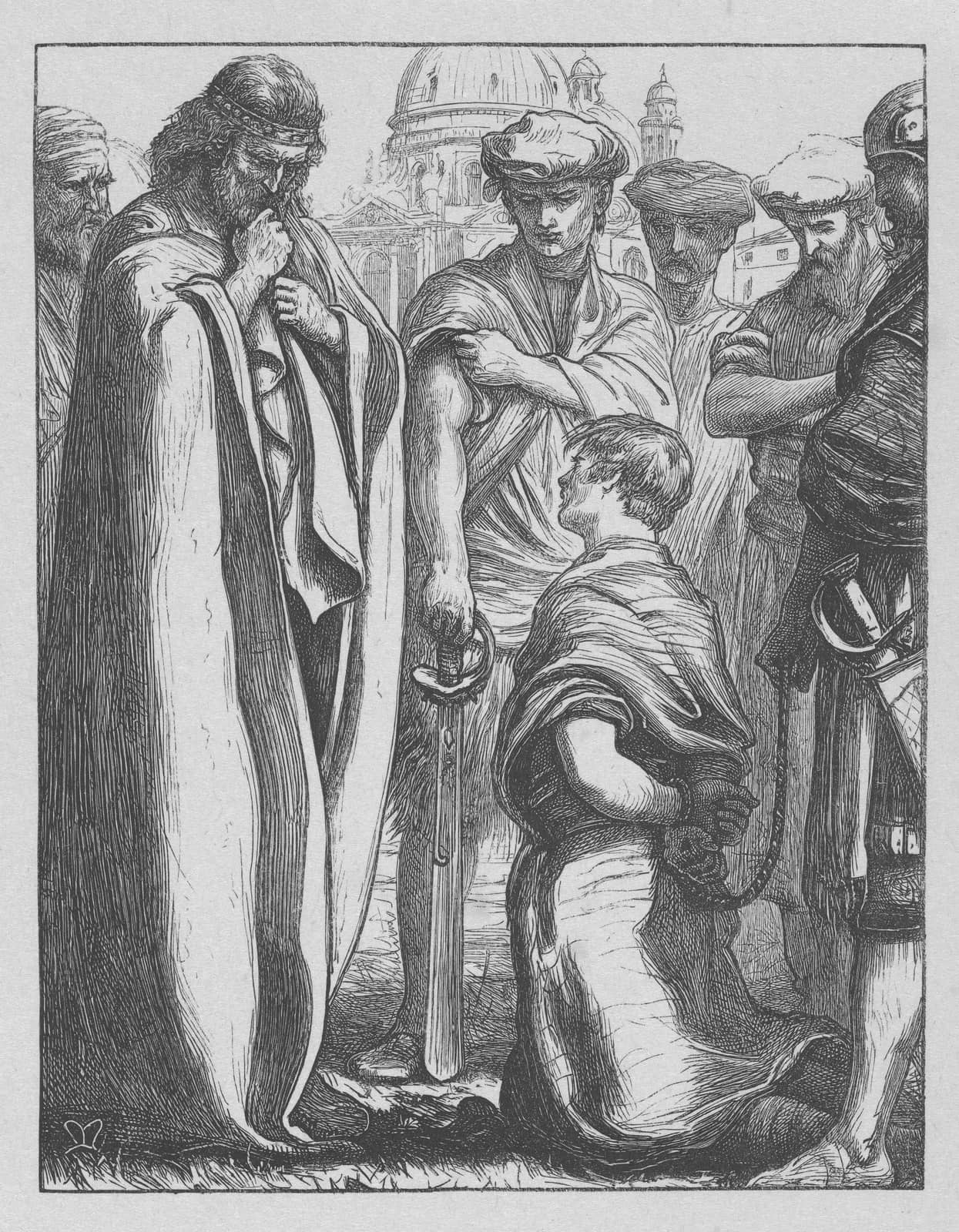
The parable of the unmerciful servant
Sir John Everett Millais (1829–1896), The Unmerciful Servant, from The Parables of Our Lord and Saviour Jesus Christ, 1864. Credits

Email view of this day