This day

March 30, 2025

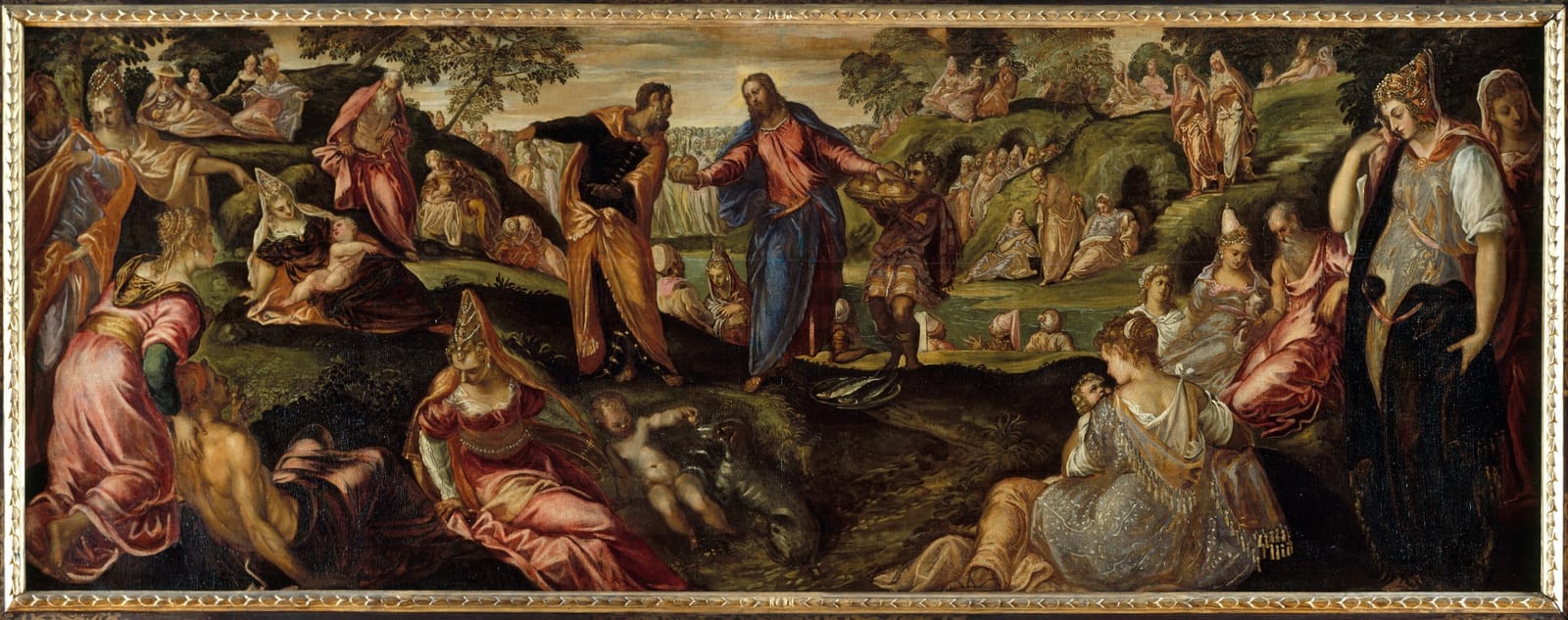
The Miracle of the Loaves and Fishes
The Miracle of the Loaves and Fishes, Tintoretto (1519–1594), c. 1545–1550. Credits

Lent

March 30, 2025

The Fourth Sunday of Lent

From Dom Guéranger’s The Liturgical Year.

This Sunday, called, from the first word of the Introit, Lætare Sunday, is one of the most solemn of the year. The Church interrupts her lenten mournfulness; the chants of the Mass speak of nothing but joy and consolation; the organ, which has been silent during the preceding three Sundays, now gives forth its melodious voice; the deacon resumes his dalmatic, and the subdeacon his tunic; and instead of purple, rose-coloured vestments are allowed to be used. These same rites were practised in Advent, on the third Sunday, called Gaudete. The Church’s motive for introducing this expression of joy into to-day’s liturgy is to encourage her children to persevere fervently to the end of this holy season. The real mid-Lent was last Thursday, as we have already observed; but the Church, fearing lest the joy might lead to some infringement on the spirit of penance, has deferred her own notice of it to this Sunday, when she not only permits, but even bids, her children to rejoice!

The Station at Rome is in the basilica of Holy Cross in Jerusalem, one of the seven principal churches of the holy city.

Chapter 2: The Mystery of Lent

From Dom Guéranger’s The Liturgical Year.

We may be sure that a season so sacred as this of Lent is rich in mysteries. The Church has made it a time of recollection and penance, in preparation for the greatest of all her feasts; she would, therefore, bring into it everything that could excite the faith of her children, and encourage them to go through the arduous work of atonement for their sins. During Septuagesima, we had the number seventy, which reminds us of those seventy years of captivity in Babylon, after which God’s chosen people, being purified from idolatry, was to return to Jerusalem and celebrate the Pasch. It is the number forty that the Church now brings before us: a number, as St. Jerome observes, which denotes punishment and affliction.

Let us remember the forty days and forty nights of the deluge sent by God in His anger, when He repented that He had made man, and destroyed the whole human race with the exception of one family. Let us consider how the Hebrew people, in punishment for their ingratitude, wandered forty years in the desert, before they were permitted to enter the promised land.

The Temptation of Christ in the wilderness
Hans Schäufelein (1480–1540), The Temptation of Christ, from Das Plenarium, 1517. Credits

Email view of this day