This day

August 4, 2025

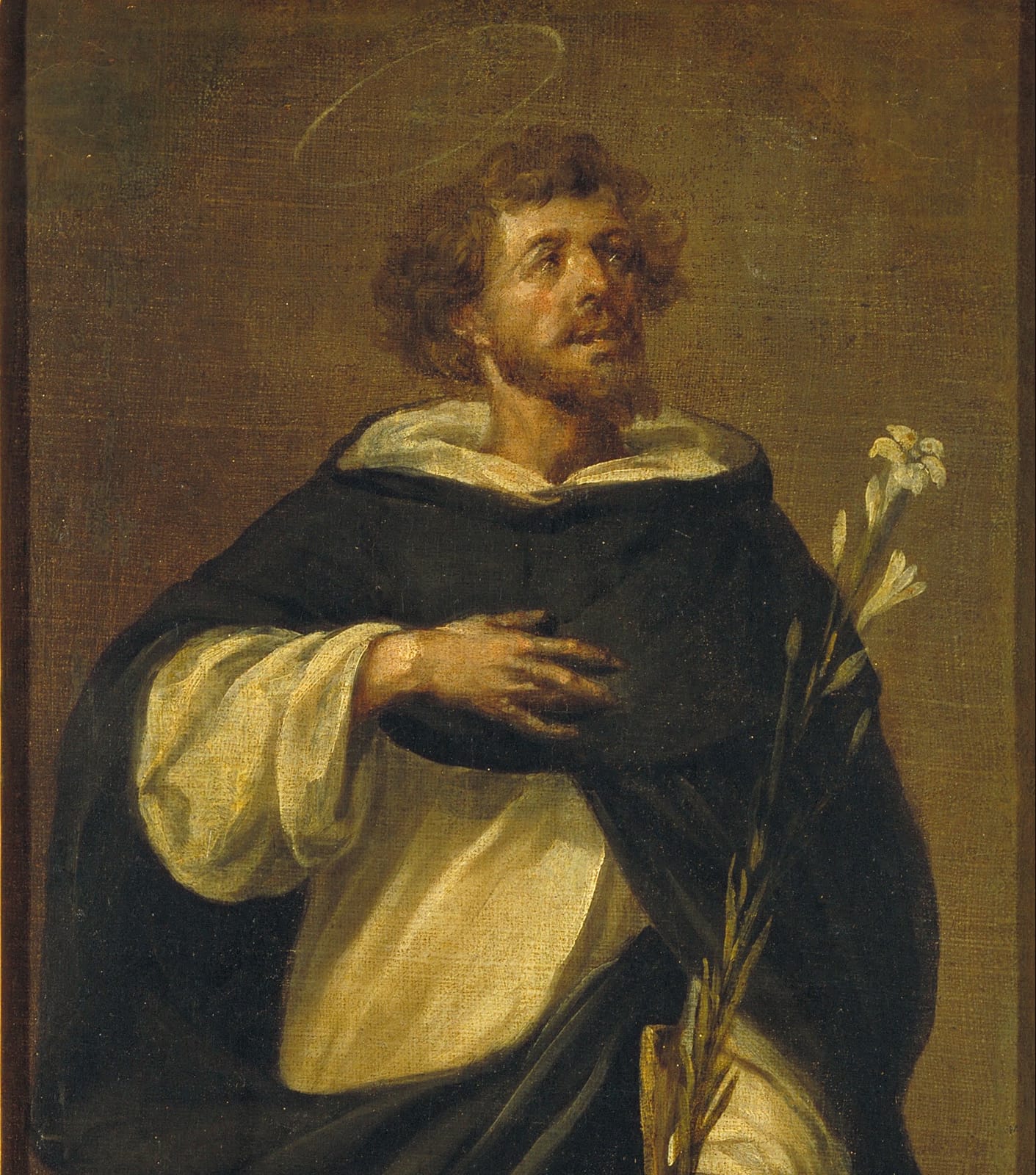
St Dominic in Dominican habit with lilies
Saint Dominic de Guzmán, Juan de Valdés Leal (1622–1690). Credits

After Pentecost

August 4, 2025

August 4: St. Dominic, Confessor

From Dom Guéranger’s The Liturgical Year.

In that clime
Where springs the pleasant west wind to unfold
The fresh leaves, with which Europe sees herself
New-garmented; nor from those billows far,
Beyond whose chiding, after weary course,
The sun doth sometimes hide him; safe abides
The happy Calaroga under guard
Of the great shield, wherein the lion lies
Subjected and supreme. And there was born
The loving minion of the Christian faith,
The hallowed wrestler, gentle to his own,
And to his enemies terrible. So replete
His soul with lively virtue, that when first
Created, even in the mother's womb,
It prophesied. When, at the sacred font,
The spousals were complete 'twixt faith and him,
Where pledge of mutual safety was exchanged,
The dame, who was his surety, in her sleep
Beheld the wondrous fruit, that was from him
And from his heirs to issue. And that such
He might be construed, as indeed he was,
She was inspired to name him of his owner,
Whose he was wholly; and so called him Dominic.

O happy father! Felix rightly named.
O favoured mother! rightly named Joanna;
If that do mean as men interpret it.

This week's Sunday: The Eighth Sunday after Pentecost

From Dom Guéranger’s The Liturgical Year.

In the middle ages this Sunday was called the sixth and last Sunday after the Natalis of the apostles (that is, the feast of St. Peter); it was, indeed, the last for the years when Easter had been kept as late in April as was possible; but it was only the first after that feast of St. Peter when Easter immediately followed the spring equinox.

We have already noticed the variable character of this last portion of the liturgical cycle, which is the result of Easter being kept on a different day each year; and that in consequence of this variation this week may be the second in which the Sapiential Books are read, or, what is of more frequent occurrence, the Books of Kings may still be providing the lessons for the Divine Office. In this latter case it is the ancient temple raised by Solomon, the king of peace, to the glory of Jehovah, that engages the Church's attention to-day. We shall find that the portions of the Mass which are chanted on this Sunday are closely connected with the lessons read in last night’s Office.

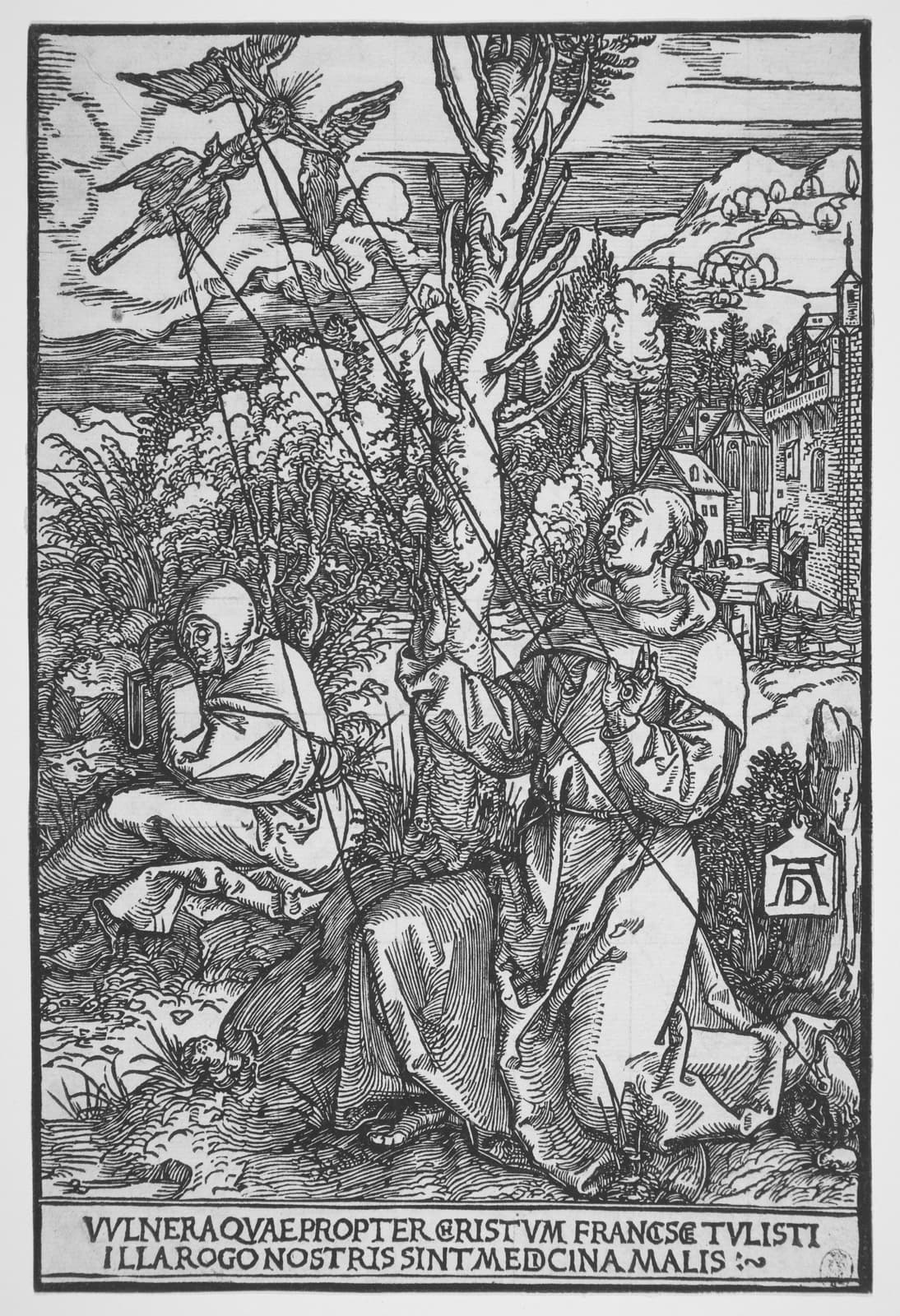
Saint Francis receiving the stigmata
Albrecht Dürer (1471–1528), Saint Francis Receiving the Stigmata, ca. 1503. Credits

Email view of this day