This day

August 27, 2025

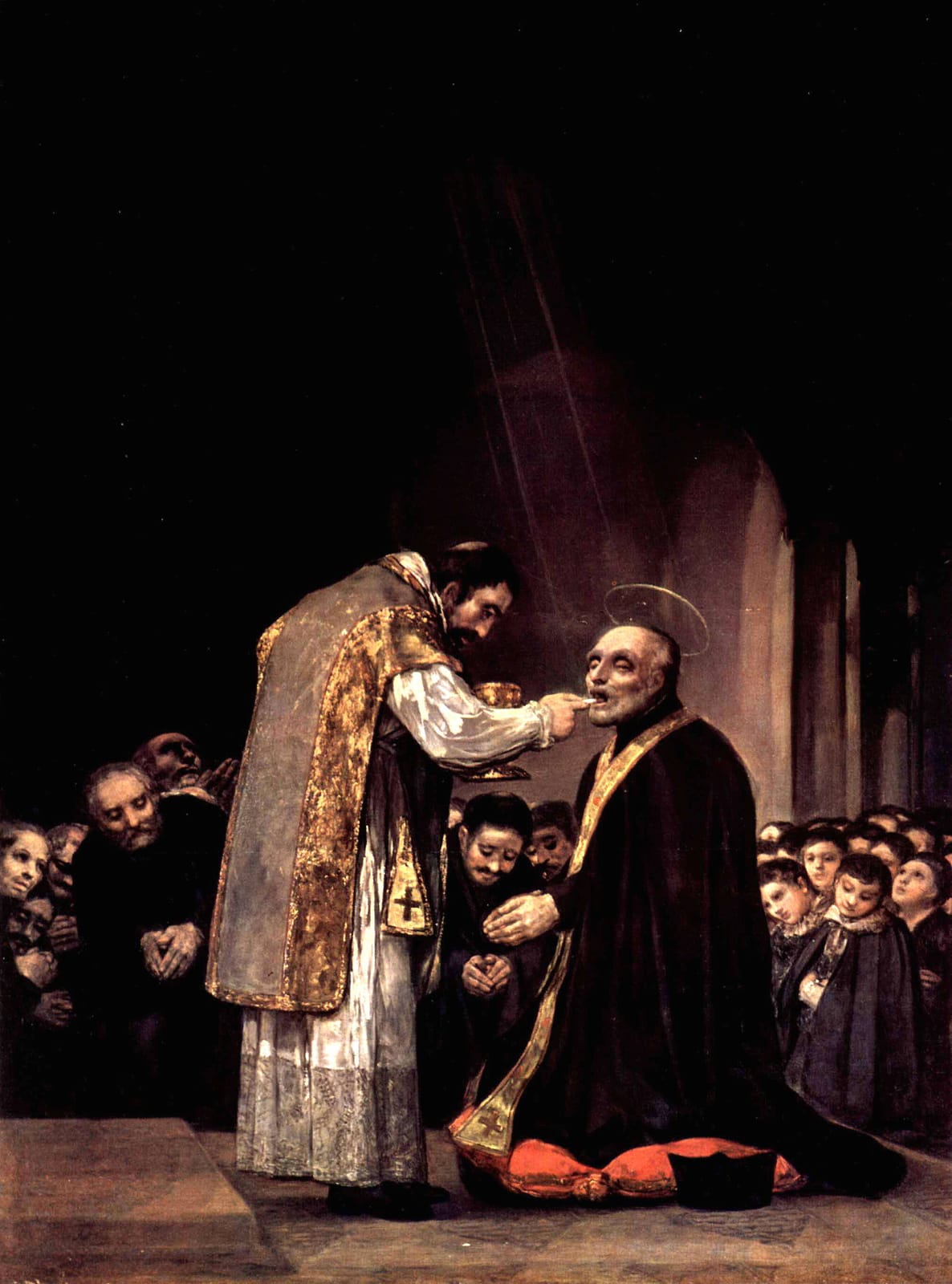
The Last Communion of Saint Joseph of Calasanz
The Last Communion of Saint Joseph of Calasanz, Francisco Goya (1746–1828), 1819. Credits

After Pentecost

August 27, 2025

August 27: St. Joseph Calasanctius, Confessor

From Dom Guéranger’s The Liturgical Year.

‘To thee is the poor man left: thou wilt be a helper to the orphan.’ Proud Venice has already seen these words realized in her noble son Jerome Æmilian: to-day they indicate the sanctity of another illustrious person descended from the first princes of Navarre, but of still higher rank in the kingdom of charity.

God, who waters the trees of the field as well as the cedars of Libanus, because it is He that planted them all, takes care also of the little birds that do not gather into barns: will He then forget the child, who is of much more value than the birds of the air? Or will He give him corporal nourishment, and neglect the soul hungering for the bread of the knowledge of salvation, which strengthens the heart of man? In the sixteenth century one might have been tempted to think our heavenly Father’s granaries were empty. True, the holy Spirit soon raised up new saints; hut the reviving charity was insufficient for the number of the destitute; how many poor ohildren, especially, were without schools, deprived of the most elementary education which is indispensable to the fulfilment of their obligations, and to their nobility as children of God: and there was no one to break to them the bread of knowledge!

This week's Sunday: The Eleventh Sunday after Pentecost

From Dom Guéranger’s The Liturgical Year.

With the Greeks, this Sunday—their eleventh of Saint Matthew—is called the Parable of the King, who calls his servants to account. In the western Church, it has gone under the name of Sunday of the deaf and dumb, ever since the Gospel of the pharisee and the publican has been assigned to the tenth. To-day's Mass, as we now have it, still gives evidence as to what was its ancient arrangement. Our commentary on to-day's liturgy will show us this very plainly.

In the years when Easter falls nearest to March 21 the Books of Kings are continued as lessons of Matins up to, but never beyond, this Sunday. The sickness of the good king Ezechias, and the miraculous cure he obtained by his prayers and tears, are then the subject of the first lessons of the night-Office.

The learned and pious Abbot Rupert, writing on this Sunday's Mass previous to the change made in the order of the Gospel lessons, thus explains the Church's reason for selecting the following Introit: ‘The publican in the Gospel accuses himself, saying: “I am not worthy to lift up mine eyes to heaven.”

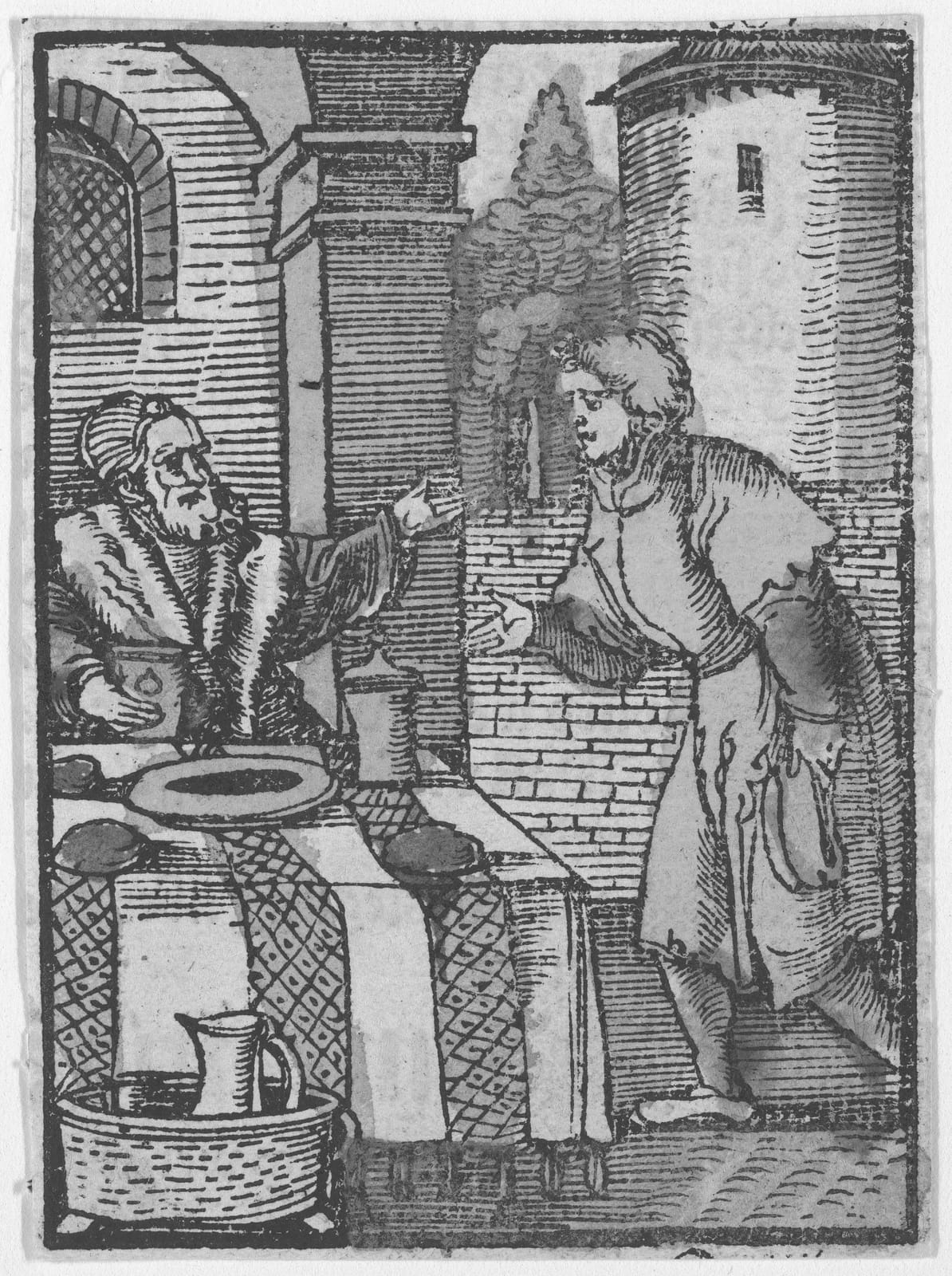
The parable of the banquet whose invited guests stayed away
Hans Schäufelein (1480–1540), The Parable of the Banquet without Guests, from Das Plenarium, 1517. Credits

Email view of this day