After Pentecost
September 2, 2025
September 2: St. Stephen, King of Hungary, Confessor
From Dom Guéranger’s The Liturgical Year.
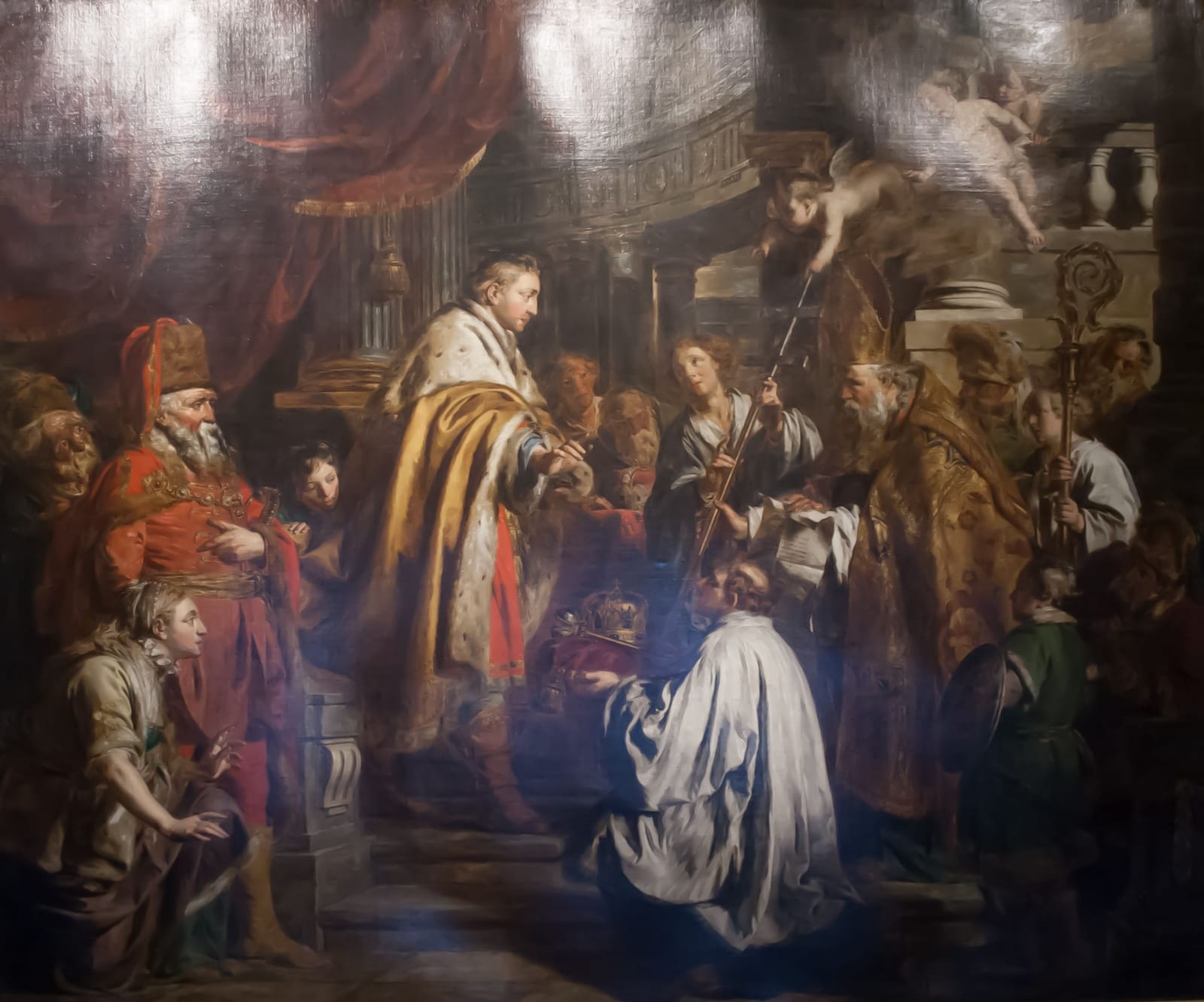
‘Out of the eater came forth meat, and out of the strong came forth sweetness. The people with teeth of steel, grinding the nations, gives itself up as food to him, to whom was said: “Kill and eat;” the mouth of the Huns, formerly vomiting foam and rage, now distils the honey of charity. Such, O Christ, are thy miracles; such are Thy works, O our God!’ Thus does Baronius, on reaching in his history the year of Christ 1000, hail the arrival of the Hungarian deputies, who came to offer to the Roman Church the suzerainty of their land, and beseech the Vicar of Christ to confer the title of king upon their duke Stephen.
We are carried back in thought a century earlier, when, led by Arcades, the son of Aleut, under the banner of the hawk, the Magyars came down from the mountains of Transylvania into the plains watered by the Theiss and the Danube. Attila seemed to live again in those sons of his race, who poured like a torrent over Germany, Gaul, and Italy. But the empire of the Huns over reconquered Pannonia was to be lasting only on condition of its ceasing to be the scourge of God, and becoming the rampart of His Church.