This day

October 2, 2025

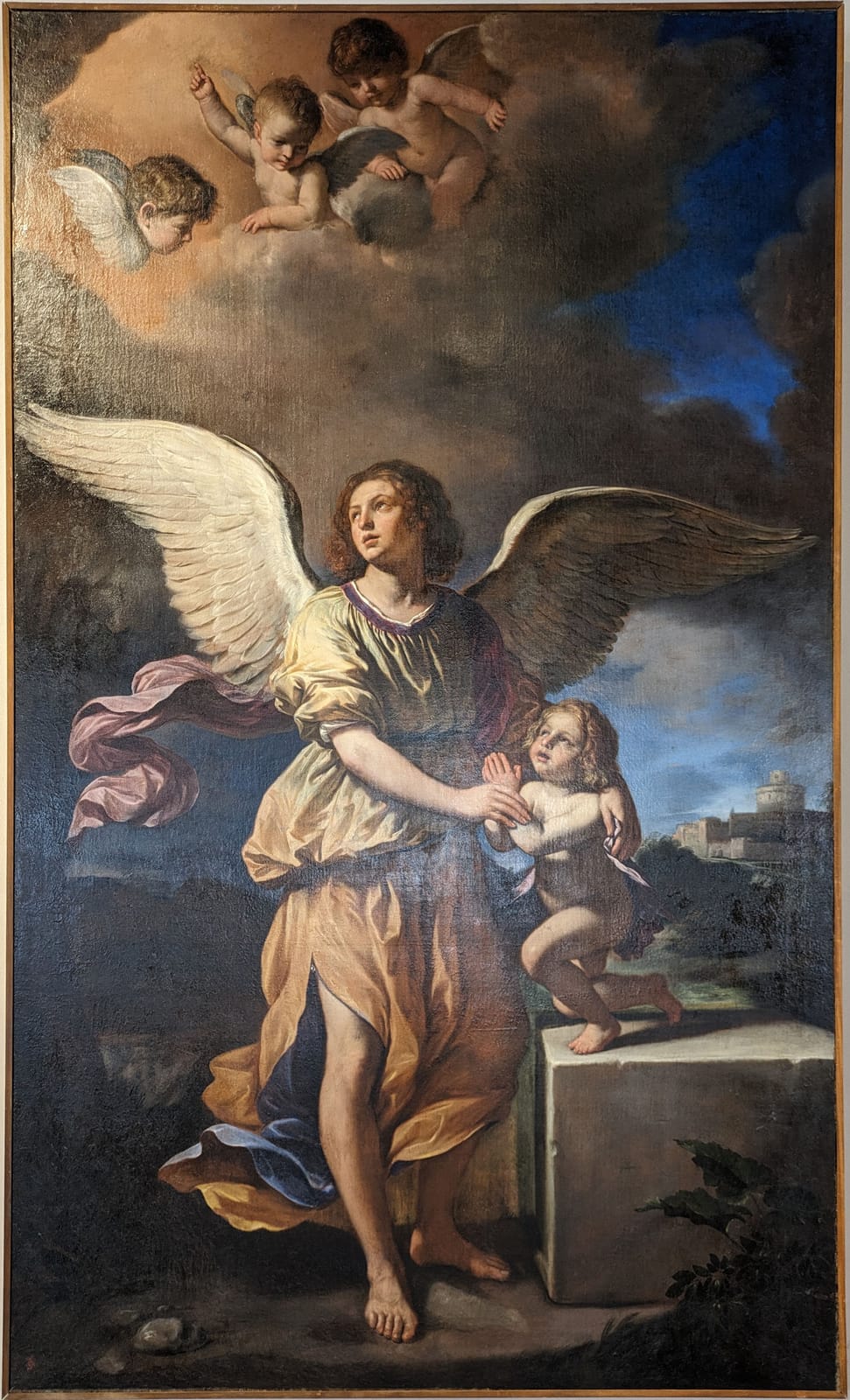
The Guardian Angel (L'angelo custode)
The Guardian Angel (L'angelo custode), Guercino (1591–1666), 1641. Photo: Accurimbono. Credits

After Pentecost

October 2, 2025

October 2: The Holy Guardian Angels

From Dom Guéranger’s The Liturgical Year.

Although the solemnity of September 29 celebrates the praises of all the nine glorious choirs, yet the piety of the faithful, in the latter ages, desired to have a special day consecrated to the Guardian Angels. Several churches having taken the initiative, and kept the feast under various rites and on different days, Paul V (1608) authorized its celebration ad libitum. Clement X (1670) established it by precept as a feast of double rite on October 2, the first free day after Michælmas, on which it thus remains in some way dependent.

It is of faith, on the testimony of the Scriptures and of unanimous tradition, that God commits to His angels the guardianship of men, who are called to contemplate Him together with these blessed spirits in their common fatherland. Catholic theology teaches that this protection is extended to every member of the human race, without any distinction of just and sinners, infidels and baptized. To ward off dangers; to uphold man in his struggle against the demons; to awaken in him holy thoughts; to prevent him from sinning, and even, at times, to chastise him; to pray for him, and present his prayers to God: such is the office of the Guardian Angel.


This week's Sunday: The Sixteenth Sunday after Pentecost

From Dom Guéranger’s The Liturgical Year.

The resuscitation of the son of the widow of Naim, on which our thoughts were fixed last Sunday, has reanimated the confidence of our beloved mother, the Church; her prayer goes up all the more earnestly to her Spouse, who leaves her on earth, for a time, that she may grow dearer to Him by sufferings and tears. Let us, of course, enter into the sentiments which guided her in the choice of to-day’s Introit.

Have mercy on me, O Lord, for I have cried unto thee all the day; for thou, Lord, art sweet and mild, and plenteous in mercy to all that call upon thee.
Ps. Incline thine ear unto me, O Lord, and hear me: for I am needy and poor. Glory, etc. Have mercy.

Such is our inability in the work of salvation, that, unless grace prevent, that is, anticipate, us, we cannot have so much as the thought of doing what is holy; and again, unless it follow up the inspirations it has given us, and lead them to a happy termination, we shall never be able to pass from the simple thought to the act of any virtue whatsoever.

Saint George slaying the dragon
Albrecht Dürer (1471–1528), Saint George Slaying the Dragon, ca. 1504. Credits

Email view of this day