This day

October 6, 2025

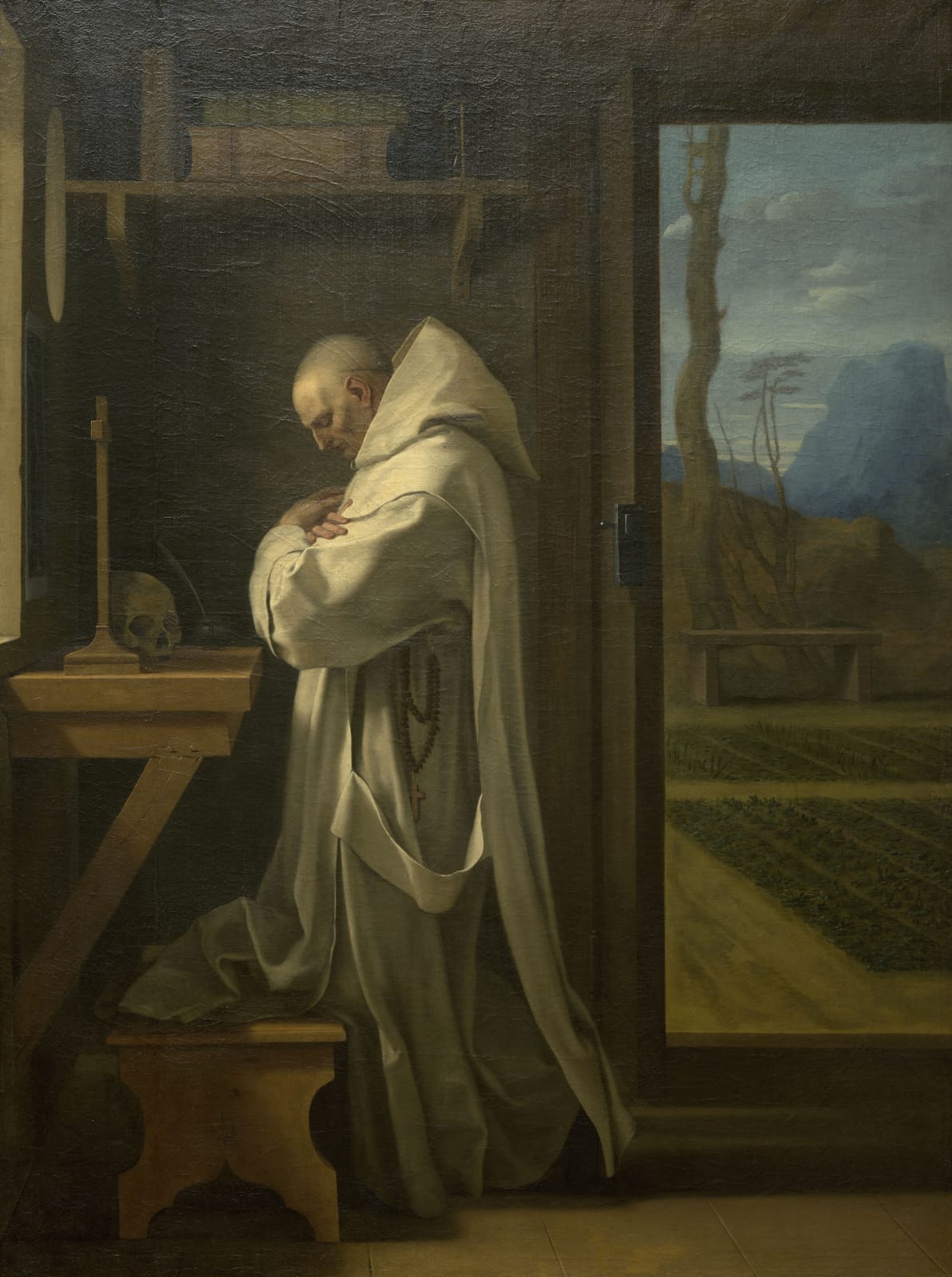
Saint Bruno in Prayer
Saint Bruno in Prayer, Eustache Le Sueur (1616–1655), c. 1650. Credits

After Pentecost

October 6, 2025

October 6: St. Bruno, Confessor

From Dom Guéranger’s The Liturgical Year.

Among the divers religious families, none is held in higher esteem by the Church than the Carthusian; the prescriptions of the corpus juris determine that a person may pass from any other Order into this, without deterioration. And yet it is of all the least given to active works. Is not this a new, and not the least convincing, proof that outward zeal, how praiseworthy soever, is not the only, or the principal thing in God’s sight? The Church, in her fidelity, values all things according to the preferences of her divine Spouse. Now, our Lord esteems His elect not so much by the activity of their works, as by the hidden perfection of their lives; that perfection which is measured by the intensity of the divine life, and of which it is said: ‘Be you therefore perfect, as also your heavenly Father is perfect.’ Again it is said of this divine life: 'You are dead and your life is hid with Christ in God.' The Church, then, considering the solitude and silence of the Carthusian, his abstinence even unto death, his freedom to attend to God through complete disengagement from the senses and from the world—sees therein the guarantee of a perfection which may indeed be met with elsewhere, but here appears to be far more secure.

This week's Sunday: The Seventeenth Sunday after Pentecost

From Dom Guéranger’s The Liturgical Year.

The Gospel, which is now assigned to the Mass of the seventeenth Sunday, has given it the name of the Sunday of the love of God, dating, that is, from the time when the Gospel of the cure of the dropsy and of the invitation to the wedding-feast was anticipated by eight days. Previously even to that change, and from the very first, there used to be read, on this seventeenth Sunday, another passage from the new Testament, which is no longer found in this series of Sundays: it was the Gospel which mentions the difficulty regarding the resurrection of the dead, which the Sadducees proposed to our Lord.

The judgments of God are always just, whether it be, in His justice, humbling the proud, or, in His mercy, exalting the humble. This day last week we saw this sovereign disposer of all things, allotting to each his place at the divine banquet. Let us recall to mind the behaviour of the guests, and the respective treatment shown to the humble and the proud. Adoring these judgments of our Lord, let us sing our Introit; and, as far as regards ourselves, let us throw ourselves entirely upon His mercy.

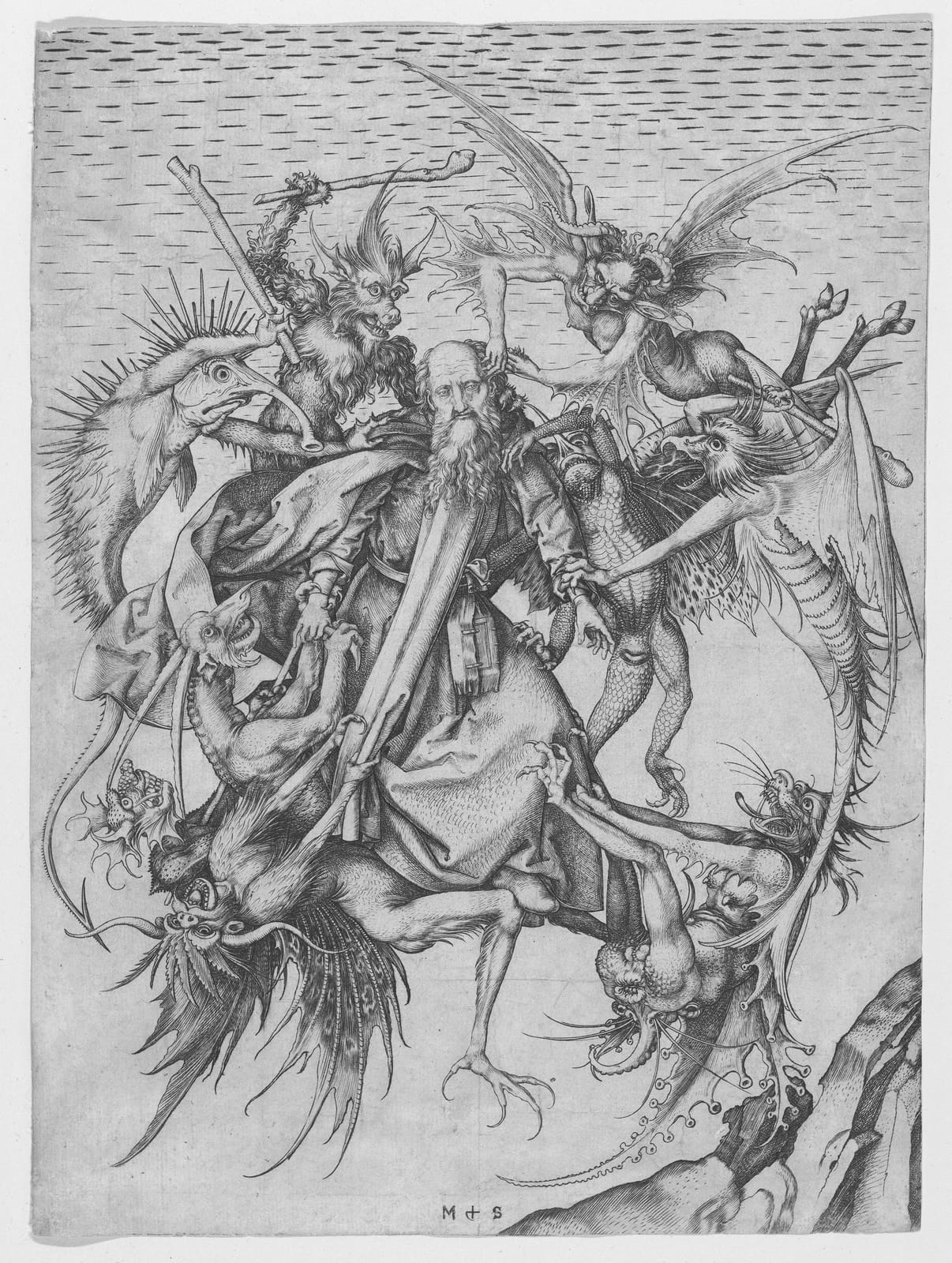
Saint Anthony tormented by demons
Martin Schongauer (ca. 1435/50–1491), Saint Anthony Tormented by Demons, ca. 1470–75. Credits

Email view of this day