This day

November 12, 2025

After Pentecost

November 12, 2025

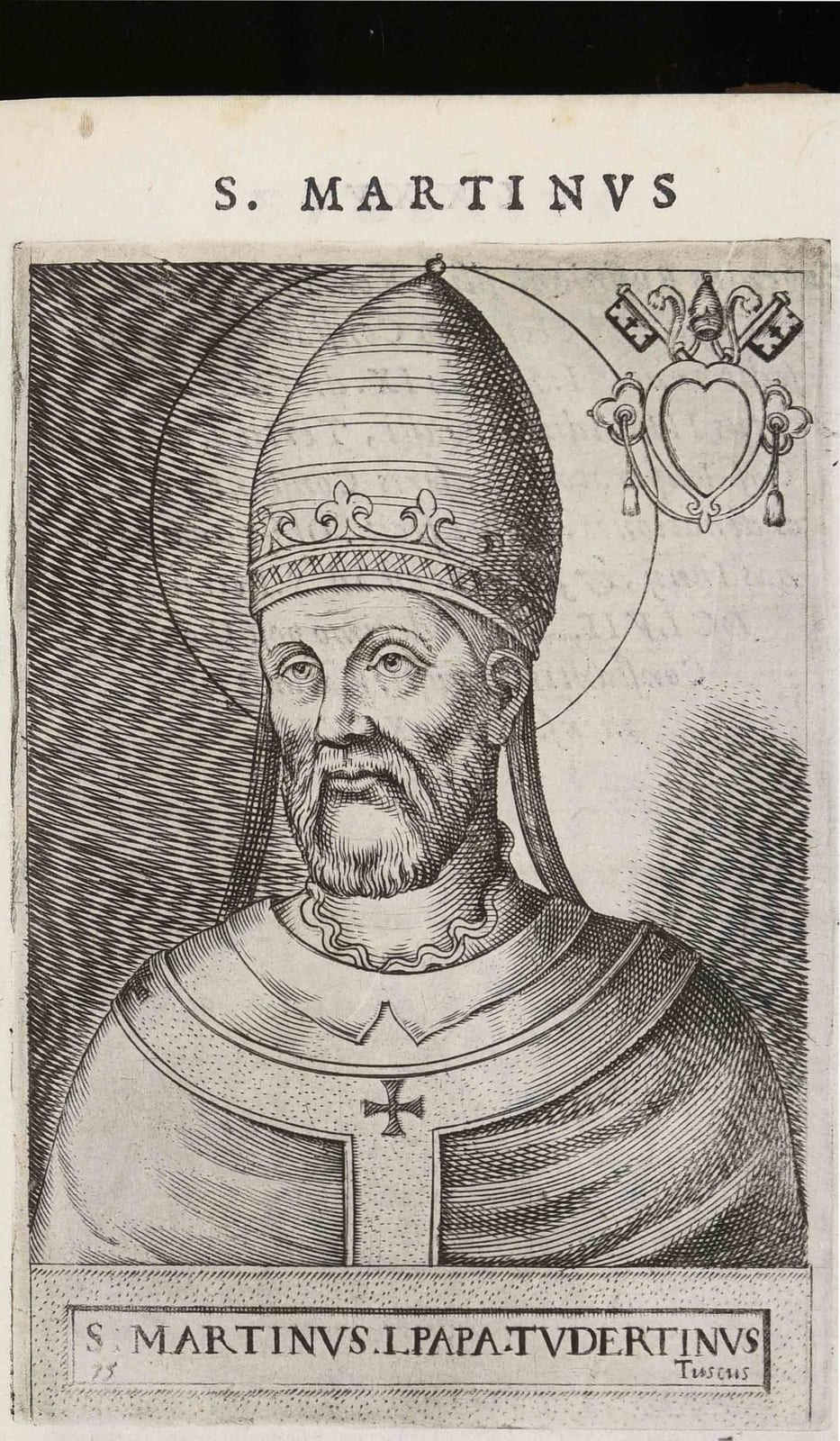
November 12: St. Martin, Pope and Martyr

From Dom Guéranger’s The Liturgical Year.

WHILE the concourse of pilgrims to the sepulchre of the Bishop of Tours induced his third successor Perpetuus, to raise over his precious remains the basilica, in which so many prodigies were to be wrought all through the middle ages, Rome herself was dedicating to St. Martin one of her noblest churches, uniting with him as joint titular her own illustrious Pontiff and Confessor Sylvester. Adorned with this twofold glory, St. Martin-on-the-hill worthily inaugurated in the eternal City the cultus of Confessors side by side with that of the Martyrs. But another honour awaited the venerable sanctuary. Beside the wonder-working apostle and the pontiff of peace, both vanquishers of idolatory, who had escaped the sword only through the conversion of the persecutors, the last of the martyr-popes, also Martin by name, came to seek a resting-place, long after the pagan persecutions had ceased. “Martin I.,” says Baronies, “fared better than any of his predecessors since the time of Constantine. Found worthy to suffer more than all of them for the Name of Jesus Christ, he had the good fortune to find a Decius and a Diocletian in a baptised prince.”

This week's Sunday: The Twenty-Second Sunday after Pentecost

From Dom Guéranger’s The Liturgical Year.

According to Honorius of Autun, the Mass of to-day has reference to the days of Antichrist. The Church, foreseeing the reign of the man of sin, and as though she were actually undergoing the persecution which is to surpass all others, takes her Introit of this twenty-second Sunday from the Psalm De profundis.

If, unitedly with this prophetic sense, we would apply these words practically to our own personal miseries, we must remember the Gospel we had last week, which was formerly appointed for the present Sunday. Each one of us will recognize himself in the person of the insolvent debtor, who has nothing to trust to but his master’s goodness; and, in our deep humiliation, we shall exclaim: If thou, O Lord, mark iniquities, who shall endure it?

If thou, O Lord, wilt mark iniquities, Lord! who shall endure it? For with thee there is merciful forgiveness, O God of Israel!
Ps. Out of the depths have I cried unto thee, O Lord: Lord! hear my voice. Glory, etc. If thou.

We have just been rousing our confidence by singing that with God there is merciful forgiveness.

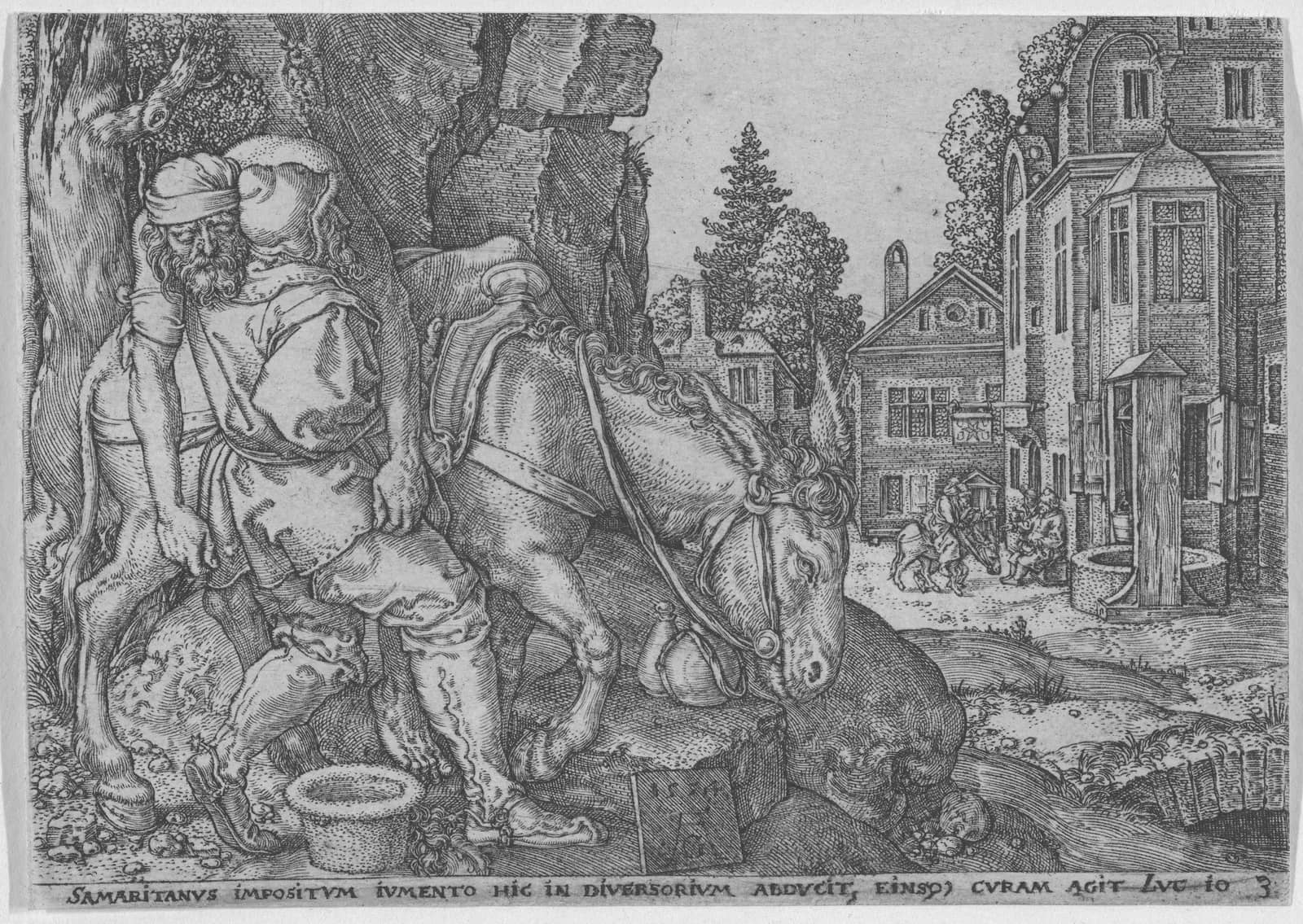
The Good Samaritan helping the wounded traveler onto his beast
Heinrich Aldegrever (1502–1561), The Good Samaritan Putting the Traveller on His Donkey, from "The Parable of the Good Samaritan", 1554. Credits

Email view of this day