This day

February 13, 2026

Septuagesima

February 13, 2026

Friday of Sexagesima Week

From Dom Guéranger’s The Liturgical Year.

God chastises the world by the deluge; but He is faithful to the promise made to our first parents, that the head of the serpent should be crushed. The human race has to be preserved, therefore, until the time shall come for the fulfilment of this promise. The Ark gives shelter to the just Noah, and to his family. The angry waters reach even to the tops of the highest mountains; but the frail yet safe vessel rides peacefully on the waves. When the day fixed by God shall come, they that dwell in this Ark shall once more tread the earth, purified as it then will be; and God will say to them, as heretofore to our first parents: ‘Increase, and multiply, and fill the earth.'

Mankind, then, owes its safety to the Ark. O saving Ark, that wast planned by God Himself, and didst sail unhurt amidst the universal wreck! But if we can thus bless this contemptible wood, how fervently should we love that other Ark, of which Noah’s was but the figure, and which, for now eighteen hundred years, has been saving and bringing men to their God!


This week's Sunday: Sexagesima Sunday

From Dom Guéranger’s The Liturgical Year.

The Church offers to our consideration, during this week of Sexagesima, the history of Noah and the deluge. Man has not profited by the warnings already given him. God is obliged to punish him once more, and by a terrible chastisement. There is found out of the whole human race one just man; God makes a covenant with him, and with us through him. But, before He draws up this new alliance, He would show that He is the sovereign Master, and that man, and the earth whereon he lives, subsist solely by His power and permission.

As the ground-work of this week’s instructions, we give a short passage from the Book of Genesis: it is read in the Office of this Sunday’s Matins.

De Libro Genesis.
Cap. vi.
Videns autem Deus quod multa malitia hominum esset in terra, et cuncta cogitatio cordis intenta esset ad malum omni tempore, pœnituit eum quod hominem fecisset in terra. Et tactus dolore cordis intrinsecus: Delebo, inquit, hominem quem creavi, a facie terræ, ab homine usque ad animantia, a reptili usque ad volucres cœli, pœnitet enim me fecisse eos.

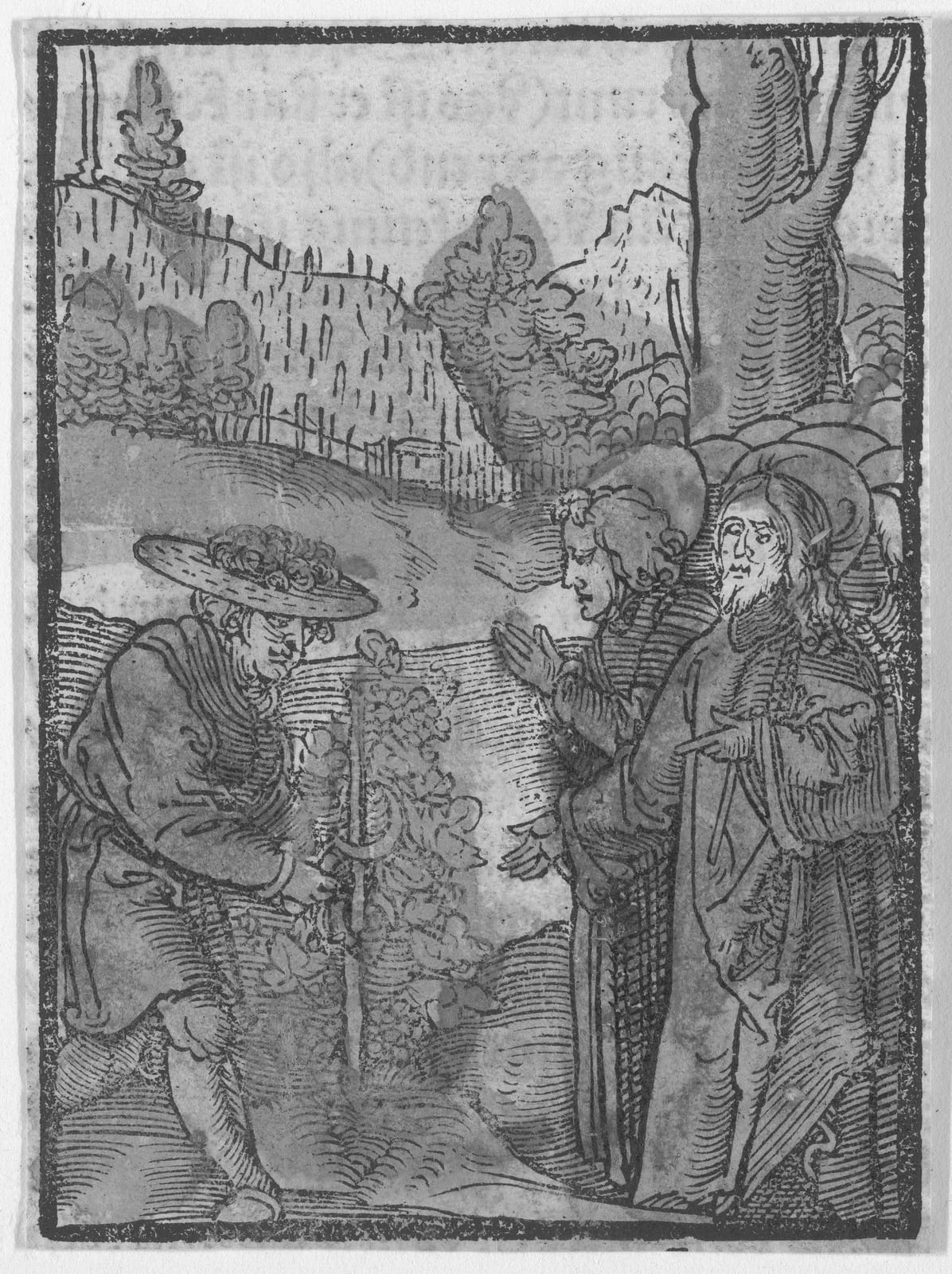
Christ points to a laborer working in a vineyard
Hans Schäufelein (1480–1540), The Parable of the Workers in the Vineyard, from Das Plenarium, 1517. Credits

Email view of this day