This day

March 9, 2026

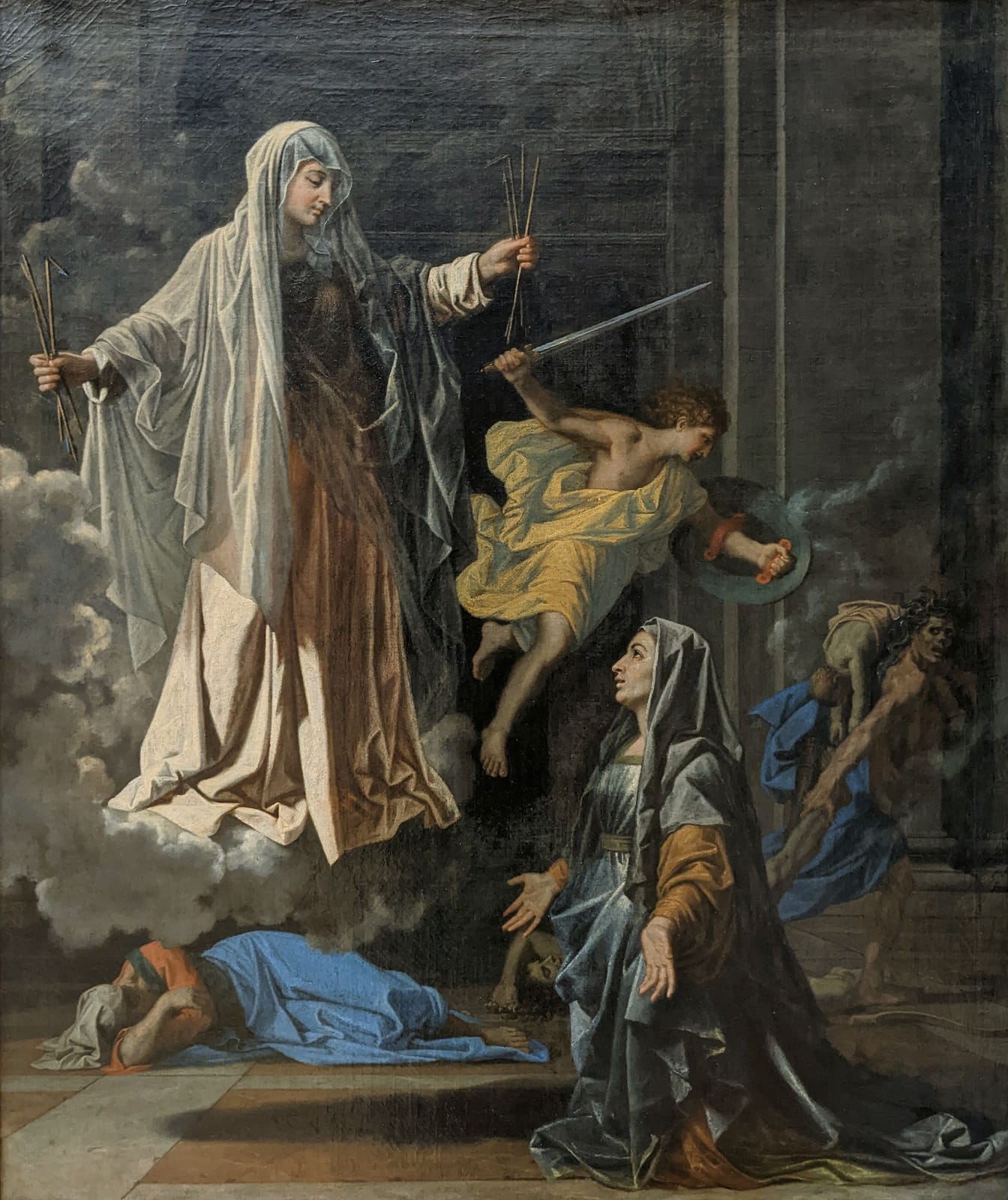
Saint Frances of Rome Announcing the End of the Plague in Rome
Saint Frances of Rome Announcing the End of the Plague in Rome, Nicolas Poussin (1594–1665), 1657–1658. Photo: Shonagon. Credits

Lent

March 9, 2026

A Double leads the weekday.Rubric

March 9: St. Frances of Rome, Widow

From Dom Guéranger’s The Liturgical Year.

The period intervening between the Purification of our blessed Lady and Ash Wednesday (when it occurs at its latest date), gives us thirty-six days; and these offer us feasts of every order of saint. The apostles have given us St. Mathias, and St. Peter’s Chair at Antioch; the martyrs have sent us, from their countless choir, Simeon, Lucius, Blase, Valentine, Faustinus and Jovita, Perpetua and Felicitas, and the forty soldiers of Sebaste, whose feast is kept to-morrow; the holy pontiffs have been represented by Titus, Andrew Corsini, and also by Cyril of Alexandria and Peter Damian, who, like Thomas of Aquin, are doctors of the Church; the confessors have produced Romuald of Camaldoli, John of Matha, John of God, the Seven Founders of the Servites, and the angelic prince Casimir; the virgins have gladdened us with the presence of Agatha, Dorothy, Apollonia, and Scholastica, three wreathed with the red roses of martyrdom, and the fourth with the fair lilies of the enclosed garden of her Spouse; and lastly, we have had a penitent saint, Margaret of Cortona. The state of Christian marriage is the only one that has not yet deputed a saint during this season, which is less rich in feasts than most of the year.


Monday of the Third Week of Lent

From Dom Guéranger’s The Liturgical Year.

The Station is in the church of Saint Mark, which was built in the fourth century in honour of the evangelist, by the holy Pope Mark, whose relics are kept there.

We beseech thee, O Lord, mercifully to pour forth thy grace into our hearts; that, as we abstain from flesh, so we may keep our senses from all noxious excesses. Through Christ our Lord. Amen.

Lectio libri Regum. IV.
Cap. v.
In diebus illis: Naaman princeps militiæ regis Syriæ, erat vir magnus apud dominum suum, et honoratus: per ilium enim dedit Dominus salutem Syriæ: erat autem vir fortis et dives, sed leprosus. Porro de Syria egressi fuerant latrunculi, et captivam duxerant de terra Israël puellam parvulam, quæerat in obsequio uxoria Naaman. Quæ ait ad dominam suam: Utinam fuisset do min us meus ad prophetam, qui est in Samaria: profecto curasset eum a lepra quam habet. Ingressus est itaque Naaman ad dominum suum, et nuntiavit ei, dicens: Sic et sic locuta est puella de terra Israël.

Christ and the Canaanite woman
Hans Schäufelein (1480–1540), Christ and the Woman of Canaan, from Das Plenarium, 1517. Credits

Email view of this day