This day

March 12, 2026

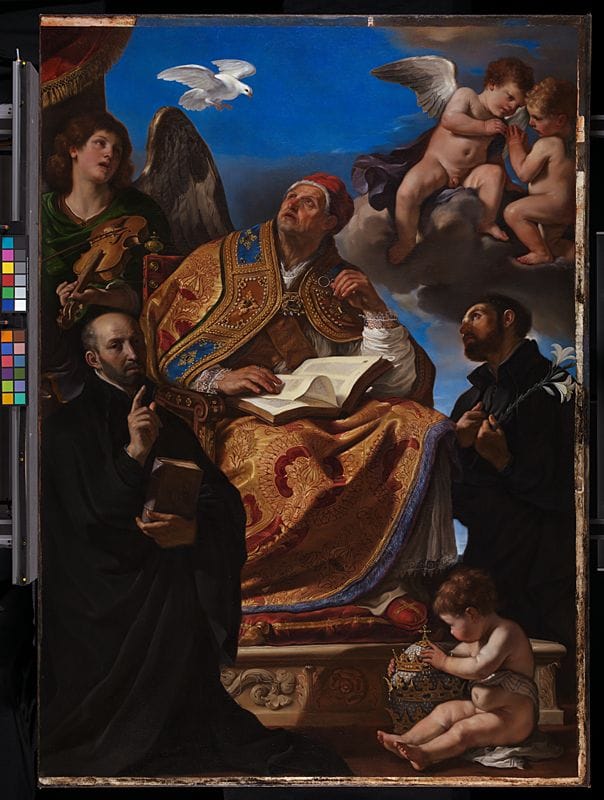
Pope Gregory the Great enthroned with Jesuit saints
Saint Gregory the Great with Saints Ignatius Loyola and Francis Xavier, Guercino (1591–1666), about 1625–1626. Credits

Lent

March 12, 2026

A Double leads the weekday.Rubric

March 12: St. Gregory the Great, Pope and Doctor of the Church

From Dom Guéranger’s The Liturgical Year.

Among all the pastors whom our Lord Jesus Christ has placed, as His vicegerents, over the universal Church, there is not one whose merits and renown have surpassed those of the holy Pope, whose feast we keep to-day. His name is Gregory, which signifies watchfulness; his surname is ‘the Great,’ and he was in possession of that title, when God sent the Seventh Gregory, the glorious Hildebrand, to govern His Church.

In recounting the glories of this illustrious Pontiff, it is but natural we should begin with his zeal for the services of the Church. The Roman liturgy, which owes to him some of its finest hymns, may be considered as his work, at least in this sense, that it is he who collected together and classified the prayers and rites drawn up by his predecessors, and reduced them to the form in which we now have them. He collected also the ancient chants of the Church, and arranged them in accordance with the rules and requirements of the divine Service. Hence it is, that our sacred music, which gives such solemnity to the liturgy, and inspires the soul with respect and devotion during the celebration of the great mysteries of our faith, is known as the Gregorian chant.

Thursday of the Third Week of Lent

From Dom Guéranger’s The Liturgical Year.

This day brings us to the middle of Lent, and is called mid-Lent Thursday. It is the twentieth of the forty fasts imposed upon us, at this holy season, by the Church. The Greeks call the Wednesday of this week Mesonestios, that is, the mid-fast. They give this name to the entire week, which, in their liturgy, is the fourth of the seven that form their Lent. But the Wednesday is, with them, a solemn feast, and a day of rejoicing, whereby they animate themselves to courage during the rest of the season. The Catholic nations of the west, though they do not look on this day as a feast, have always kept it with some degree of festivity and joy. The Church of Rome has countenanced the custom by her own observance of it; but, in order not to give a pretext to dissipation, which might interfere with the spirit of fasting, she postpones to the following Sunday the formal expression of this innocent joy, as we shall see further on.

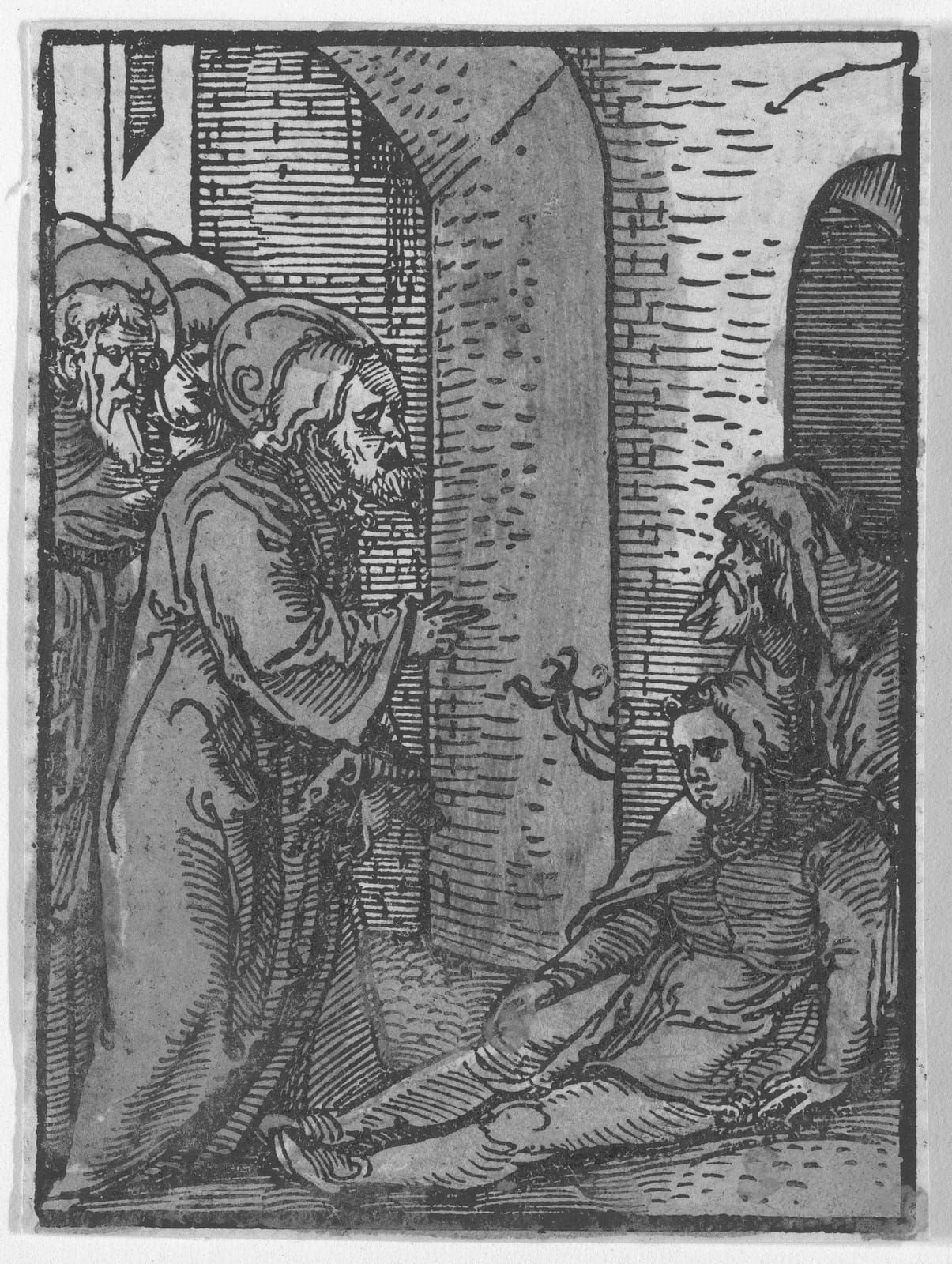
Christ healing a possessed man as a demon flees
Hans Schäufelein (1480–1540), Christ Healing the Possessed, from Das Plenarium, 1517. Credits

Email view of this day