This day

March 15, 2026

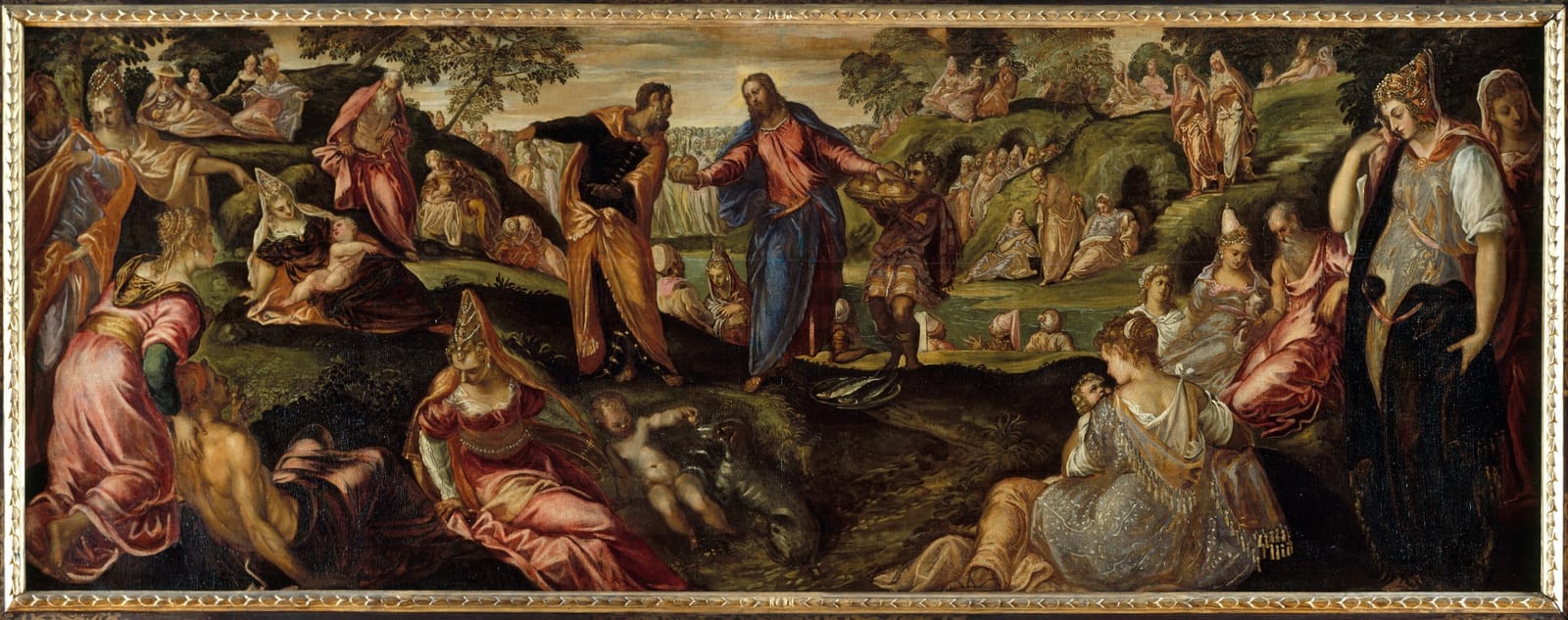
The Miracle of the Loaves and Fishes
The Miracle of the Loaves and Fishes, Tintoretto (1519–1594), c. 1545–1550. Credits

Lent

March 15, 2026

The Fourth Sunday of Lent

From Dom Guéranger’s The Liturgical Year.

This Sunday, called, from the first word of the Introit, Lætare Sunday, is one of the most solemn of the year. The Church interrupts her lenten mournfulness; the chants of the Mass speak of nothing but joy and consolation; the organ, which has been silent during the preceding three Sundays, now gives forth its melodious voice; the deacon resumes his dalmatic, and the subdeacon his tunic; and instead of purple, rose-coloured vestments are allowed to be used. These same rites were practised in Advent, on the third Sunday, called Gaudete. The Church’s motive for introducing this expression of joy into to-day’s liturgy is to encourage her children to persevere fervently to the end of this holy season. The real mid-Lent was last Thursday, as we have already observed; but the Church, fearing lest the joy might lead to some infringement on the spirit of penance, has deferred her own notice of it to this Sunday, when she not only permits, but even bids, her children to rejoice!

The Station at Rome is in the basilica of Holy Cross in Jerusalem, one of the seven principal churches of the holy city.

Chapter 5: On Hearing Mass during the Season of Lent

From Dom Guéranger’s The Liturgical Year.

The Christian who enters into the spirit of the Church during this season of Lent, will find an increase in his soul of that holy fear of God, which the psalmist tells us is the beginning of wisdom. The remembrance of his sins, the practice of the holy penances of Lent, the example of a God expiating our sins by fasting in the desert, the Church’s ceaseless prayer for her guilty children: all combine to arouse him from the indifference which so easily fastens on the soul. He has need, therefore, of some refuge, some powerful and saving help, which may re-enkindle within his heart that Christian hope, without which he cannot be in the grace of God. Nay, more: he has need of a victim of propitiation, which may appease the divine anger; he has need of a sacrifice, whereby to stay the arm of God, which he knows is raised to punish his sins.

This Victim is ready; this infinitely efficacious sacrifice is prepared for us.

The Temptation of Christ in the wilderness
Hans Schäufelein (1480–1540), The Temptation of Christ, from Das Plenarium, 1517. Credits

Email view of this day