This day

April 17, 2026

Paschal Time

April 17, 2026

Friday of the Second Week after Easter

From Dom Guéranger’s The Liturgical Year.

℣. In thy resurrection, O Christ, alleluia.
℟. Let heaven and earth rejoice, alleluia.

LET us to-day turn to another subject. Let us think of that unfortunate Jerusalem, which, a few days since, re-echoed with the blasphemous cry: Away with him! Away with him! Crucify him! Is the city impressed by the great events that have taken place in her midst? Is the report still afloat of the sepulchre’s being found empty? Have Jesus’ enemies succeeded in tranquillizing the public mind by their lying scheme? They have summoned the soldiers who were set to guard the tomb, and have bribed them to say that they neglected their duty, that they fell asleep, and that the disciples came in the meanwhile, and stole away their Master’s corpse. As to the punishment due to this infraction of military discipline, the soldiers are told that they need be under no apprehension, inasmuch as they are assured that every excuse shall be made to the governor in case of need.

Such is the final effort made by the Synagogue to make the world forget the name of Jesus of Nazareth!

Chapter 4: Morning and Night Prayers for Paschal Time

From Dom Guéranger’s The Liturgical Year.

DURING Paschal time, the Christian, on waking in the morning, will unite himself with the Church, who in her Office of Matins says to us these solemn words, which choirs of religious men and women, throughout the universe, have been chanting during the deep silence of the night: Surrexit Dominus vere. Alleluia.

He will profoundly adore the Son of God rising from the tomb, and surrounded with the dazzling rays of his grand triumph. He will hail him with delighted joy, as being the divine Sun of Justice, who rises on the world that he may rescue it from the darkness of sin and illuminate it with the light of grace. It is with these ideas deeply impressed upon his mind that he must perform his first acts of religion, both interior and exterior, wherewith he begins the day. The time for Morning Prayer being come, he may use the following method, which is formed upon the very prayers of the Church: First, praise and adoration of the Most Holy Trinity:

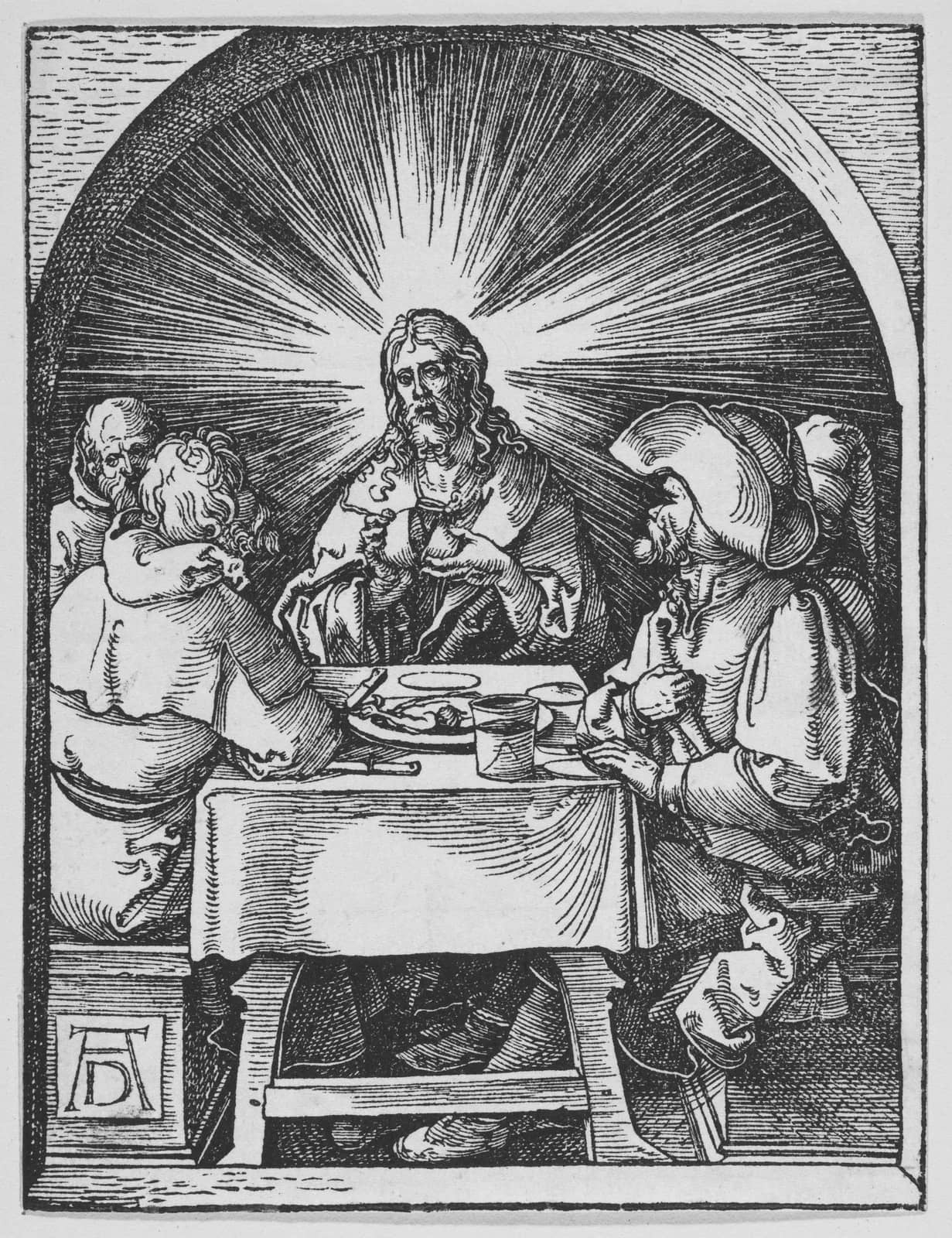
The risen Christ breaking bread with two disciples at Emmaus
Albrecht Dürer (1471–1528), Christ in Emmaus, from The Small Passion, ca. 1510. Credits

Email view of this day