This day

May 19, 2026

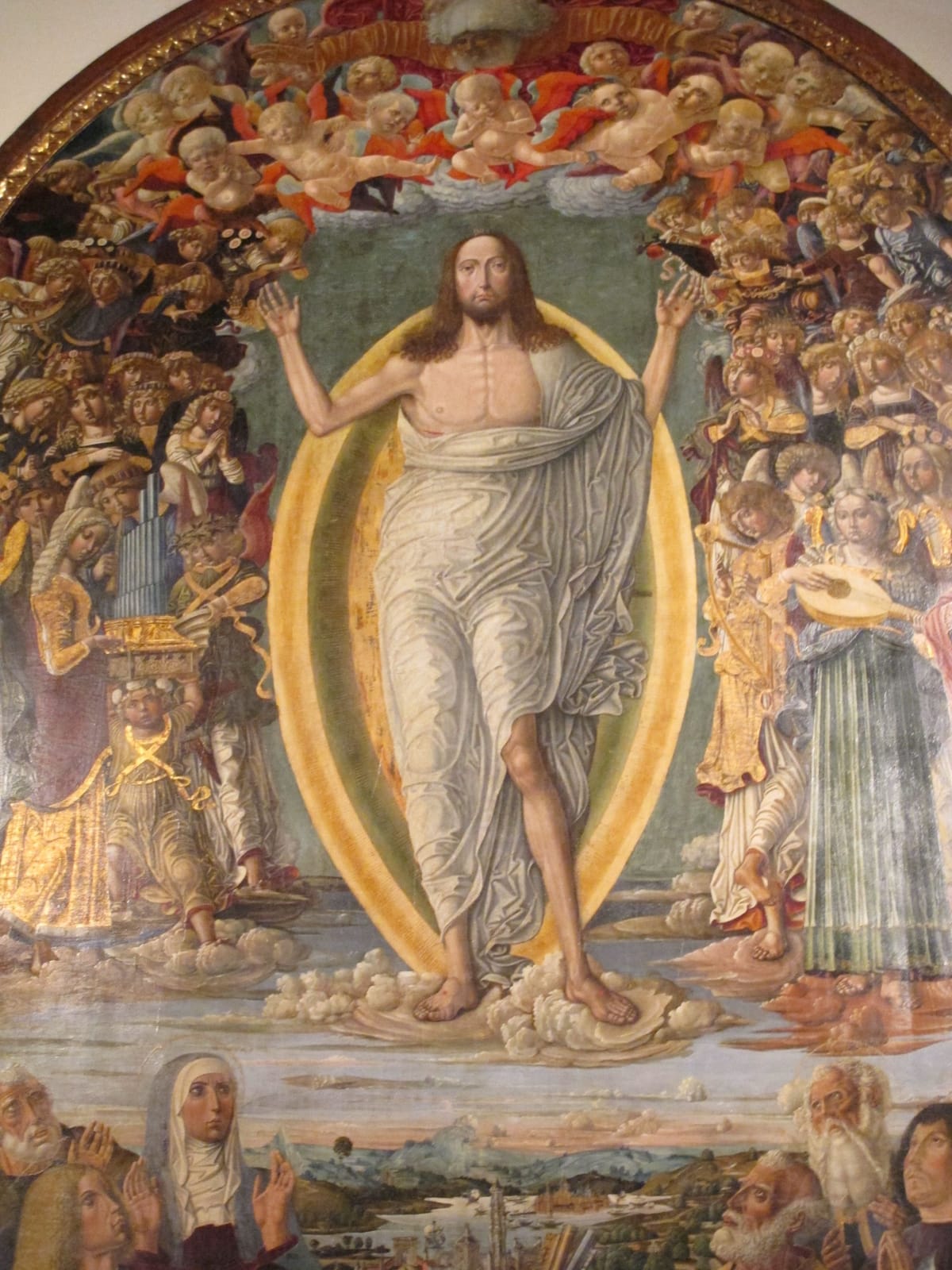
Christ stands in a mandorla of angels above Mary and the apostles, footprints on the rock
The Ascension of Christ, Benvenuto di Giovanni (1436–c. 1518). Credits

Paschal Time

May 19, 2026

Tuesday within the Octave of the Ascension

From Dom Guéranger’s The Liturgical Year.

O King of glory, Lord of hosts, who didst this day ascend in triumph above all the heavens! leave us not orphans, but send upon us the Spirit of truth, promised by the Father, alleluia.

The Lord of glory has ascended into heaven, and, as the apostle says, He has gone thither as our forerunner; but how are we to follow Him to this abode of holiness, we whose path is beset with sin, we who are ever needing pardon rather than meriting anything like glory? This brings us to another consequence of the exhaustless mystery of the Ascension; let us give it our closest attention. Jesus has gone to heaven, not only that He may reign as King, but also that He may intercede for us as our High Priest, and, in this quality, obtain for us both the pardon of our sins and the graces we need for following Him to glory. He offered Himself on the cross as a victim of propitiation for our sins; His precious Blood was shed as our superabundant ransom; but the gate of heaven remained shut against us, until He threw it open by His own entrance into that sanctuary, where He was to exercise His eternal office of’Priest according to the order of Melchisedech.’

Chapter 3: The Practice during Paschal Time

From Dom Guéranger’s The Liturgical Year.

THE practice for this holy season mainly consists in the spiritual joy which it should produce in every soul that is risen with Jesus. This joy is a fore-taste of eternal happiness, and the Christian ought to consider it a duty to keep it up within him, by ardently seeking after that life which is in our divine Head, and by carefully shunning sin which causes death. During the last nine weeks we have mourned for our sins and done penance for them; we have followed Jesus to Calvary; but now, our holy Mother the Church is urgent in bidding us rejoice. She herself has laid aside all sorrow; the voice of her weeping is changed into the song of a delighted Spouse.

In order that she might impart this joy to all her children, she has taken their weakness into account. After reminding them of the necessity of expiation, she gave them forty days wherein to do penance; and then, removing the restraint of Lenten mortification, she brings us to Easter as to a land where there is nothing but gladness, light, life, joy, calm, and the sweet hope of immortality.

Christ stands in a mandorla of angels above Mary and the apostles, footprints on the rock
Benvenuto di Giovanni (1436–c. 1518), The Ascension of Christ. Pinacoteca Nazionale, Siena. Public domain (Wikimedia Commons PD-Art). Credits

Email view of this day