This day

July 3, 2026

After Pentecost

July 3, 2026

July 3 [June 28]: St. Irenæus, Bishop and Martyr

From Dom Guéranger’s The Liturgical Year.

TO-DAY the Church of Lyons presents to the admiration of the whole world her own great doctor, the valiant Irenæus, who shines as the light of the West. But whilst contemplating him confirming with his blood the doctrine he had preached, let us hearken to his words bearing testimony to holy Church, words of world-wide celebrity, confounding hell and closing the mouth of heresy. May we not say that it was in order to afford us instruction so appropriate for to-morrow's festival that eternal Wisdom made choice of this particular day for his martyr’s triumph? Let us hearken to this zealous pupil of Polycarp and of the first disciples of the apostles; let us hearken to him who for this very reason is considered to be the most authentic witness to the faith in all the Churches of the second century, all which Churches (these are his own words when bishop of Lyons) bow down before Rome, as to their mistress and mother. ‘For,’ he continues, ' it behoves all the rest because of her superior principality to agree with her; in her do all the faithful of whatsoever place preserve ever pure the faith once preached to them.
Chapter 8: Of the Office of Compline for Sundays and Feasts during the Time after Pentecost

From Dom Guéranger’s The Liturgical Year.

This Office, which concludes the day, commences by a warning of the dangers of the night; then immediately follows the public confession of our sine, as a powerful means of propitiating the divine justice, and of obtaining God’s help, now that we are going to spend so many hours in the unconscious, and therefore dangerous, state of sleep, which is also such an image of death.

May the almighty Lord grant us a quiet night, and a perfect end.
℟. Amen.

The lector then reads these words, from the first Epistle of St. Peter: Fratres: Sobrii estote et vigilate: quia adversarius vester diabolus tamquam leo rugiens circuit, quærens quem devoret: cui resistite fortes in fide. Tu autem, Domine, miserere nobis.

Brethren, be sober and watch: because your adversary the devil, as a roaring lion, goeth about seeking whom he may devour: whom resist ye, strong in faith. But thou, O Lord, have mercy on us.

Then the Lord’s Prayer is recited in secret; after which the priest says the Confiteor, and when he has finished, the choir repeats it. The priest, having pronounced the general form of absolution, says:

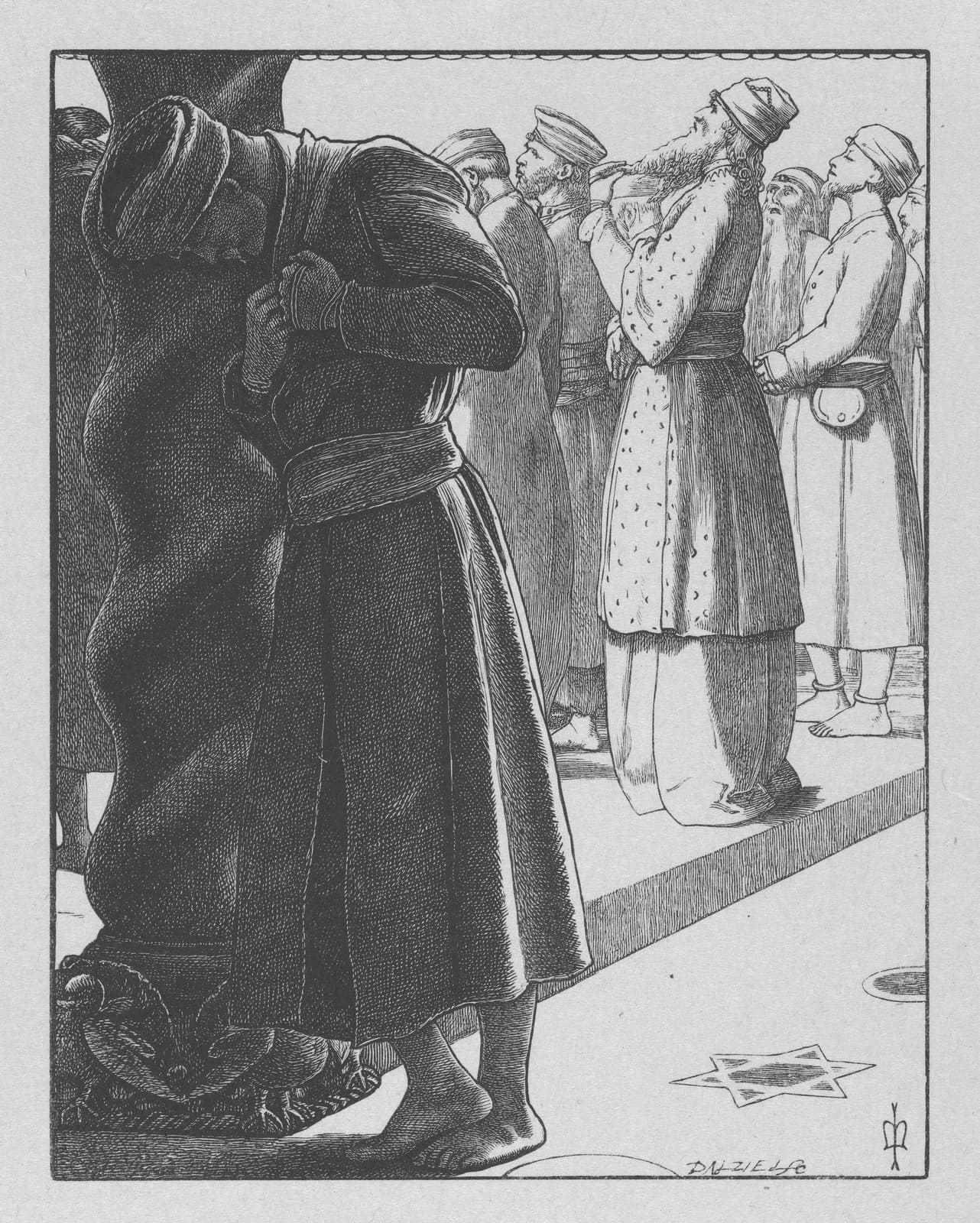
The Pharisee and the publican in the Temple
Sir John Everett Millais (1829–1896), The Pharisee and the Publican, from The Parables of Our Lord and Saviour Jesus Christ, 1864. Credits

Email view of this day