This day

July 16, 2026

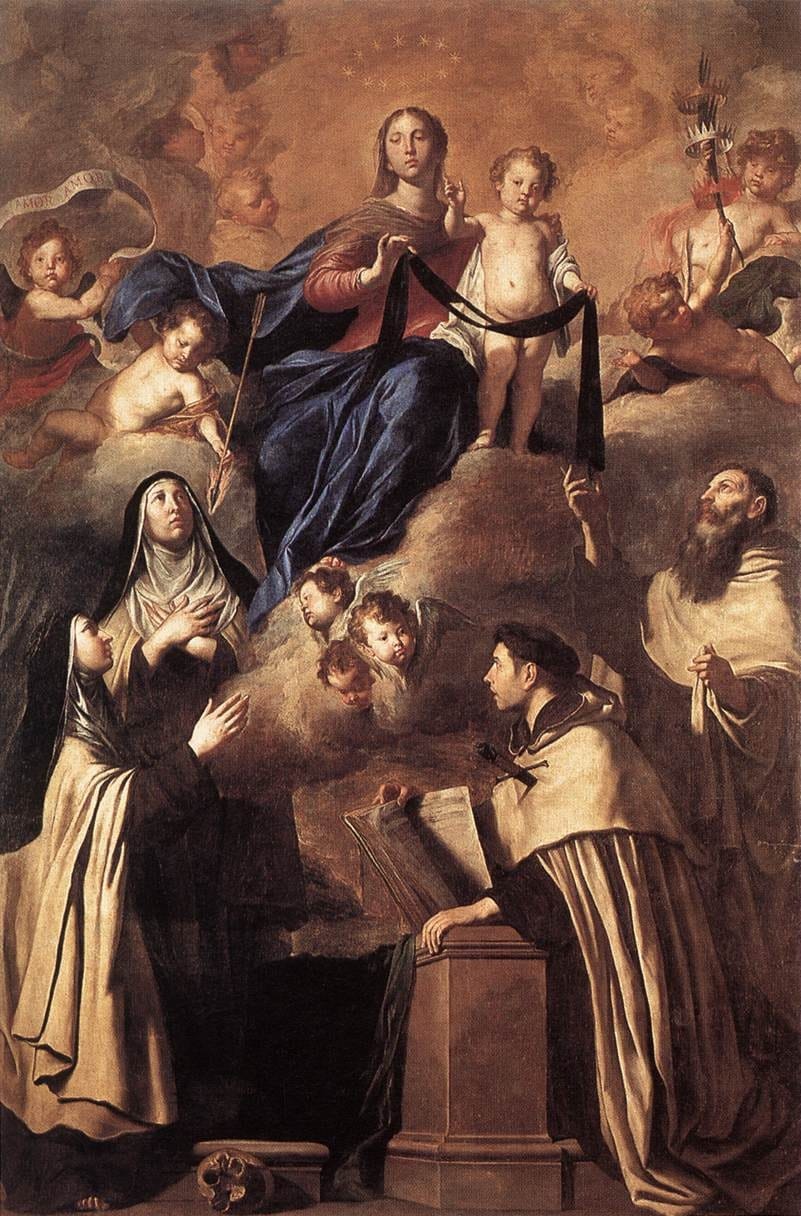
Our Lady of Mount Carmel with Child and scapular; Carmelite saints below
Our Lady of Mount Carmel, Pietro Novelli (1603–1647). Credits

After Pentecost

July 16, 2026

July 16: Our Lady of Mount Carmel

From Dom Guéranger’s The Liturgical Year.

TOWERING over the waves on the shore of the Holy Land, Mount Carmel, together with the short range of the same name, forms a connecting link to two other chains, abounding with glorious memories, namely: the mountains of Galilee on the north, and those of Judea on the south.

‘In the day of My love, I brought thee out of Egypt into the land of Carmel,’ said the Lord to the daughter of Sion, taking the name of Carmel to represent all the blessings of the Promised Land; and when the crimes of the chosen people were about to bring Judea to ruin, the prophet cried out: ‘I looked, and behold Carmel was a wilderness: and all its cities were destroyed at the presence of the Lord, and at the presence of the wrath of His indignation.’ But from the midst of the Gentile world a new Sion arose, more loved than the first; eight centuries beforehand Isaias recognized her by the glory of Libanus, and the beauty of Carmel and Saron which were given her. In the sacred Canticle, also, the attendants of the Bride sing to the Spouse concerning His well-beloved, that her head is like Carmel, and her hair like the precious threads of royal purple carefully woven and dyed.


This week's Sunday: The Seventh Sunday after Pentecost

From Dom Guéranger’s The Liturgical Year.

The dominical cycle of the Time after Pentecost completes to-day its first seven. Previous to the general adoption of the changes introduced into the Sunday Gospels for this portion of the year, the Gospel of the multiplication of the seven loaves gave its name to the seventh Sunday; and the mystery it contains is still evident in more than one section of to-day's liturgy.

As we have already seen, this mystery was that of the consummation of the perfect in the repose or rest of God Himself; it was the fruitful peace of the divine union. Nothing, then, could be more fitting than that Solomon, who is pre-eminently thepeaceful, the sacred and authorized chanter of the nuptial Canticle, should have been selected to come forward, on this day, to speak the praises of infinite Wisdom, and reveal her ways to the children of men. When Easter is kept as late in April as it is possible, the seventh Sunday after Pentecost is the first of the month of August; and the Church then begins, in her night Office, the lessons from the Sapiential Books.

Christ weeping over Jerusalem
Hans Schäufelein (1480–1540), Christ Deploring Jerusalem, from Das Plenarium, 1517. Credits

Email view of this day