After Pentecost
July 27, 2026
July 27: St. Pantaleon, Martyr
From Dom Guéranger’s The Liturgical Year.
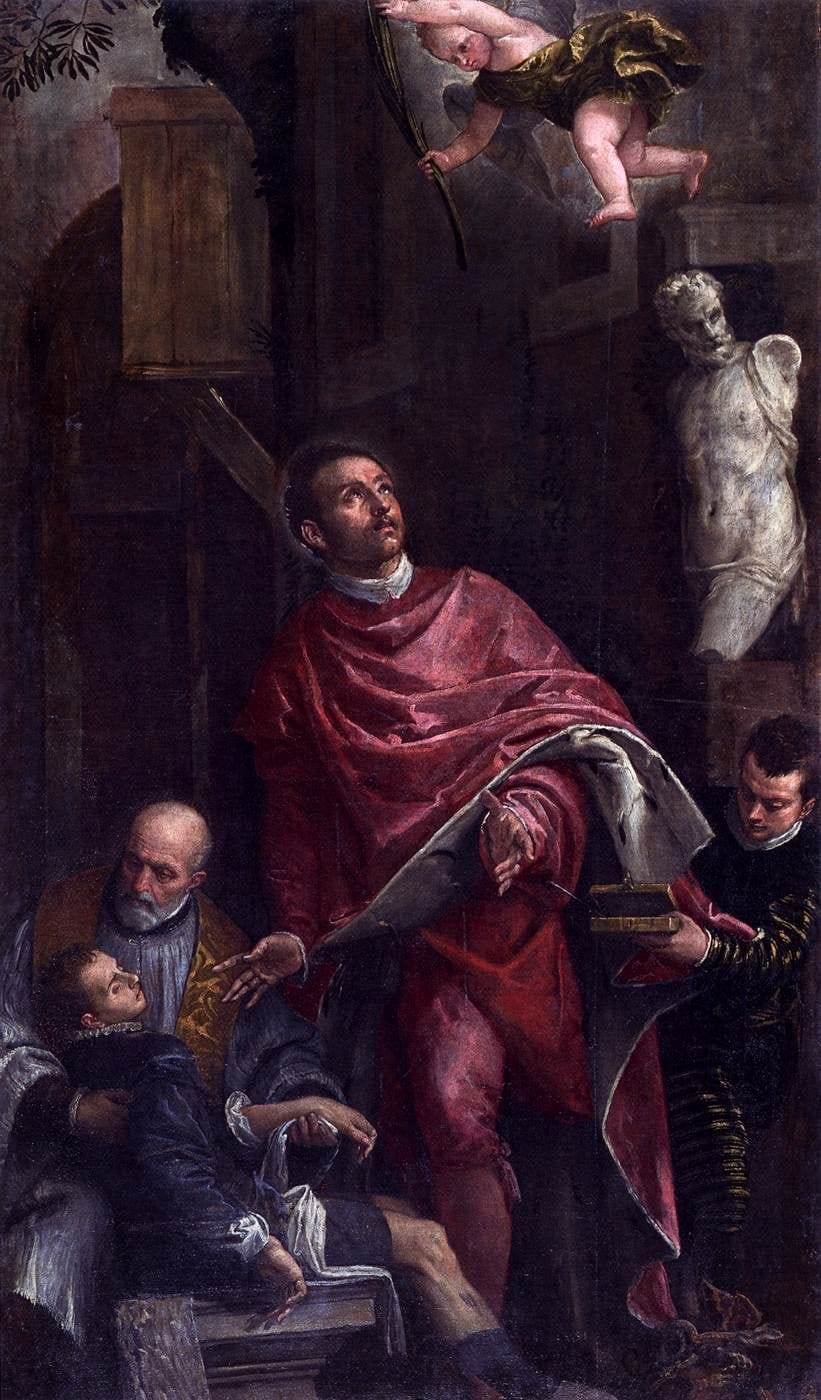
THE East celebrates to-day one of her great martyrs, who was both a healer of bodies and a conqueror of souls. His name, which recalls the strength of the lion, was changed by heaven at the time of his death into Panteleemon, or all-merciful—a happy presage of the gracious blessings our Lord would afterwards bestow on the earth through his means. The various translations and the diffusion of his sacred relics in our West have made his cultus widespread, together with his renown as a friend in need, which has caused him to be ranked among the saints called helpers.
Pantaleon was a nobleman of Nicomedia and a physician. He was instructed in the faith and baptized by the priest Hermolaus, and soon persuaded his father Eustorgius to become a Christian. Afterwards he freely preached the faith of our Lord Christ in Nicomedia, and encouraged all to embrace his doctrine. This was in the reign of Diocletian. He was tortured on the rack and red-hot plates were applied to his body. He bore the violence of these tortures calmly and bravely, and being finally beheaded, obtained the crown of martyrdom.