This day

August 12, 2026

St Clare of Assisi
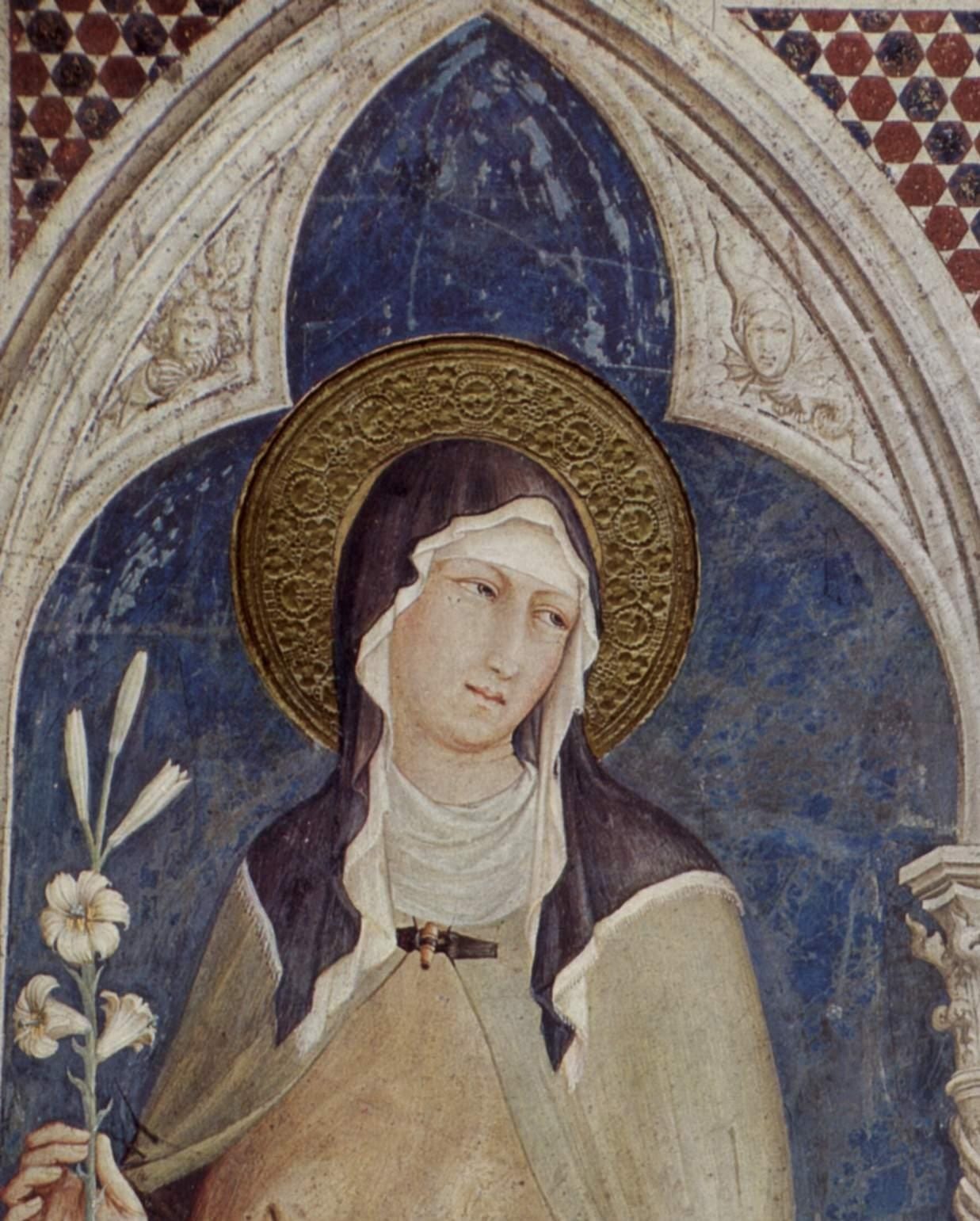
Saint Clare of Assisi, Simone Martini (1284–1344). Credits

After Pentecost

August 12, 2026

August 12: St. Clare, Virgin

From Dom Guéranger’s The Liturgical Year.

THE same year in which St. Dominic, before making any project with regard to his sons, founded the first establishment of the Sisters of his Order, the companion destined for him by heaven received his mission from the Crucifix in the church of St. Damian, in these words: ‘Go, Francis, repair My house, which is falling to ruin.' The new patriarch inaugurated his work, as Dominic had done, by preparing a dwelling for his future daughters, whose sacrifice might obtain every grace for the great Order he was about to found. The house of the Poor Ladies occupied the thoughts of the seraph of Assisi, even before St. Mary of the Portiuncula, the cradle of the Friars Minor. Thus, for a second time this month, Eternal Wisdom shows us that the fruit of salvation, though it may seem to proceed from the word and from action, springs first from silent contemplation.

Clare was to Francis the help like unto himself, who begot to the Lord that multitude of heroic virgins and illustrious penitents soon reckoned by the Order in all lands, coming from the humblest condition and from the steps of the throne.

This week's Sunday: The Eleventh Sunday after Pentecost

From Dom Guéranger’s The Liturgical Year.

With the Greeks, this Sunday—their eleventh of Saint Matthew—is called the Parable of the King, who calls his servants to account. In the western Church, it has gone under the name of Sunday of the deaf and dumb, ever since the Gospel of the pharisee and the publican has been assigned to the tenth. To-day's Mass, as we now have it, still gives evidence as to what was its ancient arrangement. Our commentary on to-day's liturgy will show us this very plainly.

In the years when Easter falls nearest to March 21 the Books of Kings are continued as lessons of Matins up to, but never beyond, this Sunday. The sickness of the good king Ezechias, and the miraculous cure he obtained by his prayers and tears, are then the subject of the first lessons of the night-Office.

The learned and pious Abbot Rupert, writing on this Sunday's Mass previous to the change made in the order of the Gospel lessons, thus explains the Church's reason for selecting the following Introit: ‘The publican in the Gospel accuses himself, saying: “I am not worthy to lift up mine eyes to heaven.”

The parable of the banquet whose invited guests stayed away
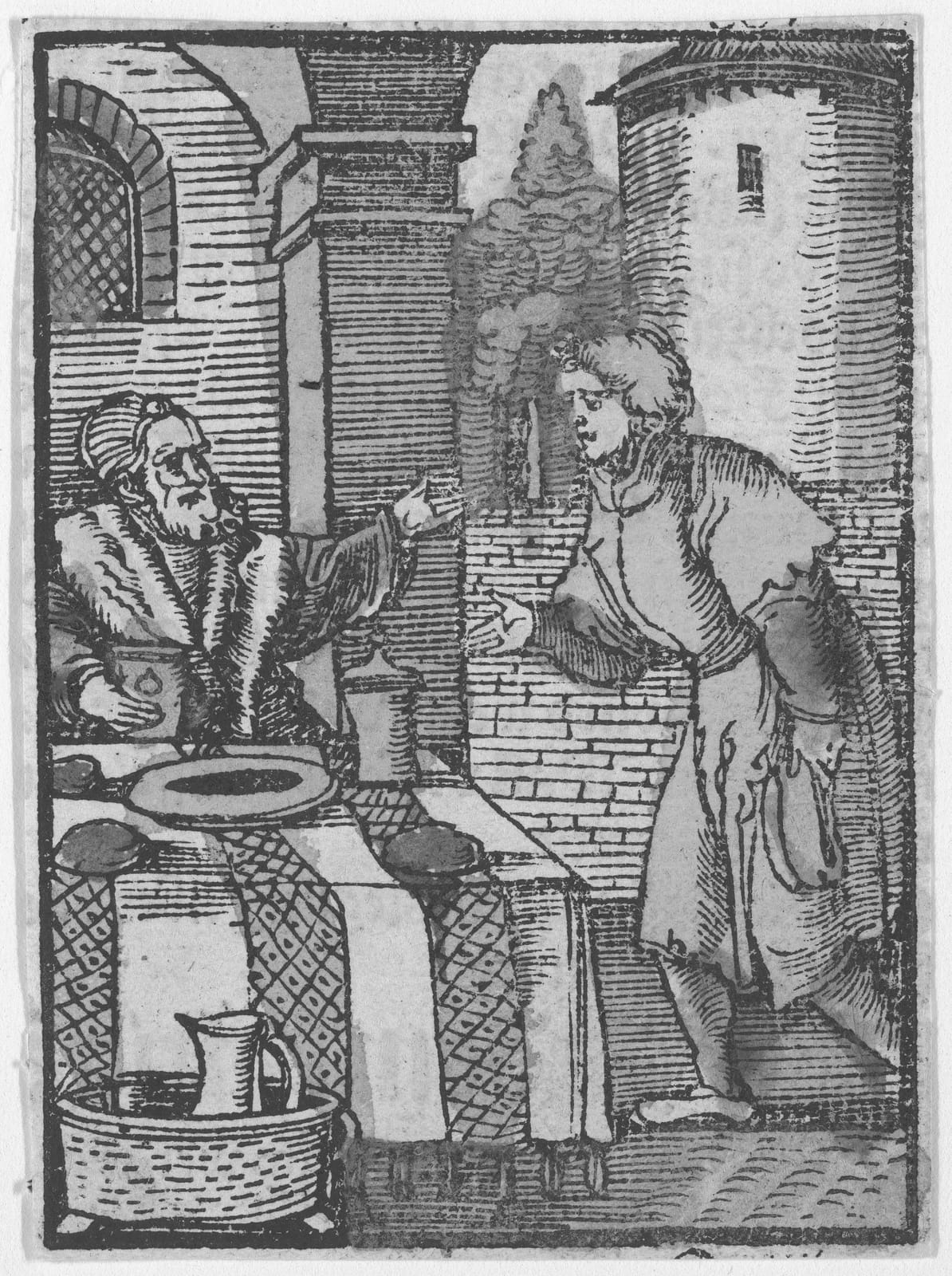
Hans Schäufelein (1480–1540), The Parable of the Banquet without Guests, from Das Plenarium, 1517. Credits

Email view of this day