This day

September 30, 2026

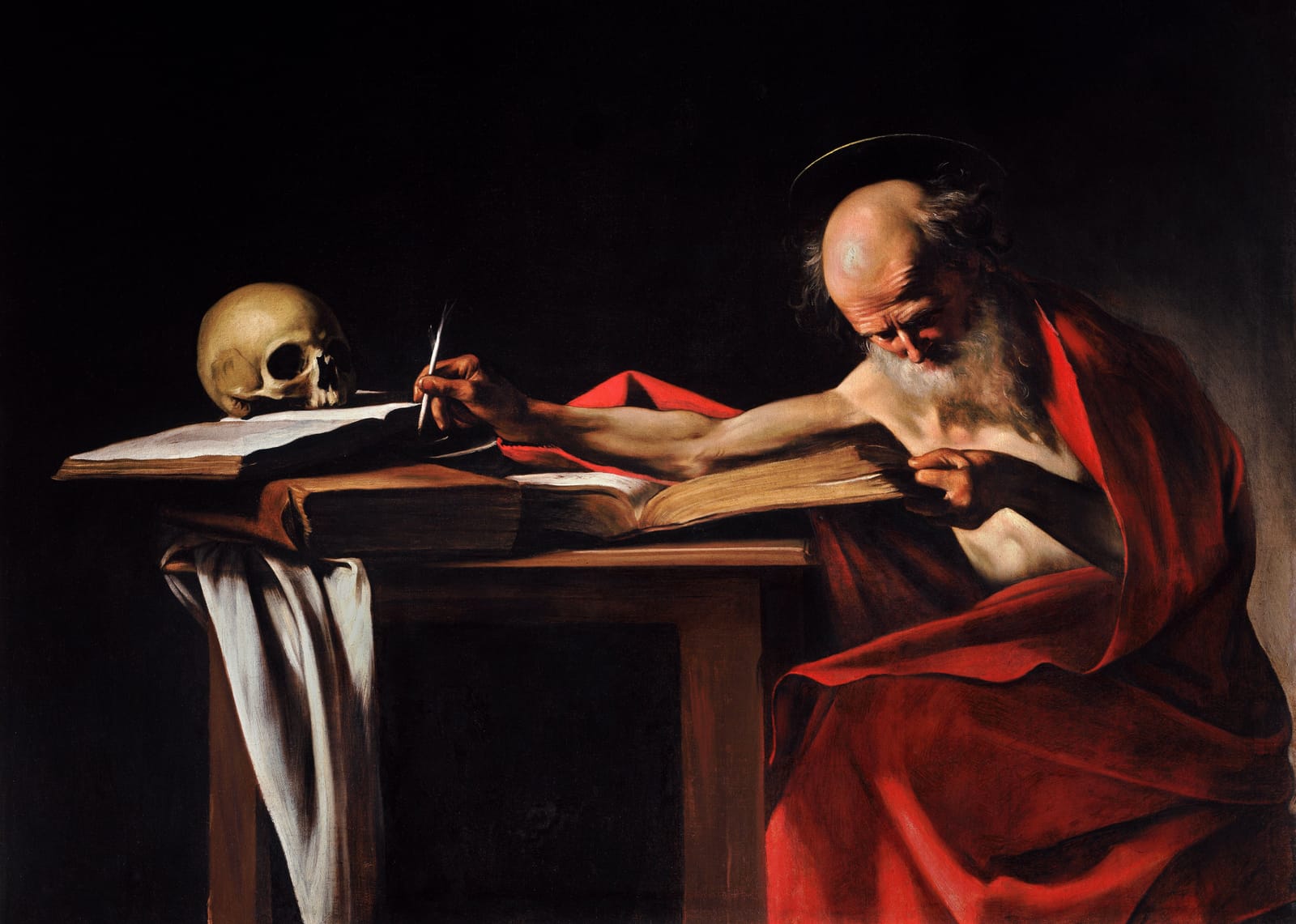
Saint Jerome Writing
Saint Jerome Writing, Caravaggio (1571–1610), 1605–1606. Credits

After Pentecost

September 30, 2026

September 30: St. Jerome, Priest, Confessor and Doctor of the Church

From Dom Guéranger’s The Liturgical Year.

‘I know not Vitalis, I reject Meletius, I pass by Paulinus; he that cleaveth to the Chair of Peter, he is mine.’ Thus, about the year 376, when the whole east was disturbed by the competitions for the episcopal See of Antioch, wrote an unknown monk to Pope St. Damasus. It was St. Jerome, a native of Dalmatia, who implored ‘light for his soul redeemed by the Blood of our Lord.’

Far from Stridonium, his semi-barbarous native place, whose austerity and vigour he never lost; far from Rome, where the study of literature and philosophy had not had sufficient ascendency to withhold him from the seductions of pleasure; the fear of God’s judgments had led him into the desert of Chalcis. There, under a burning sky, in the company of wild beasts, he for four years tormented his body with fearful macerations; and then, as a yet more efficacious remedy, and certainly a more meritorious mortification for one passionately fond of classical beauties, he sacrificed his Ciceronian tastes to the study of the Hebrew language. Such an undertaking was far more laborious then than in our days of lexicons and grammars and scientific works of every description.

This week's Sunday: The Eighteenth Sunday after Pentecost

From Dom Guéranger’s The Liturgical Year.

The paralytic carrying his bed is the subject of this day’s Gospel, and gives the eighteenth Sunday after Pentecost its title. This Sunday is inserted in the missal immediately after the Ember-days of autumn. We will not, like the liturgists of the Middle Ages, discuss the question of its having taken the place of the vacant Sunday, which formerly used always to follow the ordination of the sacred ministers, in the manner we have elsewhere described. Manuscript sacramentaries and lectionaries of very ancient date give it the name, which was so much in use, of Dominica vacat. Whatever may be the conclusion arrived at, there is one interesting point for consideration, viz., that in the Mass of this day the order of the lessons taken from St. Paul is broken. The Letter to the Ephesians, which has furnished the Epistles since the sixth Sunday after Pentecost, is to-day interrupted, and in its stead we have some verses from the first Epistle to the Corinthians, wherein the apostle gives thanks to God for the manifold gratuitous gifts granted, in Christ Jesus, to the Church.

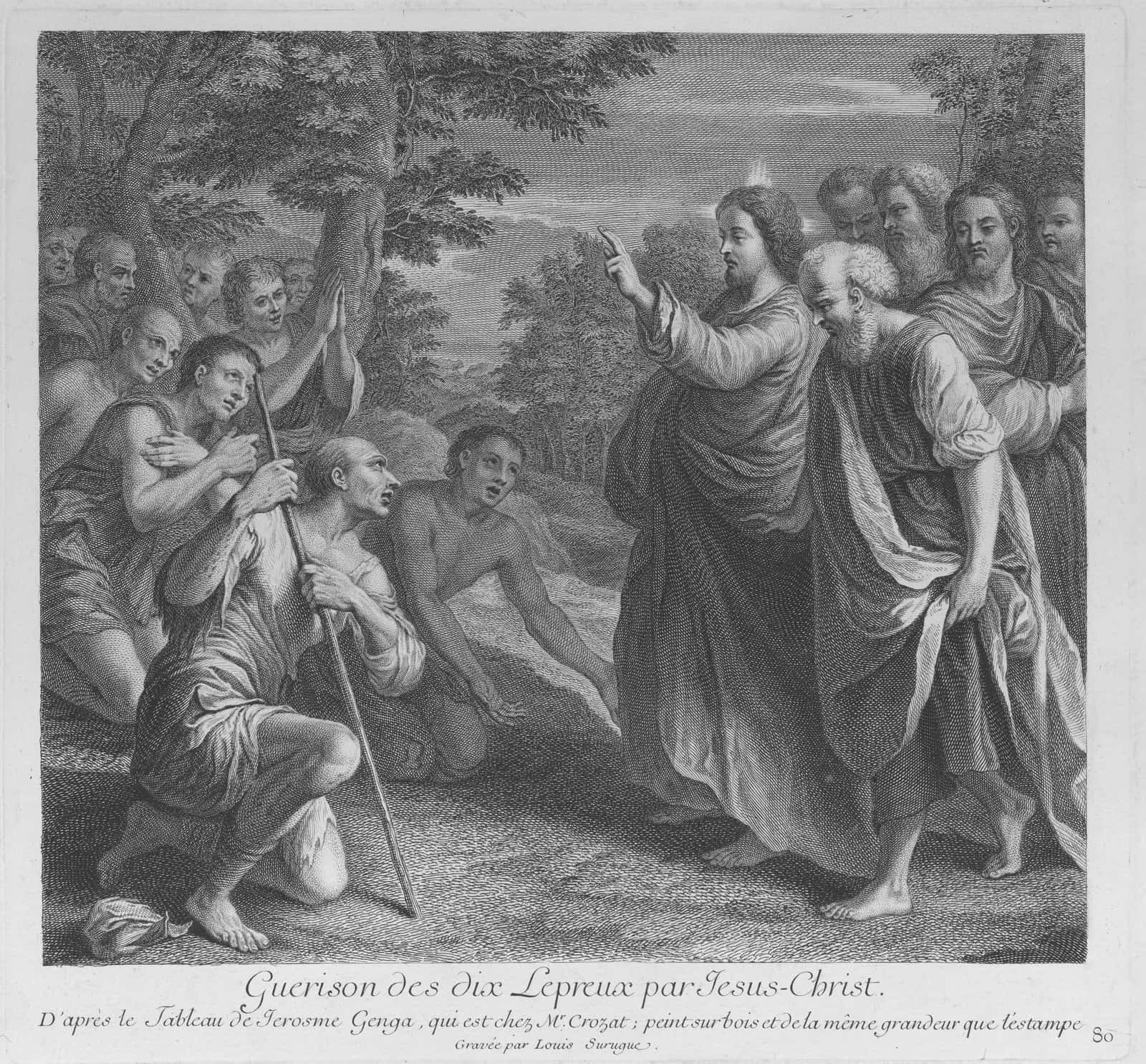
Christ healing the ten lepers
Louis Surugue (1686–1762), Healing of the ten lepers by Christ, who stands at right, ca. 1729. Credits

Email view of this day