This day

October 2, 2026

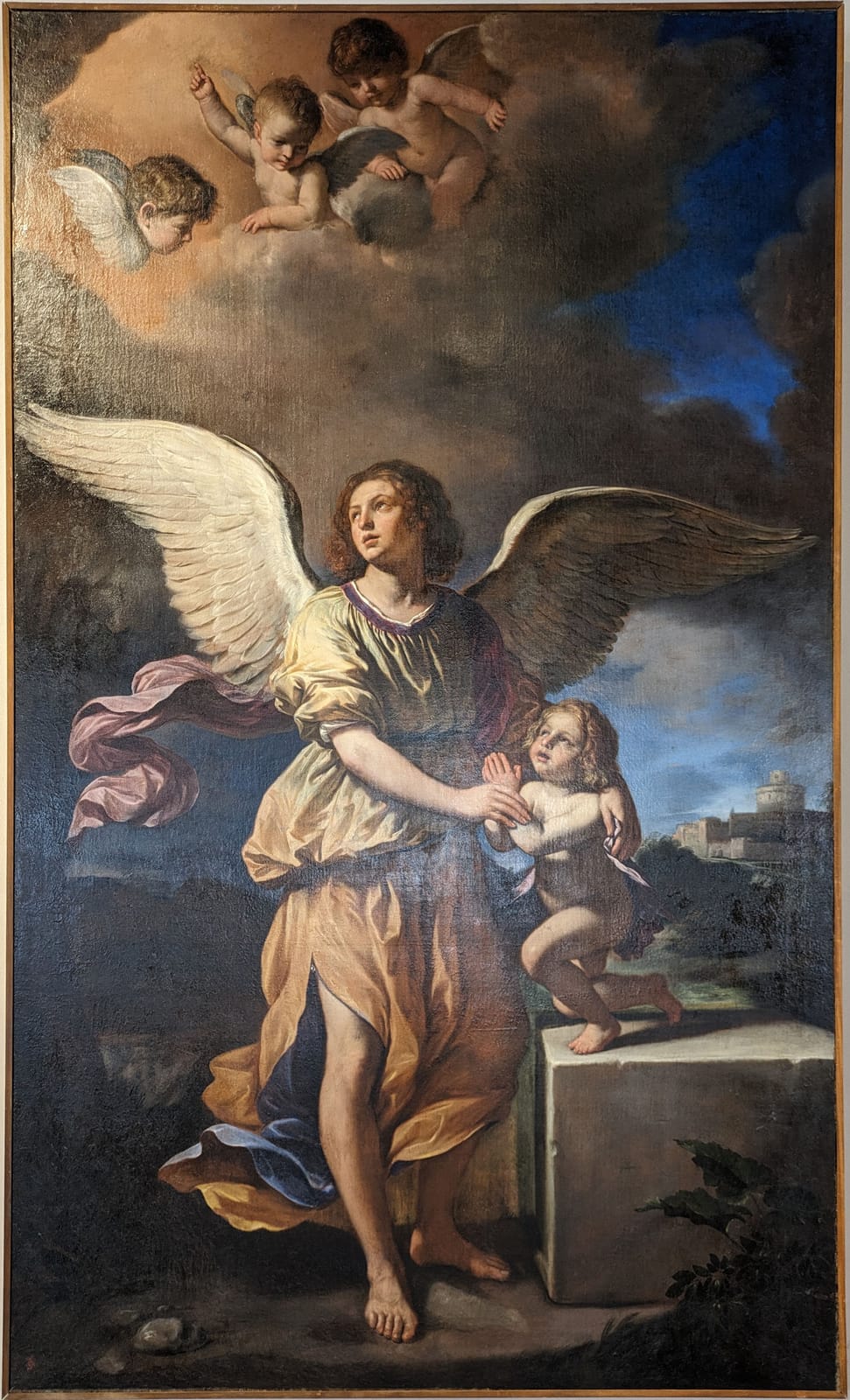
The Guardian Angel (L'angelo custode)
The Guardian Angel (L'angelo custode), Guercino (1591–1666), 1641. Photo: Accurimbono. Credits

After Pentecost

October 2, 2026

October 2: The Holy Guardian Angels

From Dom Guéranger’s The Liturgical Year.

Although the solemnity of September 29 celebrates the praises of all the nine glorious choirs, yet the piety of the faithful, in the latter ages, desired to have a special day consecrated to the Guardian Angels. Several churches having taken the initiative, and kept the feast under various rites and on different days, Paul V (1608) authorized its celebration ad libitum. Clement X (1670) established it by precept as a feast of double rite on October 2, the first free day after Michælmas, on which it thus remains in some way dependent.

It is of faith, on the testimony of the Scriptures and of unanimous tradition, that God commits to His angels the guardianship of men, who are called to contemplate Him together with these blessed spirits in their common fatherland. Catholic theology teaches that this protection is extended to every member of the human race, without any distinction of just and sinners, infidels and baptized. To ward off dangers; to uphold man in his struggle against the demons; to awaken in him holy thoughts; to prevent him from sinning, and even, at times, to chastise him; to pray for him, and present his prayers to God: such is the office of the Guardian Angel.

This week's Sunday: The Eighteenth Sunday after Pentecost

From Dom Guéranger’s The Liturgical Year.

The paralytic carrying his bed is the subject of this day’s Gospel, and gives the eighteenth Sunday after Pentecost its title. This Sunday is inserted in the missal immediately after the Ember-days of autumn. We will not, like the liturgists of the Middle Ages, discuss the question of its having taken the place of the vacant Sunday, which formerly used always to follow the ordination of the sacred ministers, in the manner we have elsewhere described. Manuscript sacramentaries and lectionaries of very ancient date give it the name, which was so much in use, of Dominica vacat. Whatever may be the conclusion arrived at, there is one interesting point for consideration, viz., that in the Mass of this day the order of the lessons taken from St. Paul is broken. The Letter to the Ephesians, which has furnished the Epistles since the sixth Sunday after Pentecost, is to-day interrupted, and in its stead we have some verses from the first Epistle to the Corinthians, wherein the apostle gives thanks to God for the manifold gratuitous gifts granted, in Christ Jesus, to the Church.

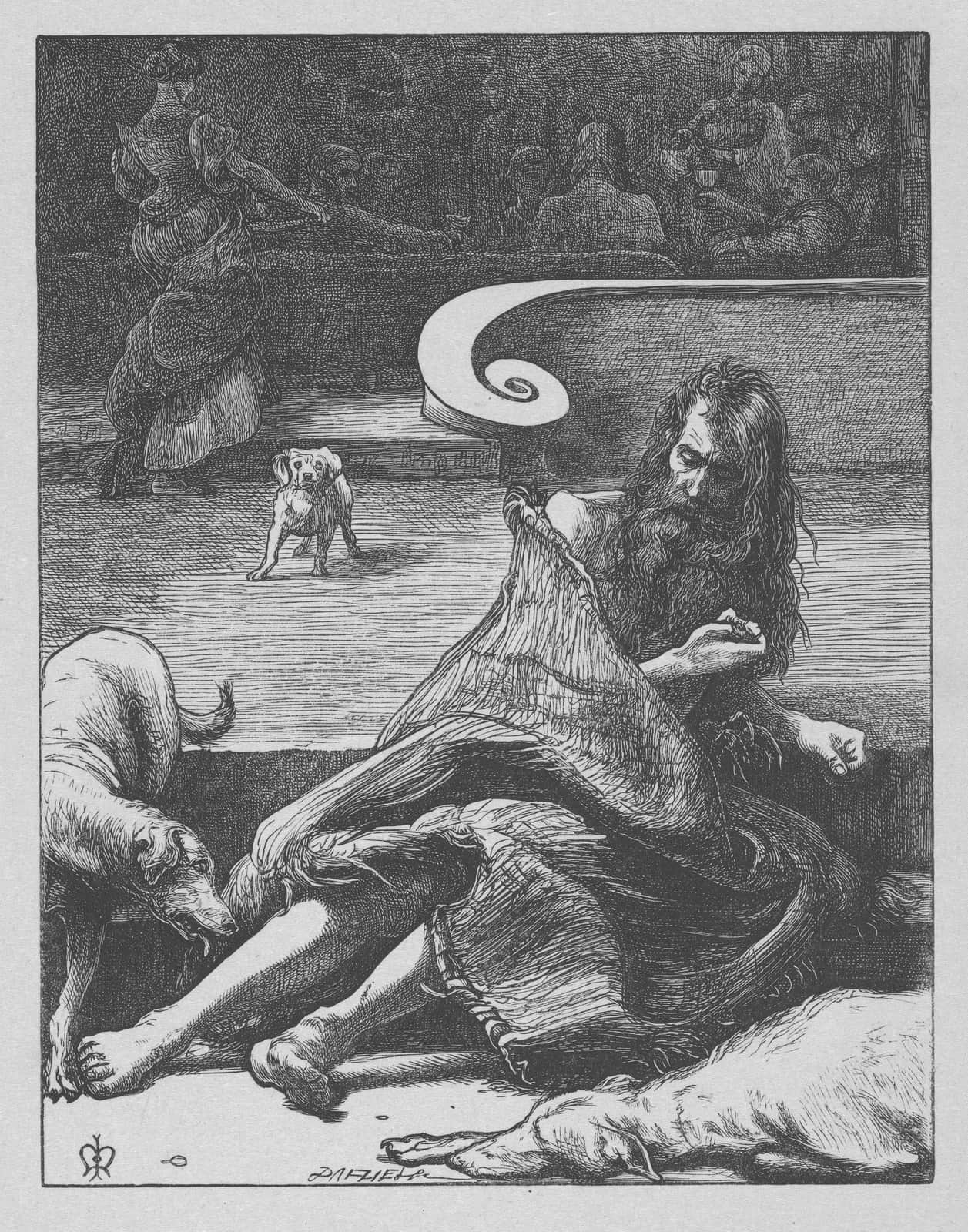
The rich man and Lazarus
Sir John Everett Millais (1829–1896), The Rich Man and Lazarus, from The Parables of Our Lord and Saviour Jesus Christ, 1864. Credits

Email view of this day