This day

October 26, 2026

After Pentecost

October 26, 2026

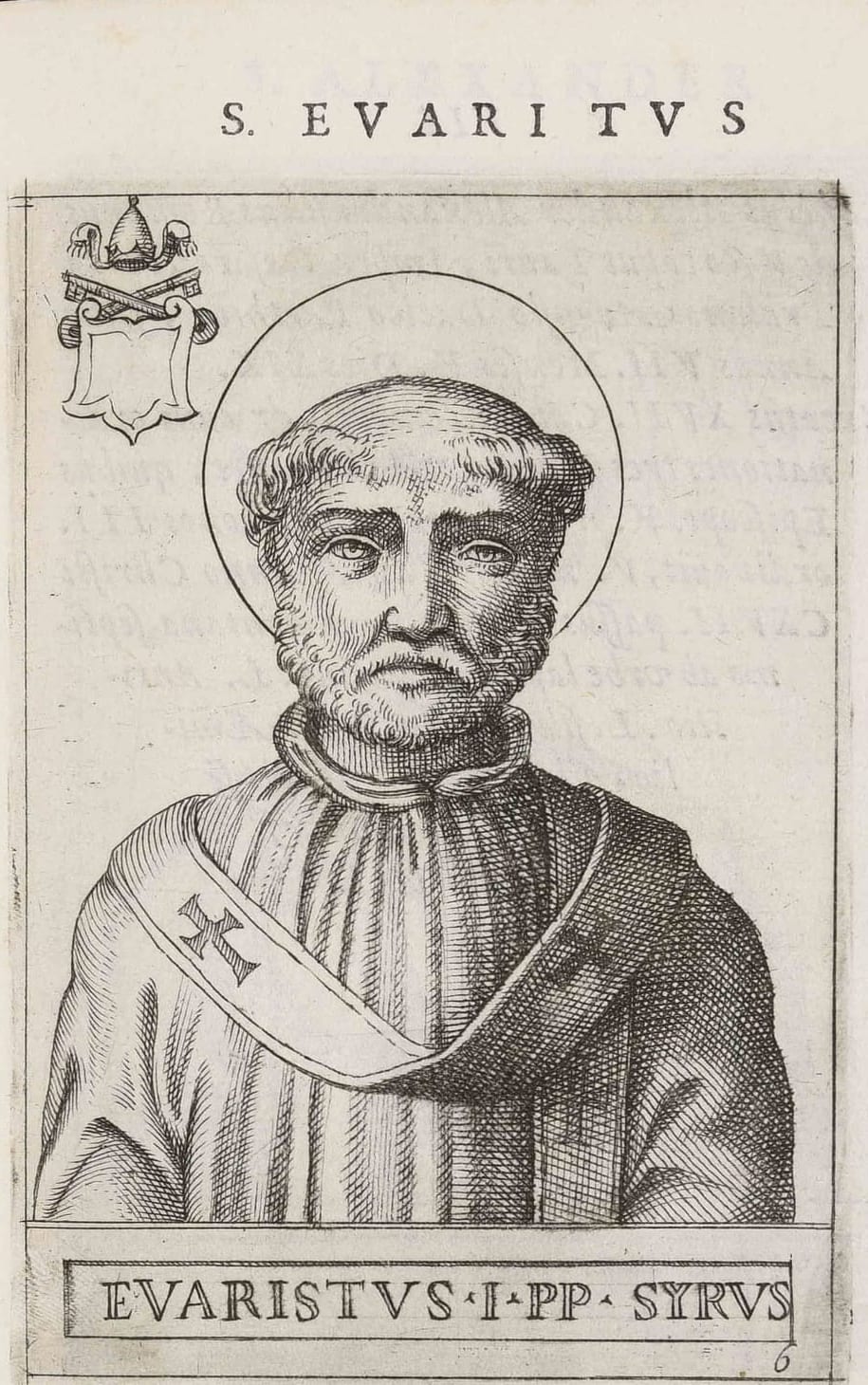
October 26: St. Evaristus, Pope and Martyr

From Dom Guéranger’s The Liturgical Year.

The beloved disciple had just received the longpromised visit of our Lord inviting him to heaven, when the Church, under Evaristus, completed the drawing up of the itinerary for her long pilgrimage to the end of time. The blessed period of the apostolic times was definitively closed; but the eternal city continued to augment her treasure of glory. Under this pontificate the virgin Domitilla, by her martyrdom, cemented the foundations of the new Jerusalem with the blood of the Flavii, who had destroyed the old. Then Ignatius of Antioch brought to the ‘Church that presides in charity,' the testimony of his death; he was the wheat of Christ, and the teeth of the wild beasts in the coliseum satisfied his desire of becoming a most pure bread.

Evaristus was born in Greece, of a Jewish father, and was sovereign Pontiff during the reign of Trajan. He divided the titles of the churches of Rome among the priests, and ordained that seven deacons should attend the bishop when preaching. He also decreed that, according to the tradition of the apostles, matrimony should be celebrated publicly and blessed by a priest.


This week's Sunday: The Twenty-Second Sunday after Pentecost

From Dom Guéranger’s The Liturgical Year.

According to Honorius of Autun, the Mass of to-day has reference to the days of Antichrist. The Church, foreseeing the reign of the man of sin, and as though she were actually undergoing the persecution which is to surpass all others, takes her Introit of this twenty-second Sunday from the Psalm De profundis.

If, unitedly with this prophetic sense, we would apply these words practically to our own personal miseries, we must remember the Gospel we had last week, which was formerly appointed for the present Sunday. Each one of us will recognize himself in the person of the insolvent debtor, who has nothing to trust to but his master’s goodness; and, in our deep humiliation, we shall exclaim: If thou, O Lord, mark iniquities, who shall endure it?

If thou, O Lord, wilt mark iniquities, Lord! who shall endure it? For with thee there is merciful forgiveness, O God of Israel!
Ps. Out of the depths have I cried unto thee, O Lord: Lord! hear my voice. Glory, etc. If thou.

We have just been rousing our confidence by singing that with God there is merciful forgiveness.

Christ speaking with the Pharisees
Hans Schäufelein (1480–1540), Christ and the Pharisees, from Das Plenarium, 1517. Credits

Email view of this day