After Pentecost
November 14, 2026
November 14: St. Josaphat, Bishop and Martyr
From Dom Guéranger’s The Liturgical Year.
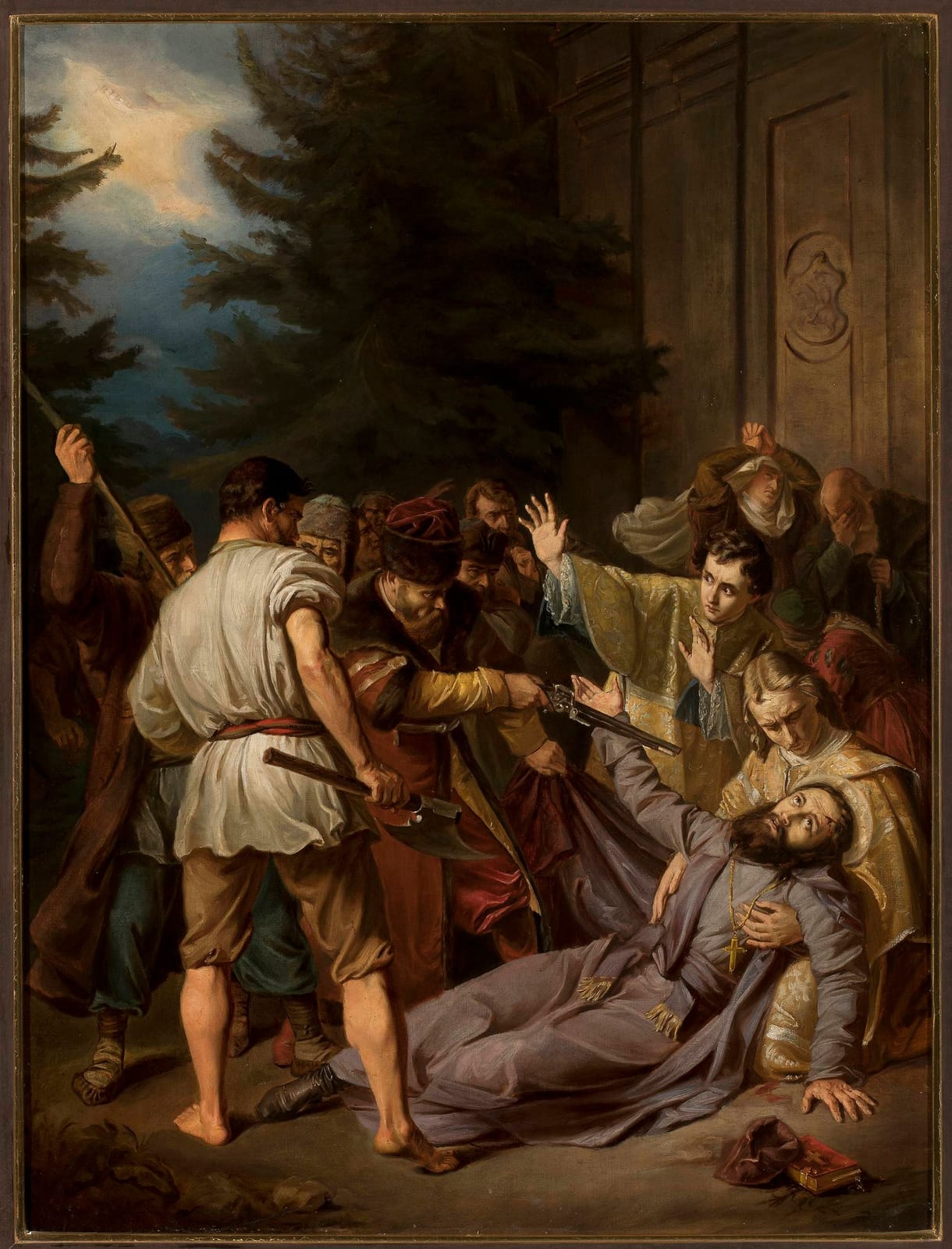
JOSAPHAT Kuncewicz, contemporary with St. Francis de Sales and St. Vincent de Paul, might have been taken for a Greek monk of the eleventh century, or an ascetic of the Thebaid. A stranger to the intellectual culture of the West, he knew only the liturgical books and sacred texts used in his own church; as a priest, an archimandrite, a reformer of his Order of St. Basil, and lastly as Archbishop, he combated all his life against the consequences of the schism of Photius, and closed the struggle by culling the palm of martyrdom. Yet all this took place in the heart of Europe, in the countries then subject to Catholic Poland, during the reign of the most pious of its kings. How is this mystery to be explained?
Immediately after the Mongolian invasions, Poland received into her arms, rather than conquered, the Ruthenian nation, that is to say the Slays of the Greek rite from the Dnieper and the Dwina, who had formed around their capital and religious metropolis, Kiev, the nucleus of the power now known as Russia. Had she granted a participation in her own national life to these brethren separated from, but not enemies to, the Roman unity, who came to her full of confidence in her strength and her justice, Poland would have secured the triumph of the Catholic cause, and her own dominion throughout Slavonia.