This day

December 7, 2026

Advent

December 7, 2026

No Vigil of the Immaculate Conception before 1879.Rubric

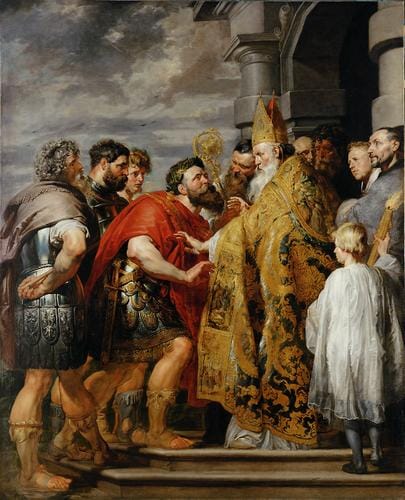
December 7: St. Ambrose, Bishop and Doctor of the Church

From Dom Guéranger’s The Liturgical Year.

This illustrious pontiff was deservedly placed in the calendar of the Church side by side with the glorious bishop of Myra. Nicholas confessed, at Nicæa, the divinity of the Redeemer; Ambrose, in his pity of Milan, was the object of the hatred of the Arians, and, by his invincible courage, triumphed over the enemies of Christ. Let Ambrose, then, unite his voice, as doctor of the Church, with that of St. Peter Chrysologus, and preach to the world the glories and the humiliations of the Messias. But, as doctor of the Church, he has a special claim to our veneration: it is, that among the bright luminaries of the Latin Church, four great masters head the list of sacred interpreters of the faith: Gregory, Augustine, Jerome; and then our glorious Ambrose, bishop of Milan, makes up the mystic number.

Ambrose owes his noble position in the calendar to the ancient custom of the Church, whereby, in the early ages, no saint’s feast was allowed to be kept in Lent. The day of his departure from this world and of his entrance into heaven was the fourth of April, which, more frequently than not, comes during Lent; so that it was requisite that the memory of his sacred death should be solemnized on some other day, and the seventh of December naturally presented itself for such a feast, inasmuch as it was the anniversary-day of Ambrose’s consecration as bishop.

Monday of the Second Week of Advent

From Dom Guéranger’s The Liturgical Year.

Regem venturum Dominum, venite, adoremus.De Isaia Propheta.
Cap. xiii.

Onus Babylonis, quod vidit Isaias filius Amos. Super montem caliginosum levate signum, exaltate vocem, levate manum, et ingrediantur portas duces. Ego mandavi sanctificatis meis, et vocavi fortes meos in ira mea, exsultantes in gloria mea. Vox multitudinis in montibus, quasi populorum frequentium: vox sonitus regum, gentium congregatarum. Dominus exercituum præcepit militiæ belli, venientibus de terra procul, a summitate cœli; Dominus, et vasa furoris ejus, ut disperdat omnem terram. Ululate, quia prope est dies Domini, quasi vastitas a Domino veniet. Propter hoc omnes manus dissolventur, et omne cor hominis contabescet, et conteretur. Torsiones et dolores tenebunt, quasi parturiens dolebunt: unusquisque ad proximum suum stupebit, facies combustæ vultus eorum. Ecco dies Domini veniet crudelis et indignationis plenus, et iræ, furorisque ad ponendam terram in solitudinem, et peccatores ejus conterendos de ea. Quoniam stellæ cœli, et splendor earum non expandent lumen suum: obtenebratus est sol in ortu suo, et luna non splendebit in lumine suo. Et visitabo super orbis mala, et contra impios iniquitatem eorum: et quiescere faciam superbiam infidelium, et arrogantiam fortium humiliabo.

Come, let us adore the King our Lord, who is to come.From the Prophet Isaias.
Ch. xiii.

The burden of Babylon, which Isaias the son of Amos saw. Upon the dark mountain lift ye up a banner, exalt the voice, lift up the hand and let the rulers go into the gates.

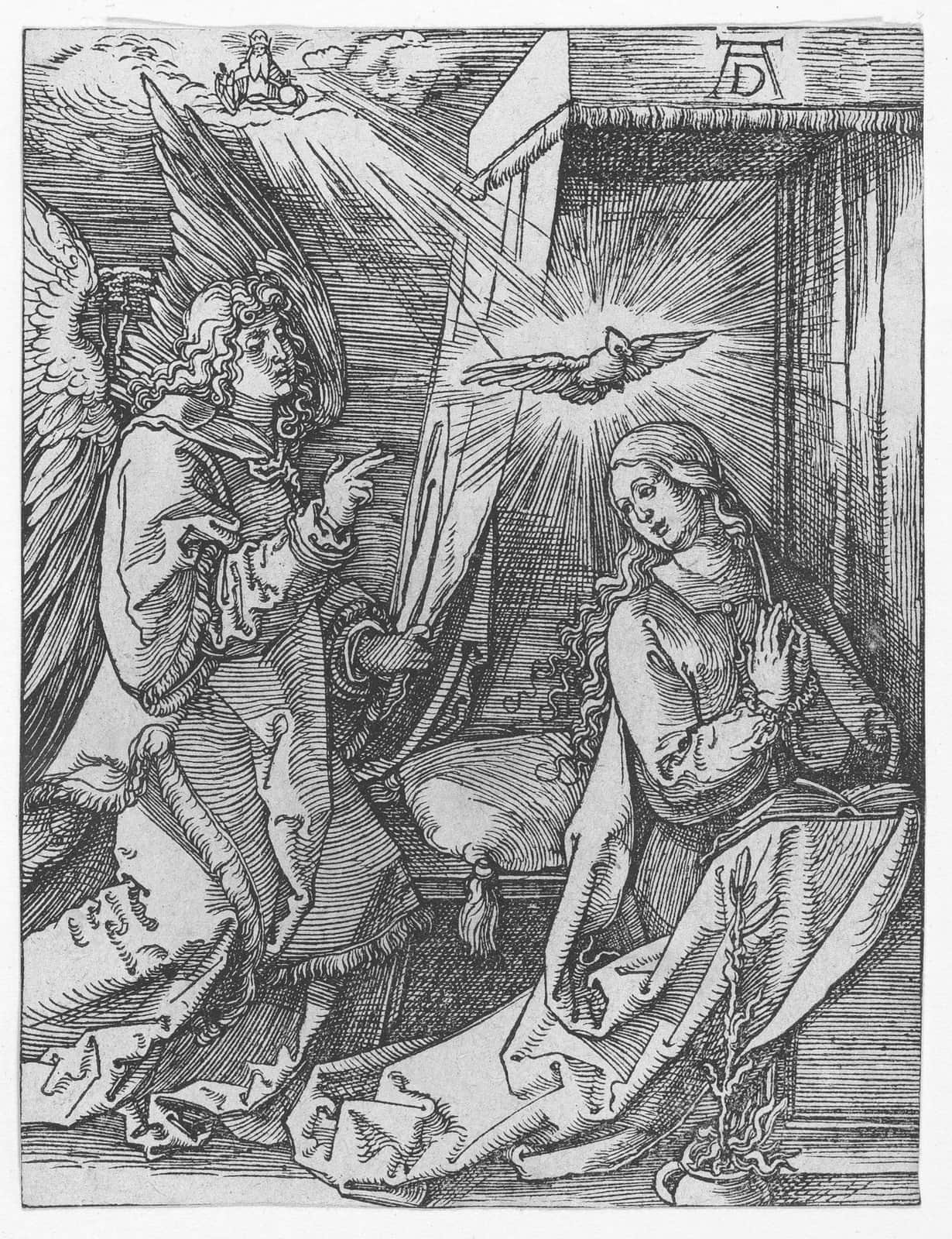
The Annunciation: the Archangel Gabriel appears to the Virgin Mary
Albrecht Dürer (1471–1528), The Annunciation, from The Small Passion, ca. 1510. Credits

Email view of this day