This day

February 14, 2027

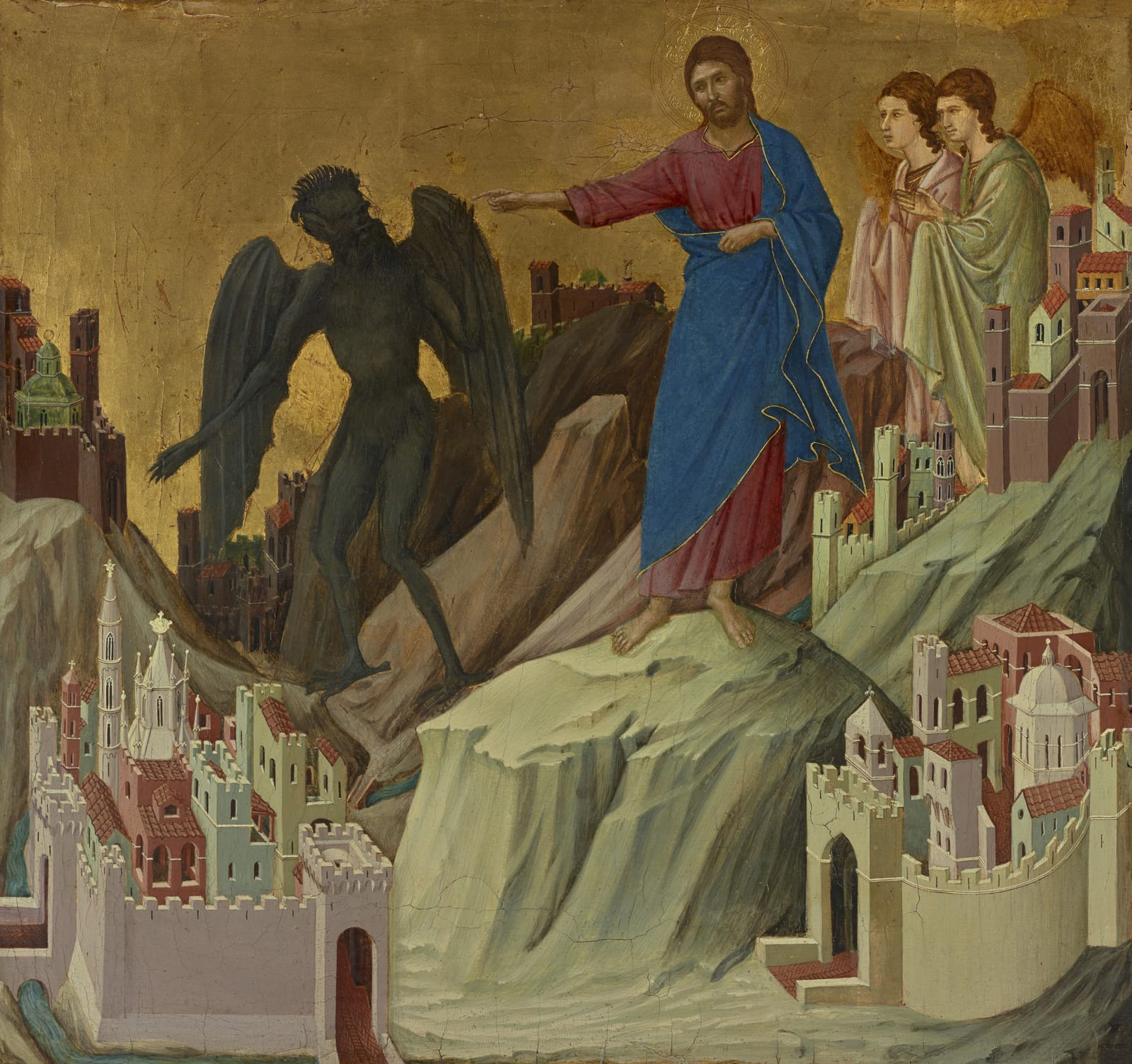
The Temptation on the Mount
The Temptation on the Mount, Duccio (1255–1319), c. 1308–1311. Credits

Lent

February 14, 2027

The Sunday leads; St. Valentine is commemorated.Rubrics

The First Sunday of Lent

From Dom Guéranger’s The Liturgical Year.

This Sunday, the first of the six which come during Lent, is one of the most solemn throughout the year. In common with the other Sundays of Lent, it has the privilege of taking precedence of all feasts, even that of the patron, titular saint, or dedication of the Church. In the ancient calendars, it is called Invocabit, from the first word of the Introit of the Mass. In the middle ages, it was called Brand Sunday, because the young people, who had misconducted themselves during the carnival, were obliged to show themselves to-day at the church with a torch in their hands, as a kind of public satisfaction for their riot and excess.

Lent solemnly opens to-day. We have already noticed that the four preceding days were added since the time of St. Gregory the Great, in order to make up forty days of fasting. Neither can we look upon Ash Wednesday as the solemn opening of the season; for the faithful are not bound to hear Mass on that day. The holy Church, seeing her children now assembled together, speaks to them, in her Office of Matins, these eloquent and noble words of St. Leo the Great: Having to announce to you, dearly beloved, the most sacred and chief fast, how can I more appropriately begin, than with the words of the apostle, in whom Christ Himself spoke, and by saying to you what has just been read: Behold!

Chapter 5: On Hearing Mass during the Season of Lent

From Dom Guéranger’s The Liturgical Year.

The Christian who enters into the spirit of the Church during this season of Lent, will find an increase in his soul of that holy fear of God, which the psalmist tells us is the beginning of wisdom. The remembrance of his sins, the practice of the holy penances of Lent, the example of a God expiating our sins by fasting in the desert, the Church’s ceaseless prayer for her guilty children: all combine to arouse him from the indifference which so easily fastens on the soul. He has need, therefore, of some refuge, some powerful and saving help, which may re-enkindle within his heart that Christian hope, without which he cannot be in the grace of God. Nay, more: he has need of a victim of propitiation, which may appease the divine anger; he has need of a sacrifice, whereby to stay the arm of God, which he knows is raised to punish his sins.

This Victim is ready; this infinitely efficacious sacrifice is prepared for us. We shall soon have to celebrate the sad anniversary of His being offered upon the Cross: meanwhile, He is daily offered to the divine Majesty, and it is by assisting at this holy sacrifice that we shall be taking the most efficacious means for obtaining the regeneration of our souls.

Christ and the Canaanite woman
Hans Schäufelein (1480–1540), Christ and the Woman of Canaan, from Das Plenarium, 1517. Credits

Email view of this day