This day

July 4, 2027

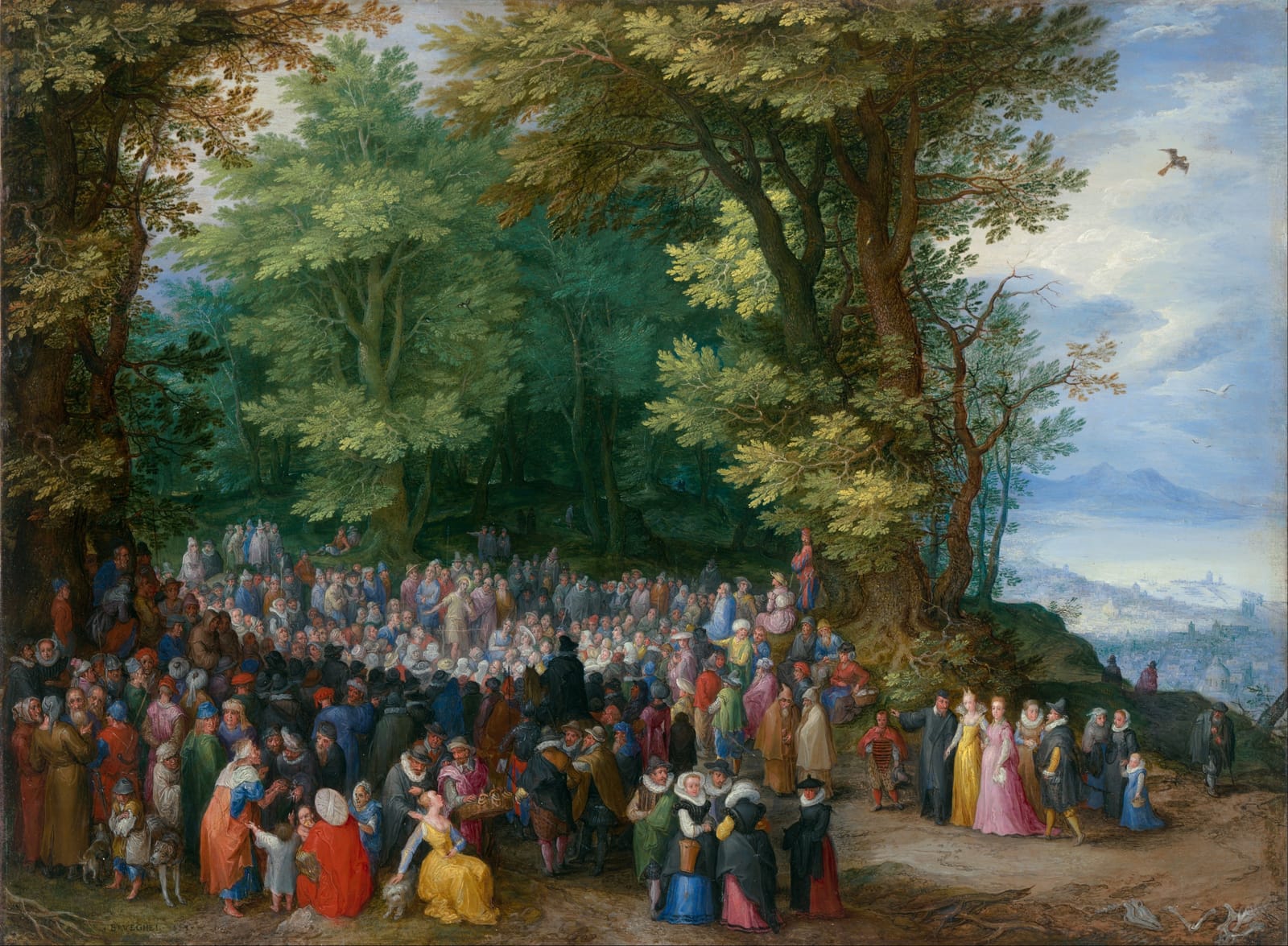
A great crowd in a wooded landscape listens to the Sermon on the Mount
The Sermon on the Mount, Jan Brueghel the Elder (1568–1625), 1598. Credits

After Pentecost

July 4, 2027

The Seventh Sunday after Pentecost

From Dom Guéranger’s The Liturgical Year.

The dominical cycle of the Time after Pentecost completes to-day its first seven. Previous to the general adoption of the changes introduced into the Sunday Gospels for this portion of the year, the Gospel of the multiplication of the seven loaves gave its name to the seventh Sunday; and the mystery it contains is still evident in more than one section of to-day's liturgy.

As we have already seen, this mystery was that of the consummation of the perfect in the repose or rest of God Himself; it was the fruitful peace of the divine union. Nothing, then, could be more fitting than that Solomon, who is pre-eminently thepeaceful, the sacred and authorized chanter of the nuptial Canticle, should have been selected to come forward, on this day, to speak the praises of infinite Wisdom, and reveal her ways to the children of men. When Easter is kept as late in April as it is possible, the seventh Sunday after Pentecost is the first of the month of August; and the Church then begins, in her night Office, the lessons from the Sapiential Books.

Chapter 8: Of the Office of Compline for Sundays and Feasts during the Time after Pentecost

From Dom Guéranger’s The Liturgical Year.

This Office, which concludes the day, commences by a warning of the dangers of the night; then immediately follows the public confession of our sine, as a powerful means of propitiating the divine justice, and of obtaining God’s help, now that we are going to spend so many hours in the unconscious, and therefore dangerous, state of sleep, which is also such an image of death.

May the almighty Lord grant us a quiet night, and a perfect end.
℟. Amen.

The lector then reads these words, from the first Epistle of St. Peter: Fratres: Sobrii estote et vigilate: quia adversarius vester diabolus tamquam leo rugiens circuit, quærens quem devoret: cui resistite fortes in fide. Tu autem, Domine, miserere nobis.

Brethren, be sober and watch: because your adversary the devil, as a roaring lion, goeth about seeking whom he may devour: whom resist ye, strong in faith. But thou, O Lord, have mercy on us.

Then the Lord’s Prayer is recited in secret; after which the priest says the Confiteor, and when he has finished, the choir repeats it.

Peter hauling in a second draught of fishes
Hans Schäufelein (1480–1540), The Second Draught of Fishes by Saint Peter, from Das Plenarium, 1517. Credits

Email view of this day