This day

July 16, 2027

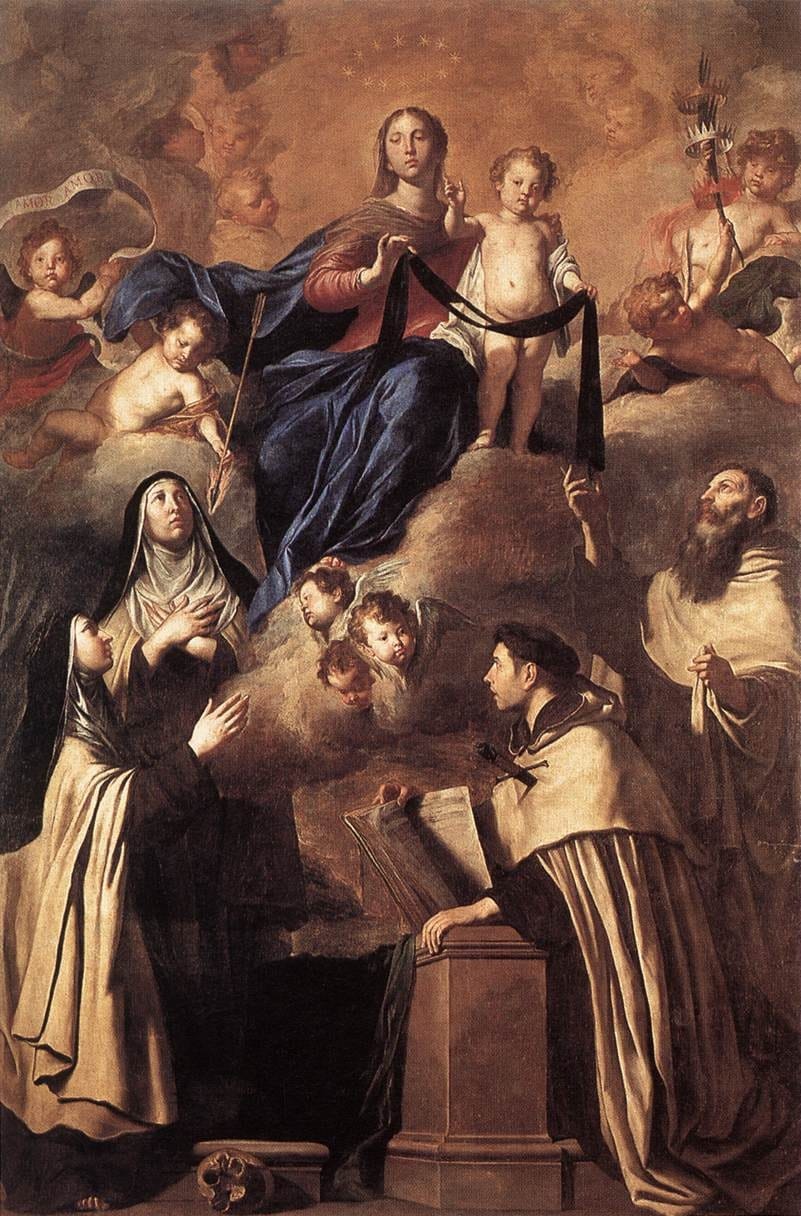
Our Lady of Mount Carmel with Child and scapular; Carmelite saints below
Our Lady of Mount Carmel, Pietro Novelli (1603–1647). Credits

After Pentecost

July 16, 2027

July 16: Our Lady of Mount Carmel

From Dom Guéranger’s The Liturgical Year.

TOWERING over the waves on the shore of the Holy Land, Mount Carmel, together with the short range of the same name, forms a connecting link to two other chains, abounding with glorious memories, namely: the mountains of Galilee on the north, and those of Judea on the south.

‘In the day of My love, I brought thee out of Egypt into the land of Carmel,’ said the Lord to the daughter of Sion, taking the name of Carmel to represent all the blessings of the Promised Land; and when the crimes of the chosen people were about to bring Judea to ruin, the prophet cried out: ‘I looked, and behold Carmel was a wilderness: and all its cities were destroyed at the presence of the Lord, and at the presence of the wrath of His indignation.’ But from the midst of the Gentile world a new Sion arose, more loved than the first; eight centuries beforehand Isaias recognized her by the glory of Libanus, and the beauty of Carmel and Saron which were given her. In the sacred Canticle, also, the attendants of the Bride sing to the Spouse concerning His well-beloved, that her head is like Carmel, and her hair like the precious threads of royal purple carefully woven and dyed.

This week's Sunday: The Eighth Sunday after Pentecost

From Dom Guéranger’s The Liturgical Year.

In the middle ages this Sunday was called the sixth and last Sunday after the Natalis of the apostles (that is, the feast of St. Peter); it was, indeed, the last for the years when Easter had been kept as late in April as was possible; but it was only the first after that feast of St. Peter when Easter immediately followed the spring equinox.

We have already noticed the variable character of this last portion of the liturgical cycle, which is the result of Easter being kept on a different day each year; and that in consequence of this variation this week may be the second in which the Sapiential Books are read, or, what is of more frequent occurrence, the Books of Kings may still be providing the lessons for the Divine Office. In this latter case it is the ancient temple raised by Solomon, the king of peace, to the glory of Jehovah, that engages the Church's attention to-day. We shall find that the portions of the Mass which are chanted on this Sunday are closely connected with the lessons read in last night’s Office.

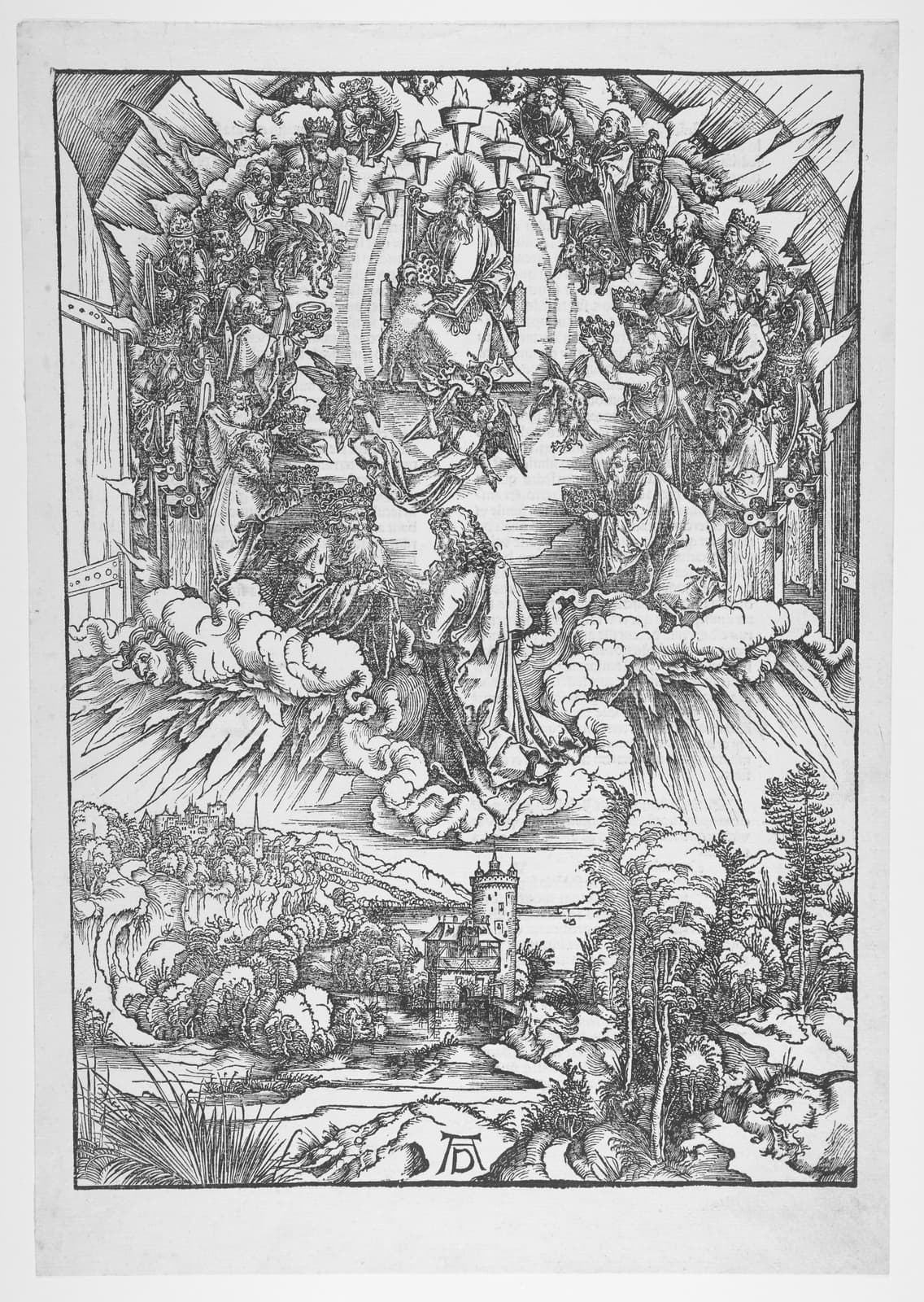
Saint John before God and the elders
Albrecht Dürer (1471–1528), Saint John Before God and the Elders, from The Apocalypse, 1498. Credits

Email view of this day