After Pentecost
October 25, 2027
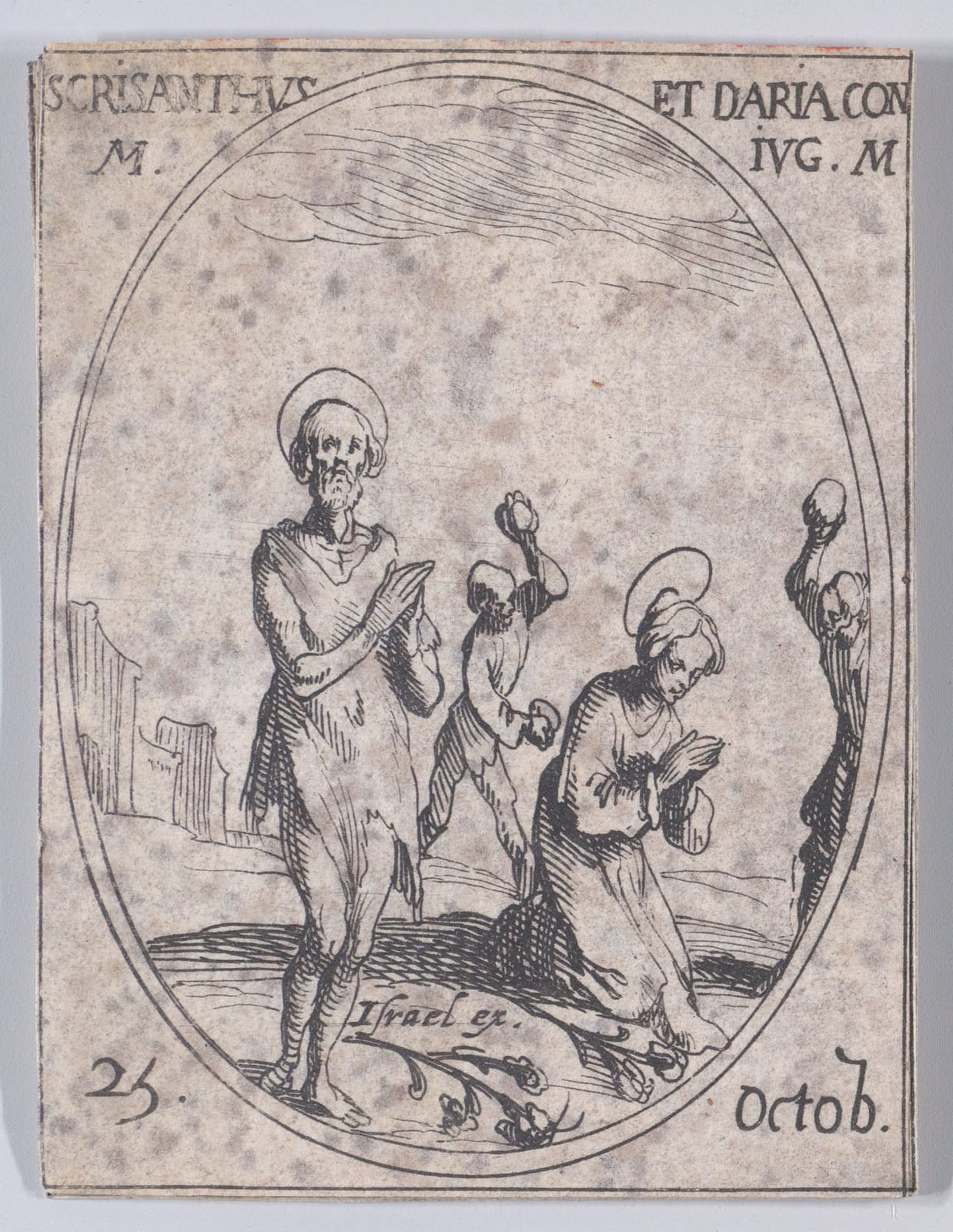
October 25: Sts. Chrysanthus and Daria, Martyrs
From Dom Guéranger’s The Liturgical Year.
Chrysanthus was united, in his confession of our Lord, with her whom he had won to Christianity and to the love of the angelic virtue. Our forefathers had a great veneration for these two martyrs, who having lived together in holy virginity, were together buried alive in a sand-pit at Rome for refusing to honour the false gods.
Dying like the seed in the earth, they yielded the fruit of martyrdom. On the anniversary day of their triumph, numbers of the faithful had gathered in the catacomb on the Salarian Way for the liturgical Synaxis, when the pagans surprised them and walled up the entrance of the vault. Many years passed away. When the hour of victory had sounded for the Church, and the Christians discovered again the way to the sacred crypt, a wonderful spectacle was presented to their gaze: before the tomb where reposed Chrysanthus and Daria, was grouped the family they had begotten to martyrdom. Each person was still in the attitude in which he had been overtaken by death. Beside the ministers of the altar, which was surrounded by men, women, and children, assistants at that most solemn of Masses, were to be seen the silver vessels of the Sacrifice: that Sacrifice in which the conquering Lamb had so closely united to Himself so many noble victims.