This day

October 28, 2027

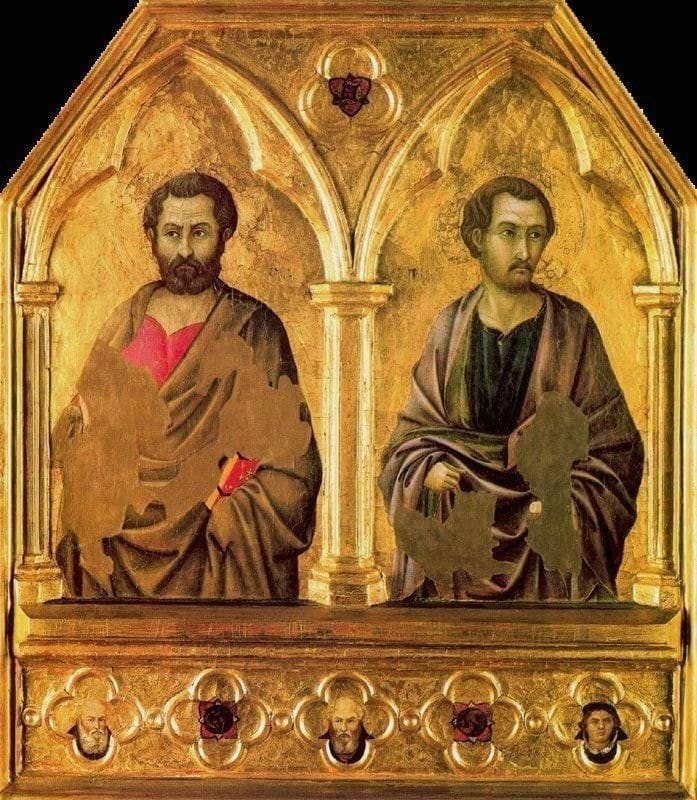
Saints Simon and Thaddeus (Jude)
St Simon and St Thaddeus, Ugolino di Nerio (1280–1330), c. 1324–25. Credits

After Pentecost

October 28, 2027

October 28: Sts. Simon and Jude, Apostles

From Dom Guéranger’s The Liturgical Year.

Instead of thy fathers, sons are born to thee. Thus does the Church, disowned by Israel, extol in her chants the apostolic fruitfulness which resides in her till the end of time. Yesterday she was already filled with that loving hope, which is never deceived, that the holy apostles Simon and Jude would anticipate their solemnity by shedding blessings upon her. Such is the condition of her existence on earth, that she can remain here only as long as she continues to give children to our Lord; and therefore, in the Mass of October 27 she makes us read the passage of the Gospel where it is said: ‘I am the true vine, and My Father is the husbandman. Every branch in Me, that beareth not fruit, He will take away: and every one that beareth fruit, He will purge it, that it may bring forth more fruit.’

The pruning is painful, as the Epistle of the vigil points out. In the name of the other branches, honoured like himself with the divine election, the apostle there recounts the labours, sufferings of every description, persecutions, revilings, denials, at the cost of which the preacher of the Gospel purchases the right to call sons those whom he has begotten in Christ Jesus.

This week's Sunday: The Twenty-Third Sunday after Pentecost

From Dom Guéranger’s The Liturgical Year.

When the number of the Sundays after Pentecost is only twenty-three, the Mass for to-day is taken from the twenty-fourth and last Sunday; and the Mass appointed for the twenty-third is said on the previous Saturday, or on the nearest day of the preceding week which is not impeded by a double or semi-double feast.

But, under all circumstances, the antiphonary ends to-day. The Introits, Graduals, Communions, and Postcommunions, which are given below, are to be repeated on each of the Sundays till Advent, which vary in number each year. Our readers will remember that, in the time of St. Gregory, Advent was longer than we now have it; and that, in those days, its weeks commenced in that part of the cycle which is now occupied by the last Sundays after Pentecost. This is one of the reasons for the lack of liturgical riches in the composition of the dominical Masses which follow the twenty-third.

Even on this one, the Church, without losing sight of the last day, used to lend a thought to the new season which was fast approaching, the season, that is, of preparation for the great feast of Christmas.

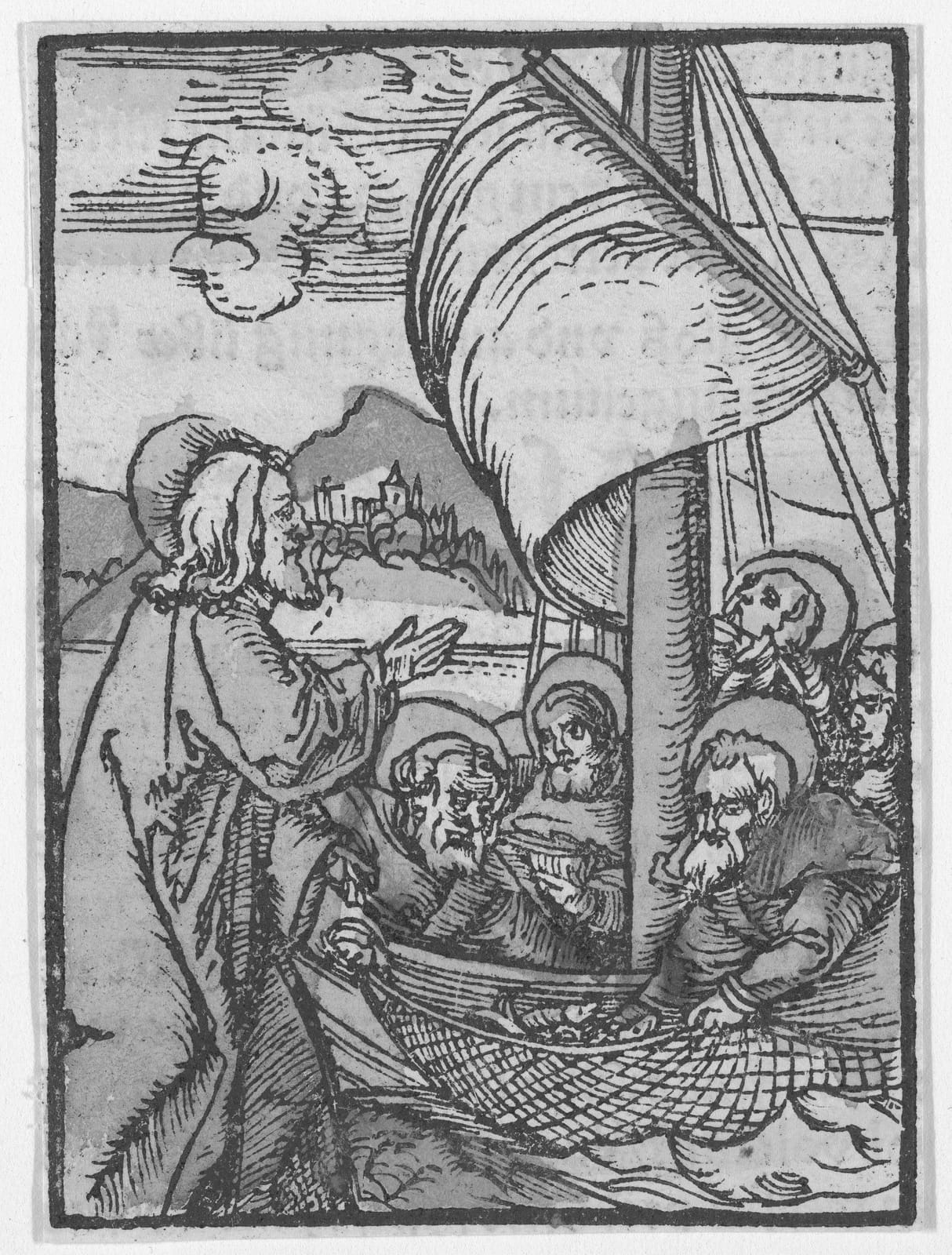
Peter hauling in a second draught of fishes
Hans Schäufelein (1480–1540), The Second Draught of Fishes by Saint Peter, from Das Plenarium, 1517. Credits

Email view of this day