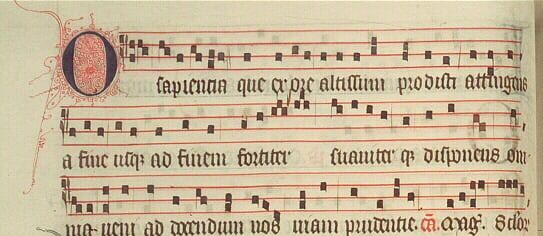
Advent
December 17, 2027
December 17: The Commencement of the Great Antiphons
From Dom Guéranger’s The Liturgical Year.
The Church enters to-day on the seven days which precede the Vigil of Christmas, and which are known in the liturgy under the name of the Greater Ferias. The ordinary of the Advent Office becomes more solemn; the antiphons of the psalms, both for Lauds and the Hours of the day, are proper, and allude expressly to the great coming. Every day, at Vespers, is sung a solemn antiphon, consisting of a fervent prayer to the Messias, whom it addresses by one of the titles given Him in the sacred Scriptures.
In the Roman Church, there are seven of these antiphons, one for each of the greater ferias. They are commonly called the O’s of Advent, because they all begin with that interjection. In other Churches, during the middle ages, two more were added to these seven; one to our blessed Lady, O Virgo virginum; and the other to the angel Gabriel, O Gabriel; or to St. Thomas the apostle, whose feast comes during the greater ferias; it began O Thoma Didyme. There were even Churches where twelve great antiphons were sung; that is, besides the nine we have just mentioned, O Rex Pacifice to our Lord, O mundi Domina, to our Lady, and O Hierusalem to the city of the people of God.